Build your emotional healing workflow: 67% PTSD remission
Emotional healing rarely happens by accident. For many people navigating trauma, depression, or anxiety, the missing piece is not willpower but structure. When you build a clear, intentional workflow around your healing, you create a path you can actually follow, even on the hardest days. Integrative and psychedelic therapies are reshaping what that path can look like, with 67% of patients in MDMA-assisted therapy no longer meeting PTSD criteria a year after treatment. This article walks you through proven frameworks, practical steps, and real strategies for building a healing workflow that lasts.
Table of Contents
- Understanding emotional healing workflows
- Core components: What you need to start
- Step-by-step: Building your emotional healing workflow
- Troubleshooting and common pitfalls
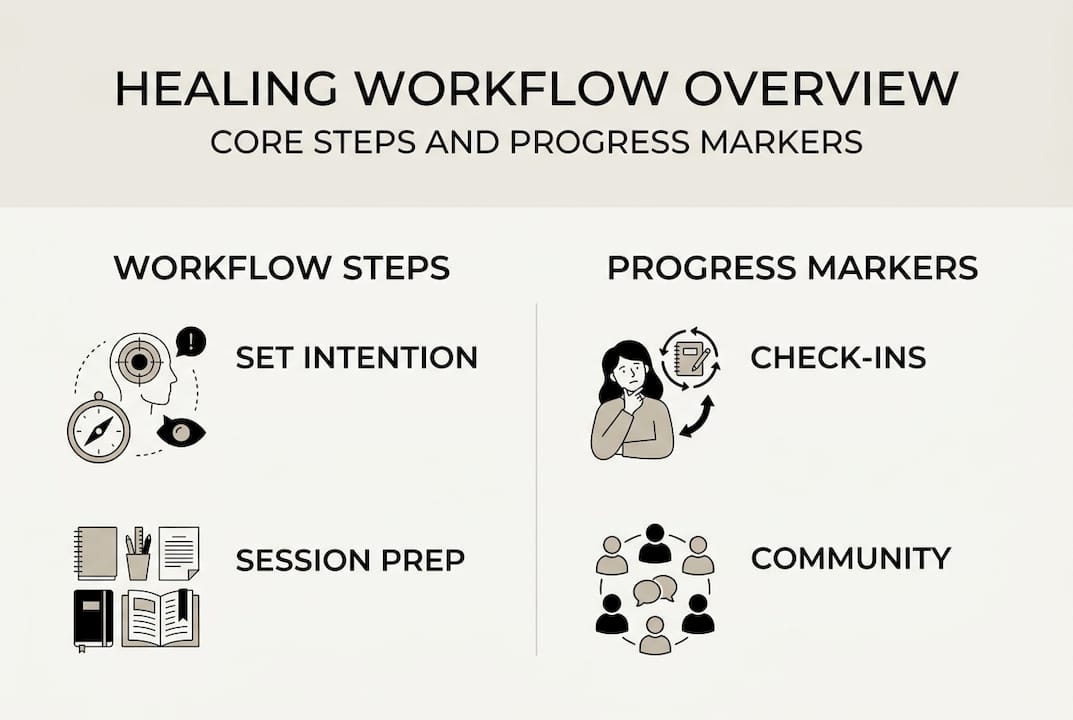
- Markers of progress and sustaining transformation
- Get support for your healing journey
- Frequently asked questions
Key Takeaways
| Point | Details |
|---|---|
| Structure fosters healing | A clear workflow helps you track progress and sustain emotional well-being. |
| Integration is essential | Combining therapeutic, social, and lifestyle elements anchors positive change. |
| Evidence guides best practices | Research-based models like THRIVE and MDMA-assisted therapy show lasting effects. |
| Community boosts resilience | Peer support and group programs enhance results and accountability. |
| Professional guidance matters | Licensed clinicians and holistic programs ensure safety and long-term healing. |
Understanding emotional healing workflows
An emotional healing workflow is a structured, repeatable process that guides you from where you are now toward sustained psychological well-being. Think of it like a treatment roadmap: it tells you what to do, when to do it, and how to reflect on what is working. Without structure, healing efforts tend to be reactive rather than intentional.
Structure matters because it helps you track progress, sustain change, and avoid the trap of doing intense inner work with no follow-through. Two frameworks stand out for their clinical grounding and practical design.
The THRIVE Model offers a holistic integration framework across six domains that support long-term transformation. Those domains are:
- Nature: Connection to the natural world as a healing resource
- Health: Physical, mental, and somatic well-being
- Relationships: Community, intimacy, and belonging
- Insight: Self-awareness and meaning-making
- Values: Living in alignment with what matters most
- Meaning: Purpose and spiritual or existential grounding
The second framework, PHRI (Psychedelic Harm Reduction and Integration), draws from harm reduction and mindfulness to support individuals without requiring them to administer psychedelics. It is especially useful for people who want to integrate past experiences or prepare for future ones safely.
“Healing is not a single event. It is a practice that unfolds across every domain of your life.”
Pro Tip: If you are new to integrative healing, explore how culture and emotion in healing shape your personal framework before committing to a single approach.
Core components: What you need to start
Before you take your first step, you need the right supports in place. Jumping into deep emotional work without preparation is one of the most common reasons people stall or feel worse before they feel better.
Here is what a strong starting foundation looks like:
- A licensed therapist or integration specialist who understands psychedelic and somatic approaches
- A peer support network such as a healing circle, group therapy, or trusted friends who respect your process
- A safe physical space for reflection, whether that is a therapy office, a quiet room at home, or a natural setting
- A medical assessment to rule out contraindications, especially if you are considering ketamine or other clinical therapies
- An intake tool like the TRIP interview, which can personalize integration plans to fit your individual needs and history
Intention setting is also a core component. Before any session, whether it is a therapy appointment, a breathwork class, or a ketamine infusion, clarifying your intention focuses your nervous system and gives your experience direction.
| Component | Why it matters | Where to start |
|---|---|---|
| Licensed therapist | Safety, clinical guidance | Integrative mental health resources |
| Peer support | Accountability, belonging | Community groups, group therapy |
| Medical screening | Rule out contraindications | Primary care or clinic intake |
| Intake interview (TRIP) | Personalized planning | Ask your provider |
| Intention setting | Focus and direction | Journaling before sessions |
Pro Tip: Research shows that EFT (Emotional Freedom Techniques) can reduce anxiety and emotional reactivity before deeper therapeutic work, making it a useful warm-up practice.
Step-by-step: Building your emotional healing workflow
Now it is time to put the pieces together. A well-built workflow moves through three phases: preparation, experience, and integration. Each phase has specific actions and checkpoints.
- Assess your starting point. Use the THRIVE Model’s six domains to rate your current well-being in each area. This gives you a baseline and helps you prioritize.
- Choose your primary modality. Options include MDMA-assisted therapy, ketamine therapy, EFT, somatic work, or mindfulness-based integration. Your choice depends on your diagnosis, history, and access.
- Build your support team. Confirm your therapist, peer network, and medical provider before scheduling any sessions.
- Set intentions before each session. Write down one or two specific things you want to explore or release.
- Complete the experience phase. Attend your sessions with full presence. Avoid scheduling stressful obligations immediately after.
- Integrate actively. This is where most people underinvest. Use journaling, nature walks, peer check-ins, and mindfulness for self-compassion to process what surfaced.
- Review and adjust. Every four weeks, revisit your THRIVE domain ratings and update your plan.
Comparing key modalities
| Modality | Format | Timeline | Best for |
|---|---|---|---|
| MDMA-assisted therapy | Individual, clinical | 3 sessions + integration | PTSD, complex trauma |
| Group ketamine (Roots To Thrive) | Group, clinical | 12 weeks | Depression, anxiety, resilience |
| EFT | Individual or group | Ongoing | Anxiety, emotional regulation |
| PHRI | Individual or group | Flexible | Integration, harm reduction |
| Mindfulness-based integration | Self-directed or guided | Ongoing | Maintenance, values alignment |
The MDMA-assisted therapy results are striking: 67% of participants no longer met PTSD criteria after completing the protocol, and those results held at 12 months. That kind of sustained remission is rare in conventional treatment.

For group-based healing, the Roots To Thrive model uses group ketamine therapy over 12 weeks to build resilience and community alongside clinical treatment. It is a powerful example of how structure and connection amplify individual healing.
Pro Tip: Explore ketamine therapy insights to understand how this modality works before your first session. Informed clients tend to have better outcomes.
You can also review resilience program details to find structured options that match your timeline and goals.
Troubleshooting and common pitfalls
Even with a solid workflow, you will hit rough patches. Knowing what to expect keeps you from interpreting a setback as failure.
The most common mistakes people make include:
- Skipping integration. The session is not the healing. What you do in the days and weeks after is where transformation actually takes root.
- Isolating after difficult experiences. Emotional openings can feel overwhelming. Staying connected to your support network is critical.
- Setting unrealistic timelines. Healing is not linear. Expecting to feel better in two weeks sets you up for disappointment.
- Avoiding professional support. Self-directed work has value, but without clinical oversight, especially for trauma or psychedelic work, risks increase significantly.
The PHRI model directly addresses this by normalizing challenges like fear, ego dissolution, and emotional resistance. It reframes these experiences as part of the process rather than signs that something is wrong.
“Resistance is not a roadblock. It is information. Slow down, get curious, and reach out.”
When you feel stuck, return to your values. Ask yourself what matters most and whether your current actions reflect that. Nature, community, and self-compassion are reliable reset tools. If you feel unsafe or overwhelmed, support for setbacks is available through integrative mental health providers who understand this territory.
Cultural context also shapes how you experience and process emotions. Reading about overcoming barriers in psychedelic healing can help you recognize when cultural factors are influencing your resistance or progress.
For those in group-based support programs, the community itself becomes a buffer against isolation and dropout.
Markers of progress and sustaining transformation
How do you know your workflow is actually working? Progress in emotional healing is often subtle at first. You might notice you react less intensely to old triggers, sleep more soundly, or feel more present in relationships.
Here are reliable markers to track:
- Reduced emotional reactivity in situations that previously felt overwhelming
- Increased capacity for self-compassion without defaulting to self-criticism
- Stronger sense of values alignment, meaning your daily choices feel more consistent with what you believe
- Improved relationships, including more honest communication and less conflict avoidance
- Greater tolerance for uncertainty without anxiety spiraling
The THRIVE Model’s six domains are associated with 1-year transformation maintenance, making them a reliable lens for long-term self-assessment. Rate yourself across all six domains every month and look for trends rather than single-session results.
| Domain | Sample check-in question | Frequency |
|---|---|---|
| Nature | Am I spending time outdoors regularly? | Weekly |
| Health | How is my sleep, movement, and nutrition? | Weekly |
| Relationships | Do I feel connected and supported? | Bi-weekly |
| Insight | Am I learning something new about myself? | Monthly |
| Values | Are my choices aligned with what I care about? | Monthly |
| Meaning | Do I feel a sense of purpose right now? | Monthly |
Ongoing peer and community practice sustains the gains you make in clinical settings. A mindful self-compassion course can anchor your maintenance phase with practical, evidence-based tools. Know when to reach back out for professional support: if you notice regression across multiple domains for more than two weeks, that is a signal to reconnect with your care team.
Get support for your healing journey
Building an emotional healing workflow is meaningful work, and you do not have to figure it out alone. Structured programs that combine clinical expertise, community, and integrative practices consistently produce deeper and more lasting results than solo efforts.
At Mystic Health, we offer a full spectrum of support designed around your unique healing path. Our holistic mental health services include ketamine-assisted psychotherapy, Spravato, somatic therapies, and personalized integration planning. Our mindfulness self-compassion program gives you practical tools for the maintenance phase of your workflow. Whether you are just beginning or looking to deepen an existing practice, our care team is here to guide you with both clinical rigor and genuine compassion. Reach out today to schedule a consultation.
Frequently asked questions
What is the THRIVE model in emotional healing?
THRIVE is a holistic integration framework covering six domains including nature, health, relationships, insight, values, and meaning, designed to support sustained emotional healing over time.
How do group-based ketamine programs support emotional recovery?
Programs like Roots To Thrive use group ketamine over 12 weeks to blend therapeutic sessions with community resilience-building for depression, anxiety, and PTSD.
What are common obstacles in emotional healing workflows?
The most frequent challenges include skipping integration, isolating after sessions, and setting unrealistic timelines. The PHRI framework normalizes these obstacles and offers strategies to move through them with support.
Is MDMA-assisted therapy effective for PTSD recovery?
Yes. 67% of participants no longer met PTSD criteria a year after completing the MDMA-assisted therapy protocol, making it one of the most promising treatments available.
Should I try emotional healing techniques alone or seek a program?
Structured group programs offer greater safety, clinical oversight, and long-term results. Self-directed work has value but benefits significantly from professional integration support.
Recommended

Mystic Health Blog








FAQs
1. Am I eligible for ketamine therapy?
2. Does insurance cover the cost of ketamine therapy?
3. How many ketamine treatments will I need?
We recommend two initial treatments to determine suitability and adjust dosage. After these sessions, additional treatments are available based on your progress and specific requirements.