The Role of Ancient Wisdom in Therapy Today
TL;DR:
- Ancient wisdom traditions like mindfulness, compassion, and non-attachment provide learnable psychological skills supported by clinical evidence. These practices, when integrated into therapy through structured programs, effectively reduce stress, anxiety, and depression across diverse populations. Cultural adaptation and guided implementation are essential for ensuring their effectiveness and authenticity in modern mental health care.
When you are searching for relief from anxiety, depression, or trauma, it is easy to overlook tools that have existed for thousands of years. The role of ancient wisdom in therapy is no longer a fringe conversation. Researchers, clinicians, and patients are recognizing that practices rooted in Buddhist philosophy, Stoicism, and Ayurveda offer something modern psychology sometimes struggles to provide: a framework for understanding suffering, not just managing it. This article walks you through what the evidence actually says, how these principles show up in real clinical settings, and how you can start using them in your own healing.
Table of Contents
- Key Takeaways
- The role of ancient wisdom in therapy: core principles
- How modern therapy translates ancient teachings
- Nuances and cultural considerations
- Practical steps to bring ancient wisdom into your healing
- My perspective on what people get wrong
- How Mystic can support your healing path
- FAQ
Key Takeaways
| Point | Details |
|---|---|
| Ancient wisdom is skills-based | Mindfulness, compassion, and non-attachment are learnable psychological skills, not just spiritual concepts. |
| Strong clinical evidence exists | Meta-analyses show moderate effect sizes for stress and anxiety reduction through mindfulness-based interventions. |
| Context and fidelity matter | Stripping ancient practices of their philosophical roots can reduce their therapeutic effectiveness. |
| Cultural adaptation is necessary | Clinicians must tailor ancient wisdom practices to individual backgrounds for safe and effective care. |
| Guided programs outperform self-study | Structured, clinician-supported approaches produce better outcomes than unguided or purely online formats. |
The role of ancient wisdom in therapy: core principles
Ancient wisdom traditions are not monolithic. They come from different cultures, centuries, and worldviews. But several core concepts appear across Buddhist mindfulness practice, Stoic philosophy, and Ayurvedic medicine that translate directly into psychological skill-building.
Mindfulness is perhaps the most familiar. At its heart, mindfulness is intentional present-moment awareness. You train your attention to observe thoughts and sensations without reacting to them automatically. This is not mysticism. It is attention regulation, and it has measurable effects on emotional processing. The brain’s prefrontal cortex, the region most involved in emotional regulation, shows structural changes with mindfulness practice over time.
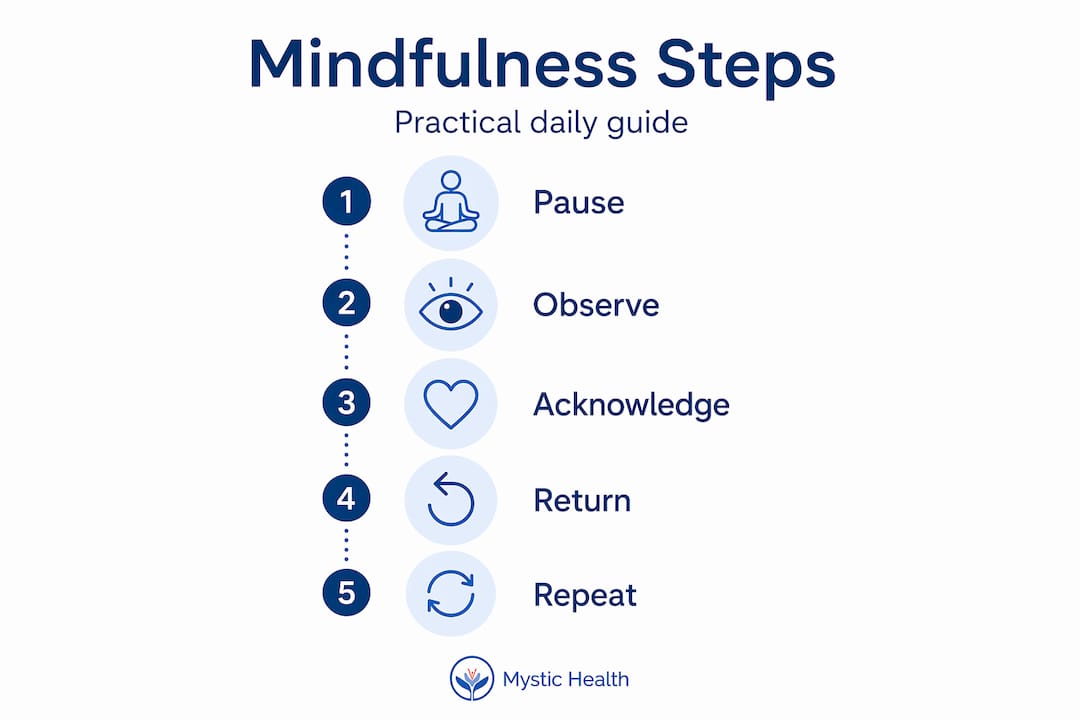
Compassion is another pillar, particularly through what Buddhist tradition calls the four immeasurables: loving-kindness, compassion, empathetic joy, and equanimity. These are not just attitudes. They are practiced through specific exercises that build emotional resilience and reduce the self-critical patterns that fuel depression. You can read more about how this connects to emotional resilience strategies in a broader clinical context.
Non-attachment is the concept that tends to confuse people most. It does not mean indifference. It means learning to hold your experiences, both pleasant and painful, with a lighter grip. Impermanence, the Buddhist teaching that all states are temporary, directly counters the cognitive distortions that make anxiety and grief feel permanent.
Here is what distinguishes ancient wisdom from a belief system versus a therapeutic tool:
- Mindfulness meditation can be practiced by someone with no spiritual beliefs whatsoever
- Compassion training has documented psychological effects independent of religious framing
- Non-attachment and acceptance overlap significantly with principles in Acceptance and Commitment Therapy
- Stoic practices like negative visualization map almost directly onto cognitive restructuring techniques in modern therapy
Pro Tip: When exploring ancient healing practices, look for programs that frame these concepts as psychological skills with clear instructions, not vague spiritual recommendations. That framing makes the difference between a transformative practice and an overwhelming idea.
How modern therapy translates ancient teachings
The translation of ancient wisdom into clinical practice did not happen overnight. It took decades of research and a willingness from clinicians to take these traditions seriously.

Mindfulness-Based Stress Reduction, developed in the late 1970s, drew directly from Buddhist contemplative practice. Mindfulness-Based Cognitive Therapy followed, weaving together Buddhist mindfulness with cognitive behavioral approaches to prevent depression relapse. The Stoic roots of cognitive behavioral therapy itself are well-documented. The idea that it is not events but our judgments about them that cause suffering comes almost word-for-word from the Stoic philosopher Epictetus.
The data now supports what ancient practitioners observed intuitively. A recent meta-analysis of 17 studies found that mindfulness-based interventions reduce stress with a standardized mean difference of negative 0.53. A large network meta-analysis reported moderate effects for mindfulness and yoga across 183 randomized controlled trials, with effect sizes of 0.44 and 0.49 respectively.
| Intervention | Ancient Origin | Effect Size | Primary Benefit |
|---|---|---|---|
| Mindfulness-Based Stress Reduction | Buddhist meditation | SMD −0.53 | Perceived stress reduction |
| Mindfulness-Based Cognitive Therapy | Buddhist mindfulness + Stoic thought | d = 0.53–0.68 | Anxiety and depression in cancer patients |
| Loving-kindness meditation | Buddhist four immeasurables | d = 0.26–0.49 | Psychological symptoms in clinical samples |
| Gratitude-integrated mindfulness | Multiple ancient traditions | g = −0.56 (anxiety) | Anxiety and depression reduction |
Gratitude, a concept appearing across virtually every wisdom tradition, also shows real clinical value. Programs that weave gratitude into mindfulness practice show stronger anxiety reductions with an effect size of negative 0.56, compared to standard mindfulness programs alone.
The role of ancient wisdom in modern medicine is becoming clearer in oncology settings too. Mindfulness-based cognitive therapy integrating Buddhist wisdom principles showed meaningful outcomes for cancer patients, with Cohen’s d ranging from 0.53 to 0.68 for anxiety and depression reduction across nine randomized controlled trials. That is not a small finding. You can explore this more through Mystic’s resource on mindfulness for cancer patients.
Pro Tip: When evaluating a mindfulness or ancient wisdom-based program, ask whether it follows a structured curriculum with measurable outcomes. Clinical integration works best when the approach has clear protocols, not just open-ended guidance.
Nuances and cultural considerations
The benefits of traditional wisdom are real, but so are the ways these practices can be misapplied. This is worth talking about honestly.
One of the most significant concerns in the research is decontextualization. Western adaptations of mindfulness often strip away the philosophical and ethical foundations that gave the original practices their depth. Buddhist mindfulness, for example, was not just about stress relief. It was embedded in a framework that includes ethical conduct, insight into impermanence, and the understanding of panna, or wisdom. Buddhist interventions retain larger effects when these deeper elements are preserved, especially in clinical samples where effect sizes reach d=0.26 compared to d=0.10 in nonclinical groups.
“The deconstruction of Buddhist mindfulness in Western interventions often removes core philosophies, focusing mainly on symptom management rather than the deeper transformations the original tradition intended.”
There are also real questions about cultural fit. Ancient wisdom traditions emerged from specific cultural and historical contexts. Applying them across diverse populations requires careful adaptation, not a one-size-fits-all approach. A therapist working with a client from a community where meditation carries religious connotations, or where emotional expression is shaped by cultural norms, needs to adjust accordingly. Clinicians who have personal experience with these practices tend to integrate them more authentically and effectively.
Other challenges include:
- Engagement and adherence, particularly in online delivery formats
- Internet-delivered programs face high attrition rates near 67%, pointing to the need for stronger onboarding and ongoing support
- Risk of oversimplification, where complex teachings get reduced to sound bites that lose their therapeutic power
- Potential for some individuals to use spiritual bypassing, avoiding genuine emotional work under the cover of practice
Wisdom traditions in counseling work best when the therapist brings knowledge, humility, and genuine respect for the tradition they are drawing from. For a deeper look at how these traditions inform whole-person healing, the concept of psycho-spiritual therapy offers a useful frame.
Practical steps to bring ancient wisdom into your healing
You do not need to become a scholar of ancient philosophy to benefit from these practices. But you do need some structure, guidance, and patience with yourself.
Here is a grounded starting point:
-
Find a credible program. Look for mindfulness-based or integrative therapy programs with a published curriculum, trained facilitators, and documented outcomes. Structured programs outperform self-guided approaches in almost every study reviewed here. Programs that explicitly incorporate ancient principles alongside modern clinical methods tend to produce the deepest results.
-
Start with a daily mindfulness practice. Even ten minutes of focused breathing or body scan meditation builds the attention regulation skills that underpin ancient healing practices. Apps and guided recordings can help initially, but working with a trained instructor makes a meaningful difference in how quickly you develop the skill.
-
Add a compassion practice. Loving-kindness meditation, where you silently extend goodwill first to yourself and then to others, directly trains the emotional circuits that reduce self-criticism and depressive thinking. It feels awkward at first. That discomfort usually softens within a few weeks of consistent practice.
-
Keep a gratitude journal. Ancient traditions from Stoicism to Buddhist practice emphasized deliberate reflection on what is good and temporary. A nightly practice of writing three specific, unrepeated things you are grateful for has measurable effects on anxiety and mood over time.
-
Work with a therapist who understands integration. The benefits of traditional wisdom multiply when a skilled clinician helps you apply these principles to your specific history and patterns. This is especially true if you are working through trauma, grief, or a serious illness.
-
Explore Ayurvedic approaches to mental clarity. Some people find that combining with therapy adds another layer of support, particularly around sleep, stress, and body-based regulation. has a long tradition of addressing the mind through the body, and some of its principles align well with integrative mental health care.
Pro Tip: Consistency matters more than duration. A daily ten-minute practice you actually do will serve you better than an hour-long session you keep postponing. Commit to the minimum viable version first, then build from there.
My perspective on what people get wrong
There is something I have seen repeatedly: people dismiss ancient wisdom as too vague to be useful, or they embrace it so eagerly that they skip the clinical work entirely. Both responses miss the point.
In my experience, the most powerful thing about therapeutic ancient philosophies is not the specific techniques. It is the underlying framework. When you genuinely internalize that suffering arises from clinging and aversion, not from circumstances alone, something shifts. That shift is not intellectual. It moves through you at a level that changes how you respond to your own pain.
What I have learned is that structure matters enormously. Ancient wisdom components are most effective as structured skills, not as abstract ideals. You cannot think your way into equanimity. You practice your way there, one session at a time.
The role of ancient wisdom in medicine and healing is not a replacement for clinical support. It is a deepening of it. The people I have seen make the most meaningful progress are the ones who bring both: the rigor of evidence-based treatment and the humility to learn from traditions that understood human suffering long before the DSM existed.
If you are exploring this path, do not wait until you have read everything or understood it perfectly. Show up with curiosity and let a trained guide help you find what fits.
— Kabir
How Mystic can support your healing path
At Mystic, the approach to mental health care was built on exactly this belief: that the most effective healing draws from both ancient wisdom and modern clinical science. Whether you are exploring ketamine-assisted psychotherapy, mindfulness-based therapy, or compassion-centered approaches to chronic illness and grief, every program at Mystic is designed to meet you where you are.
Mystic’s integrative mental health programs combine structured ancient wisdom practices with evidence-based interventions, supported by a clinical team that genuinely cares about your whole-person healing. You can also explore the full range of available programs to find the right fit for your needs. If you have been curious about what this kind of care looks like in practice, reaching out for a consultation is a good first step. You deserve support that goes beyond symptom management. It is there when you are ready.
FAQ
What is the role of ancient wisdom in therapy?
Ancient wisdom traditions like Buddhist mindfulness, Stoicism, and Ayurveda provide psychological frameworks and skills that modern therapists integrate into evidence-based interventions. These practices help clients manage stress, reduce anxiety, and build emotional resilience through structured techniques.
How does ancient wisdom differ from modern therapy techniques?
Ancient wisdom offers overarching frameworks about the nature of suffering and the mind, while modern therapy translates these into specific, measurable clinical protocols. The most effective approaches combine both rather than treating them as separate.
Are ancient healing practices scientifically supported?
Yes. Meta-analyses of mindfulness-based interventions show stress reductions with moderate effect sizes, and structured programs integrating Buddhist principles show meaningful outcomes for anxiety and depression across multiple randomized controlled trials.
Can I practice ancient wisdom approaches without a therapist?
You can begin with basic practices like mindfulness meditation and gratitude journaling on your own, but clinical guidance significantly improves outcomes and safety, particularly for trauma, chronic illness, or treatment-resistant conditions.
What should I look for in a therapist who uses ancient wisdom?
Look for a clinician trained in structured programs like Mindfulness-Based Cognitive Therapy or Mindfulness-Based Stress Reduction, who has personal practice experience and cultural competency when applying wisdom traditions in counseling to diverse clients.
Recommended

Mystic Health Blog








FAQs
1. Am I eligible for ketamine therapy?
2. Does insurance cover the cost of ketamine therapy?
3. How many ketamine treatments will I need?
We recommend two initial treatments to determine suitability and adjust dosage. After these sessions, additional treatments are available based on your progress and specific requirements.