How education drives holistic health and wellness outcomes
TL;DR:
- Holistic health in education encompasses physical, mental, emotional, and social well-being.
- Long-term, integrated programs with community support produce the most significant, sustained benefits.
- Equity and systemic change are essential for truly transformative holistic education.
Most of us grew up thinking education was about grades, test scores, and getting into a good college. But education shapes health in ways that go far beyond the classroom, touching our emotional resilience, social bonds, physical habits, and even our sense of purpose. When we look at the full picture, education is one of the most powerful forces shaping how we feel, how we cope, and how we show up for ourselves and others. This article walks through what holistic health really means, which educational methods actually work, what the evidence says, and where the honest limitations lie.
Table of Contents
- What is holistic health and why education matters
- Key educational methods for holistic health
- Evidence for the impact of holistic health education
- Caveats, controversies, and future directions
- A new paradigm for holistic health and education
- Explore holistic health and education with Mystic Health
- Frequently asked questions
Key Takeaways
| Point | Details |
|---|---|
| Holistic health requires integration | Physical, mental, emotional, and social well-being should be embedded throughout educational experiences. |
| Long-term methods work best | Sustained, well-designed programs like mindfulness and SEL yield stronger impacts on wellness and achievement. |
| Nuanced application is crucial | Not all holistic health programs are created equal—implementation details and inclusivity matter for lasting results. |
| Education’s reach goes beyond academics | Effective health education shapes lives by fostering resilience, social skills, and life satisfaction. |
What is holistic health and why education matters
Holistic health is not just the absence of illness. It is the integration of physical, mental, emotional, and social well-being into a lived experience that feels whole. Think of it less like a checklist and more like a garden where every element needs tending. Neglect one area and the others start to suffer.
Education, at its best, is one of the most consistent tools we have for nurturing that garden. It builds the attitudes, values, and skills that people carry into adulthood. It creates community connections. It gives young people a language for their inner lives, and that matters more than most curricula acknowledge.
Here are the core dimensions holistic health covers:
- Physical well-being: Movement, nutrition, sleep, and bodily awareness
- Mental well-being: Cognitive skills, focus, self-regulation, and learning capacity
- Emotional well-being: Resilience, self-awareness, empathy, and the ability to grieve and recover
- Social well-being: Belonging, communication, trust, and meaningful relationships
Schools are uniquely positioned to address all four. Not just through health classes, but through the culture of the institution itself. A school that models respect, teaches conflict resolution, and creates space for emotional expression is doing holistic health work, even if it never uses that term.
“Education integrates physical, mental, emotional, and social well-being into curricula, equipping individuals with the skills, values, and attitudes needed to lead healthy lives.” — UNESCO
This framing matters because it shifts the conversation. Education is not just preparation for economic productivity. It is preparation for a full human life. When we look at holistic wellness programs through this lens, we start to see that education and wellness are not separate tracks. They are the same road.
The research backs this up. Students who experience emotionally supportive school environments show better long-term health outcomes, stronger relationships, and greater capacity to handle adversity. That is not a soft outcome. That is a life outcome.
Key educational methods for holistic health
Knowing that education matters for holistic health is one thing. Understanding how to structure that education is another. Several evidence-based approaches have emerged, each with its own strengths and focus areas.
Here is a comparison of the four most studied frameworks:
| Method | Core focus | Strengths | Limitations |
|---|---|---|---|
| Health-promoting schools | Whole-school culture and environment | Systemic, community-wide impact | Requires significant institutional buy-in |
| MIPE (mindfulness-integrated physical education) | Mindfulness woven into movement | Improves attention and emotional regulation | Needs trained teachers |
| SEL (social-emotional learning) | Emotional skills and relationship building | Strong academic and well-being outcomes | Can feel add-on rather than integrated |
| Whole-school mindfulness | Mindfulness, nutrition, and community across all subjects | Sustained, multi-dimensional results | Long implementation timeline |
Methodologies like MIPE, SEL, and whole-school frameworks embed nutrition awareness, mindfulness practice, and social skill-building directly into daily school life, not as electives but as core experiences. This is a meaningful distinction. When wellness is woven into the fabric of the school day, students do not experience it as a separate lesson. They live it.
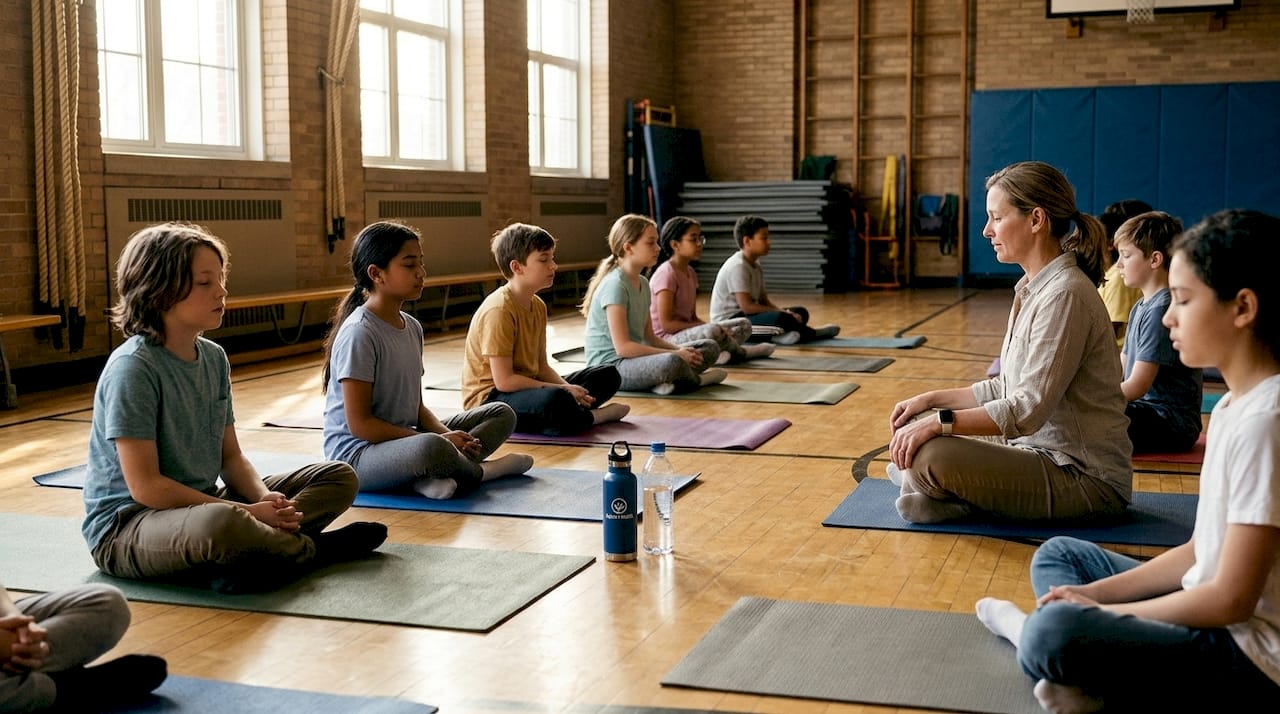
For those curious about the science behind mindfulness in education, the evidence is growing steadily. Mindfulness and SEL evidence points to measurable improvements in attention, emotional regulation, and even academic performance when these practices are implemented consistently.
Here is what effective holistic education programs tend to have in common:
- Multi-year implementation rather than one-off workshops
- Teacher training and ongoing professional support
- Cross-sector collaboration between schools, families, and communities
- Integration into existing subjects rather than standalone modules
- Regular evaluation and willingness to adapt
Pro Tip: If you are evaluating a program for yourself or your community, look for one that has been running for at least two years with documented teacher training. Short programs with no follow-through rarely produce lasting change. Mindfulness and SEL insights and integrative approaches can help you understand what sustained commitment actually looks like.
Evidence for the impact of holistic health education
Let’s talk numbers, because the research here is genuinely striking.
A review of multiple holistic health education interventions found that MIPE produced a 12.8% increase in standardized test scores (p<0.001), alongside measurable improvements in attention and emotional regulation. That is not a marginal effect. For context, a 12.8% improvement in test performance is the kind of result that typically requires years of curriculum reform.

Mindfulness integrated into science classes showed improvements in student motivation, science achievement, and mindfulness scores that were sustained six months after the program ended. That sustained effect is important. It tells us the learning became internalized, not just performed for an assessment.
SEL-based assessment programs showed significant well-being improvements (F(1,357)=15.62, p<0.001), meaning students who participated showed measurably better emotional health compared to those who did not. Whole-school programs enhanced life satisfaction, gratitude, emotional awareness, resilience, and coping skills across the board.
Here is a summary of key outcomes by intervention:
| Intervention | Primary outcomes | Duration for effect |
|---|---|---|
| MIPE | Test scores, attention, emotional regulation | Semester-long |
| Mindfulness in science | Motivation, achievement, mindfulness | 6+ months |
| SEL assessment | Well-being, emotional health | One academic year |
| Whole-school program | Life satisfaction, resilience, gratitude | Multi-year |
The benefits worth highlighting include:
- Improved academic performance without sacrificing well-being
- Greater emotional resilience and coping capacity
- Higher life satisfaction scores in adolescents
- Stronger motivation and engagement with learning
- Sustained results beyond the program itself
For those who want to go deeper, mindfulness and wellness research and evidence-based education programs offer practical context for applying these findings. The full MIPE and mindfulness studies are worth reading if you want the methodological detail.
Caveats, controversies, and future directions
Honesty matters here. The evidence is encouraging, but it is not without complications.
Some meta-analyses of whole-school approaches show inconclusive results, and the reasons are instructive. Short program duration is a major factor. A six-week mindfulness unit is not the same as a school culture built around emotional well-being. Implementation quality varies enormously, and poorly trained facilitators can undermine even well-designed programs.
There are also deeper conceptual concerns. Brain-based education risks reducing the complexity of learning to neural circuitry alone, overlooking the relational and embodied dimensions of how humans actually grow. When we focus only on the brain, we miss the body, the community, and the spirit.
Nutritionism in curricula faces similar criticism. Teaching students to think about food purely in terms of nutrients can be just as reductive as ignoring food altogether. Holistic health frameworks like hauora (a Maori concept of whole-person well-being) remind us that health is not a formula.
Overschooling also constrains development, limiting the risk-taking and unstructured exploration that genuine learning requires. When every moment is optimized, there is no space to breathe, to fail, or to discover.
Here are some edge cases that deserve more attention:
- Higher maternal education reduces child deaths by two-thirds and child marriages by two-thirds, showing education’s reach extends across generations
- Self-regulated learning in clinical immersion settings produces widely varying student experiences
- Planetary well-being is increasingly recognized as a necessary foundation for any school health framework
The most honest thing we can say is this: holistic education works best when it is long-term, balanced, equity-focused, and genuinely integrated into school culture rather than bolted on as a program.
Pro Tip: When evaluating any educational wellness initiative, ask how it addresses equity. Programs that work for well-resourced schools but not under-resourced ones are not truly holistic. Integrative health models that center the whole person and the community context tend to produce more durable outcomes.
A new paradigm for holistic health and education
Here is what I think most conversations about education and health get wrong. They treat wellness programs as interventions rather than as the foundation of what education should be.
The real transformation does not come from a mindfulness app installed in a school’s tablet program, or a nutrition unit added to the science curriculum. It comes from a systemic shift in how we understand what education is for. Not productivity. Not test scores. Human flourishing.
Contrary to what trend-driven approaches suggest, the most lasting results come from whole-school and community collaboration sustained over years, not semesters. Teachers need support. Families need to be included. Communities need to be partners, not audiences.
Equity is not optional in this framework. A holistic approach that only reaches students with resources is not holistic at all. The future of long-term holistic education depends on individualized, potentiality-driven learning that sees every student as capable of flourishing, not just performing.
This is the paradigm shift worth fighting for.
Explore holistic health and education with Mystic Health
If this article has stirred something in you, that is worth paying attention to. Understanding the connection between education and holistic health is a meaningful first step. Taking action is the next one.
At Mystic Health, we offer evidence-based programs grounded in integrative, whole-person approaches to mental and emotional wellness. Whether you are drawn to our mindfulness course, looking for integrative mental health resources, or ready to explore our full list of holistic programs, we are here to support your journey. Healing is not a destination. It is a practice, and you do not have to navigate it alone.
Frequently asked questions
How does education directly influence mental and emotional health?
SEL programs improve well-being and whole-school approaches enhance life satisfaction, resilience, and emotional regulation, showing that structured educational experiences build lasting mental health skills. These benefits extend well beyond the school years.
What’s the difference between a holistic health curriculum and a traditional health program?
A holistic curriculum integrates physical, mental, emotional, and social well-being across all subjects, while a traditional health program typically focuses on physical health or disease prevention in isolation.
Which holistic education methods have the most proven impact?
Long-term mindfulness programs, SEL and whole-school approaches show the strongest evidence for improving both academic achievement and overall well-being, especially when sustained over multiple years.
Are there any limitations to the holistic approach in education?
Short program duration and poor implementation are the most common barriers, along with overly reductionist models that focus on one dimension of health while ignoring others. Balanced, whole-person frameworks consistently outperform narrow interventions.
Recommended

Mystic Health Blog








FAQs
1. Am I eligible for ketamine therapy?
2. Does insurance cover the cost of ketamine therapy?
3. How many ketamine treatments will I need?
We recommend two initial treatments to determine suitability and adjust dosage. After these sessions, additional treatments are available based on your progress and specific requirements.