Pain management therapy explained: your complete guide
TL;DR:
- Effective chronic pain management now emphasizes personalized, multimodal, non-opioid therapies that address physical, psychological, and social factors. Interdisciplinary programs, integrative treatments, and emerging psychedelic therapies support lasting improvements by reshaping pain-related brain predictions. This holistic approach aims to help individuals regain function and quality of life rather than seeking complete pain elimination.
If you’ve been living with chronic pain, chances are someone has handed you a prescription and called it a plan. That assumption, that opioids are simply what pain management looks like, is one of the most costly misconceptions in modern medicine. To truly explain pain management therapy is to reveal something far more layered: a world of physical, psychological, and integrative treatments designed not just to quiet pain, but to help you reclaim your life. The approaches available today are more varied, more personalized, and in many cases more effective than most people ever get told.
Table of Contents
- Why non-opioid multimodal pain management is the new standard
- Core components of effective pain management therapy
- Innovative and holistic therapies enhancing pain management outcomes
- Understanding interdisciplinary multimodal pain therapy programs
- How to approach and personalize pain management therapy for yourself
- Why many still misunderstand pain management therapy: a fresh perspective
- Explore holistic pain management and psychedelic-assisted therapy with Mystic Health
- Frequently asked questions
Key Takeaways
| Point | Details |
|---|---|
| Non-opioid first-line | Current clinical guidelines favor non-opioid and multimodal therapies over opioids for chronic pain management. |
| Multimodal therapy | Combining physical, psychological, and interventional treatments targets pain effectively from multiple angles. |
| Holistic approaches | Integrative therapies like psychedelic-assisted treatment and mindfulness enhance mental and social well-being, improving pain outcomes. |
| Structured programs | Interdisciplinary multimodal pain therapy programs use intensive, biopsychosocial methods with ongoing booster support. |
| Personalized planning | Work closely with pain specialists to develop individualized plans aligned with your function and life goals. |
Why non-opioid multimodal pain management is the new standard
For years, the default response to chronic pain was a prescription pad. Opioids were handed out with reassurances that wore thin as dependence, overdose crises, and long-term functional decline told a different story. The medical community has responded. are now recommended as first-line treatments for chronic pain, with multimodal approaches preferred over opioids alone.
The logic behind multimodal therapy is sound. Chronic pain is not a single-channel problem. It involves the nervous system, the brain’s interpretation of threat, emotional history, sleep, and movement patterns. Targeting only one pathway, the way opioids do, leaves most of those contributors untouched.
“The 2022 CDC guideline explicitly recommends non-opioid therapies as first-line treatment for chronic pain, marking a clear shift in how we approach the entire category of chronic pain care.”
The shift matters for you because it opens doors. Treatment is no longer a one-size-fits-all conversation. Key components now considered first-line include:
- Physical therapy and graded movement
- Behavioral health strategies, including cognitive behavioral therapy
- Interventional procedures such as nerve blocks
- Non-opioid medications targeting specific pain pathways
- Integrative and personalized psychedelic therapy plans for distress-related pain
This model addresses underlying contributors rather than masking symptoms, which is what separates lasting improvement from temporary relief.
Core components of effective pain management therapy
Understanding what is pain management therapy means getting specific about each building block and why it matters. Let’s break down the components that pain specialists combine to build effective, personalized care.
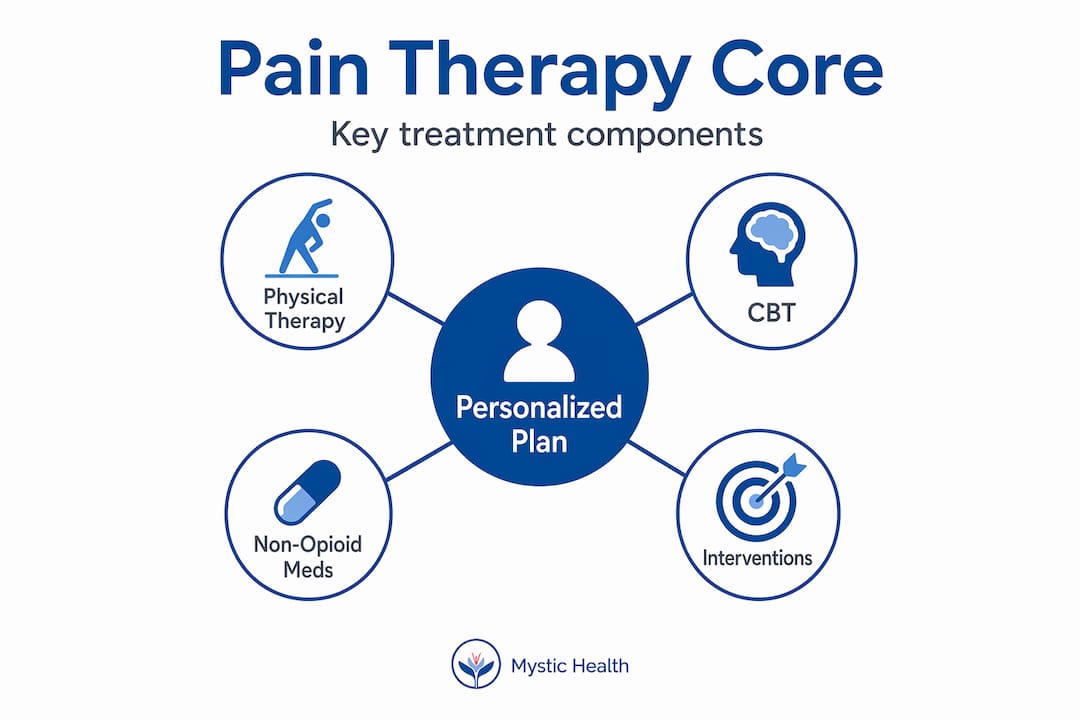
Physical therapy is probably the most misunderstood piece. Many people expect to rest their way out of pain. Physical therapy does the opposite. Graded movement recommended by the CDC and VA restores function without pushing through pain, working with your nervous system’s sensitivity rather than against it. Over weeks and months, the brain gradually recalibrates its threat response, and movement becomes less frightening.

Interventional procedures include targeted options like nerve blocks, epidural steroid injections, and spinal cord stimulation. These address specific anatomical pain sources directly, offering relief that opens a window for physical and psychological therapies to take hold.
Cognitive behavioral therapy (CBT) works on the mental and emotional amplifiers of pain. Fear of movement, catastrophizing, and learned helplessness all increase pain perception. CBT retrains those thought patterns, often producing measurable changes in how pain registers in the brain.
Non-opioid medications cover a wide range, from anticonvulsants like gabapentin used for nerve pain, to low-dose naltrexone, to topical agents. Each targets different pain mechanisms without the dependency risks of opioids.
Pain specialists create personalized plans combining medications, injections, physical therapy, and psychological support because no single approach works for complex chronic pain.
Here’s a practical sequence for how these layers typically build:
- Comprehensive diagnostic evaluation
- Identification of primary pain drivers (neurological, structural, psychological)
- Introduction of physical therapy with graded activity
- Concurrent behavioral health support
- Interventional procedures if anatomical sources are confirmed
- Non-opioid medication adjusted to specific pain type
- Regular reassessment and plan refinement
Pro Tip: Bring a written list of everything that makes your pain better or worse to your first appointment. Patterns you’ve noticed over months are clinical gold for specialists trying to identify your personal pain drivers.
The role of personalized therapy plans cannot be overstated here. Pain is deeply individual. What helps one person may be irrelevant or even counterproductive for another. Understanding psychosomatic healing, the connection between the mind’s stress response and physical pain, is often the missing piece in plans that have not worked before.
Innovative and holistic therapies enhancing pain management outcomes
Standard treatments are the foundation. But there is a growing body of evidence, and a growing community of patients, who have found meaningful relief through therapies that address the whole person, not just the pain signal.
The VA’s wHOPE trial showed something striking: a whole health team intervention improved pain interference scores more than CBT alone or usual care. The difference was the alignment of treatment goals with each patient’s personal values and life priorities. That shift from symptom-chasing to life-rebuilding changes everything.
“When treatment is organized around what matters most to the patient, not just what hurts, the results tend to outlast anything a single modality can achieve on its own.”
Psychedelic-assisted therapy is one of the most discussed emerging options, and for good reason. Psilocybin-assisted therapy has shown promising results for cancer-related distress that is comorbid with pain, enhancing mystical experiences and producing measurable symptom relief. This is not fringe medicine. It is Phase 1 clinical trial territory, moving toward mainstream application.
Other integrative pain relief techniques gaining evidence include:
- Mindfulness-based stress reduction (MBSR): Reduces the emotional reactivity that amplifies pain
- Yoga and tai chi: Improve body awareness, flexibility, and reduce pain-related anxiety
- Acupuncture: Demonstrates modest but consistent benefits for musculoskeletal and neuropathic pain
- Sound therapy and breathwork: Address the nervous system’s threat state through sensory regulation
Pro Tip: Integrative therapies work best when they are layered alongside your primary treatment plan, not substituted for it. Think of them as building your capacity to heal, not replacing the structural work.
Explore integrative mind and body approaches and how mindfulness techniques can specifically support the emotional dimensions of chronic pain. These are not add-ons. They are often where the deepest shifts happen.
Understanding interdisciplinary multimodal pain therapy programs
If you want to understand how does pain therapy work at its most organized, look at interdisciplinary multimodal pain therapy (IMPT) programs. These are structured, intensive, coordinated programs built on the biopsychosocial model, meaning they treat the physical, psychological, and social dimensions of pain together.
IMPT programs in Germany last one to four weeks, with booster sessions offered by over 50% of facilities. Day-clinic treatments have grown by 293% since 2013, reflecting how much demand has grown for this kind of care. Meanwhile, Nebraska Medicine’s chronic pain program runs over three to six months with interdisciplinary teams focusing on biopsychosocial factors and self-management skill building.
Here is how these programs typically compare:
| Program type | Duration | Key features | Best suited for |
|---|---|---|---|
| Inpatient IMPT | 2 to 4 weeks | Daily group sessions, full team access, structured schedule | Severe, complex chronic pain |
| Day-clinic IMPT | 1 to 3 weeks | Partial hospitalization, community support | Moderate chronic pain with home stability |
| Outpatient extended | 3 to 6 months | Weekly sessions, self-management focus | Building long-term coping skills |
| Booster programs | Ongoing as needed | Relapse prevention, goal recalibration | Maintaining gains after intensive care |
Daily group sessions are a feature worth pausing on. Peer support changes the experience of chronic pain in ways clinical literature is still catching up to. Hearing someone else navigate the same fears about movement or the same frustration with being dismissed by doctors creates a kind of permission to keep going.
These pain therapy programs and holistic supportive care models work because they do not rush the process. Brain rewiring, the actual neurological shift in how pain is predicted and processed, takes months of consistent practice, not days.
How to approach and personalize pain management therapy for yourself
Knowing all of this is useful. Knowing how to walk into the system and actually get what you need is the part most articles skip.
Start with a comprehensive evaluation. Pain specialists use detailed evaluations to create tailored plans combining medication, injections, physical therapy, and psychosocial support. Bring your full history, what has been tried, what helped, what made things worse, and what you actually want your life to look like.
Here is a practical framework for getting the most from your care:
- Define your goals in terms of function, not just pain scores. “I want to walk my dog again” is a better goal than “I want my pain to be a 2.” Function-based goals guide treatment more meaningfully.
- Ask your care team to explain each therapy’s role. You deserve to understand why each element is included, not just what to do.
- Track your progress in daily life, not just during appointments. Sleep quality, steps taken, social engagement all reflect real improvement.
- Request adjustment reviews every four to six weeks. Pain plans that are set and forgotten tend to drift out of alignment with where you actually are.
- Advocate for psychological support alongside physical treatment. Whole health teams aligning treatment with your values improve pain interference more than physical care alone.
Pro Tip: If your current provider dismisses psychological or integrative approaches, that is important information. The role of therapy in chronic pain is not optional in modern evidence-based care. It is central.
For those considering personalized therapy plan steps that include emerging modalities, having this framework in hand helps you ask better questions and make clearer decisions.
Why many still misunderstand pain management therapy: a fresh perspective
Here is something I have seen over and over. People arrive at pain management expecting a finish line. They want to be told when the pain will be gone. And when that promise does not come, or when the plan asks something of them rather than just offering relief, they feel let down.
That disappointment is understandable. But it rests on a misunderstanding of what pain is. Chronic pain is not a signal waiting to be turned off. It is a learned prediction the brain makes based on past experience, current threat signals, and emotional state. Programs focused on self-management, psychotherapy, and goal-setting tied to personal values help rewire those predictions by reducing the brain’s insula overactivity, the region most associated with the suffering dimension of pain.
That rewiring does not happen from a pill. It happens from repeated small wins: moving a little more, sleeping a little better, connecting with other people, finding meaning in something beyond the pain. Those wins have to be anchored to what actually matters to you, not to a generalized pain scale.
The other misunderstanding I see is the fragmentation problem. Someone sees a physical therapist on Tuesdays, a psychiatrist once a month, and takes medications prescribed by a GP who has never spoken to either of the other providers. Each piece may be good. Together, they are missing each other. Integrated, patient-centered care where the team actually communicates and where treatment goals are unified is not a luxury. It is what the evidence says produces lasting change.
Understanding psychosomatic healing insights is often the turning point for people who have tried everything and still feel stuck. The body holds what the mind has not yet processed. Effective pain therapy makes space for both.
Explore holistic pain management and psychedelic-assisted therapy with Mystic Health
If any part of this has spoken to something you’ve been carrying, you are not alone, and you do not have to keep navigating this without real support.
At Mystic Health, we offer personalized care plans that bring together integrative mental health services, psychedelic-assisted therapies, and whole-person support for people living with chronic pain, serious illness, and the emotional weight that comes with both. Our experienced team works with you to build a plan centered on your values, your goals, and your healing, not just your symptoms. Whether you are exploring ketamine-assisted therapy, Spravato, or integrative wellness approaches, we are here to guide you with compassion and clinical care. Learn more about our Mystic Health programs and take the first step toward living, not just managing.
Frequently asked questions
What does pain management therapy typically involve?
Pain management therapy involves a personalized combination of physical therapy, psychological support such as CBT, interventional procedures, and non-opioid medications, all tailored to your specific condition and life goals. Specialists build individualized plans because complex chronic pain rarely responds to any single approach.
Are opioids still used in pain management?
Opioids are no longer first-line treatments for chronic pain. Current CDC guidelines recommend non-opioid, multimodal therapies first due to better long-term outcomes and lower risks of dependence and overdose.
What is psychedelic-assisted therapy and how does it help with pain?
Psychedelic-assisted therapy uses guided sessions with substances like psilocybin to relieve emotional distress and pain, particularly when depression or anxiety is present alongside physical pain. Phase 1 research shows meaningful symptom relief for cancer-related distress and comorbid pain through enhanced psychological well-being.
How long do interdisciplinary pain therapy programs last?
These programs typically run from one to four weeks in inpatient or day-clinic settings, and over 50% of facilities offer ongoing booster sessions to protect and extend the gains made during intensive care.
Can pain management therapy completely eliminate chronic pain?
Complete elimination of chronic pain is rarely the outcome or the goal. Therapy works by reducing how the brain predicts and amplifies pain, improving your function, relationships, and quality of life so that pain takes up less of your world, even when it is still present.
Recommended

Mystic Health Blog







FAQs
1. Am I eligible for ketamine therapy?
2. Does insurance cover the cost of ketamine therapy?
3. How many ketamine treatments will I need?
We recommend two initial treatments to determine suitability and adjust dosage. After these sessions, additional treatments are available based on your progress and specific requirements.