

Personalized psychedelic therapy plans: step-by-step guide
TL;DR:
- Personalized psychedelic therapy tailors preparation, dosing, and integration based on individual history and goals.
- Effective treatment benefits conditions like depression, PTSD, and end-of-life anxiety with high remission rates.
- Safety relies on proper screening, supervised settings, thorough integration, and ethical provider practices.
If you’ve spent years cycling through therapy approaches that felt generic, distant, or simply wrong for you, you’re not alone. Many people seeking relief from depression, trauma, or anxiety find that one-size-fits-all treatment leaves them feeling unseen. Personalized treatment plans in psychedelic-assisted therapy work differently. They meet you where you are, factoring in your history, your goals, and even your values. This guide walks you through exactly how personalization works in psychedelic-assisted therapy, what the evidence says, and how to navigate the process with clarity and confidence.
Table of Contents
- What makes a treatment plan personalized?
- Step-by-step: The personalized psychedelic therapy process
- Evidence benchmarks and tailoring for specific conditions
- Risk assessment, exclusions, and common pitfalls
- The limits and ethical considerations of personalized psychedelic therapy
- The uncomfortable truth: What most guides miss about personalized psychedelic treatment
- Personalized support and programs for your journey
- Frequently asked questions
Key Takeaways
| Point | Details |
|---|---|
| Personalization boosts outcomes | Customizing each stage increases remission rates and trust, especially in depression and PTSD. |
| Preparation and integration matter most | Careful planning and post-session support are crucial for safety and sustained healing. |
| Safety screening is critical | Exclude certain mental and physical health conditions to minimize risk in psychedelic therapy. |
| Ethical standards and limits | Therapy is still early-stage—choose providers committed to consent, training, and ongoing care. |
| Integration maximizes lasting change | Leveraging the neuroplasticity window after dosing enables real-world improvements. |
What makes a treatment plan personalized?
Personalization in therapy isn’t just a buzzword. It means your clinician looks at the full picture of who you are before a single session begins. That includes your mental health history, any conditions you’re managing alongside your primary concern, your personal goals, and even your cultural background or spiritual beliefs.
In psychedelic-assisted therapy specifically, personalization key to transformation means tailoring preparation, dosing, set and setting, and integration to individual factors like mental health history, goals, comorbidities, and demographics. These aren’t small adjustments. They can be the difference between a session that opens a door and one that leaves you more confused than before.
Factors that shape a personalized plan include:
- Mental health history: Prior trauma, diagnoses, and previous treatment responses
- Current medications: Especially SSRIs, which can affect psychedelic response
- Personal goals: What you actually want to heal or understand
- Demographic factors: Age, cultural identity, and spiritual orientation, since demographic influences on outcomes are well documented
- Substance use history: Prior psychedelic experience shapes dosing and preparation needs
The preparation phase is where trust is built. Your therapist gets to know your story, clarifies your intentions, and helps you feel safe before anything else happens. This matters more than most people realize. Understanding how culture and emotion in psychedelic healing interact, for example, can reshape how a session is framed and supported.
Generic vs. personalized treatment plan
| Element | Generic plan | Personalized plan |
|---|---|---|
| History review | Minimal | In-depth, multi-session |
| Dosing | Standard protocol | Adjusted to individual factors |
| Set and setting | Default clinical space | Tailored environment and music |
| Integration support | Brief follow-up | Ongoing, structured sessions |
| Cultural sensitivity | Rarely addressed | Central to planning |
Exploring holistic approaches for mental health alongside psychedelic therapy often strengthens outcomes by addressing the whole person, not just symptoms.
Pro Tip: Before you commit to any program, ask your provider directly: “How will my treatment plan be tailored to my specific history and goals?” If the answer feels vague, keep looking.
Step-by-step: The personalized psychedelic therapy process
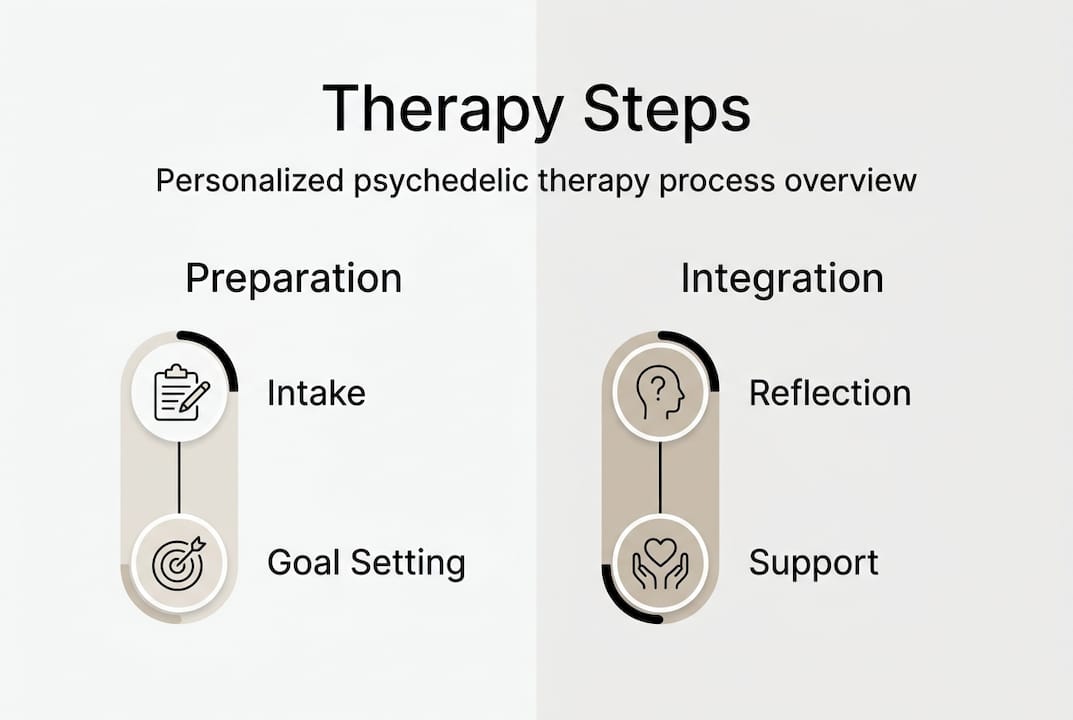
Once you know the factors affecting a plan, it’s time to see how those are woven into the entire therapeutic journey. The core methodology follows three stages: preparation, dosing session, and integration. Each one is shaped by what you’ve shared with your care team.
The three stages:
- Preparation: You and your therapist meet multiple times before any dosing occurs. You build rapport, set clear intentions, and review your mental health history in depth. Research shows that greater depression reduction with more prep is linked to each additional hour of preparation time (p=0.04). This isn’t filler. It’s foundational.
- Dosing session: The session itself typically lasts six to eight hours. You’ll be in a carefully designed environment with curated music, a comfortable space, and therapist support throughout. The goal isn’t to “trip” but to allow whatever arises to be witnessed and processed safely. Integrative care for psychedelic therapy supports this phase by ensuring the clinical and emotional elements work together.
- Integration: This is where real change takes root. In the days and weeks after dosing, your brain is in a heightened state of neuroplasticity. You work with your therapist to process insights, shift patterns, and make behavioral changes. Predictive personalization using machine learning is even being explored to optimize how integration is timed and structured for each person.
Typical session structure
| Phase | Duration | Key activities |
|---|---|---|
| Pre-session prep | 2-4 weeks | History review, intention setting |
| Dosing session | 6-8 hours | Supervised experience, music, support |
| Immediate integration | 24-72 hours | Debrief, journaling, rest |
| Ongoing integration | 4-8 weeks | Therapy sessions, behavioral work |
Practicing mindfulness in psychedelic-assisted therapy throughout all three stages helps you stay grounded and open, especially during integration when emotions can feel intense.
Evidence benchmarks and tailoring for specific conditions
Understanding the protocol is important, but what can you expect from real-world results? Here’s what the data shows when personalization is applied.
The numbers are genuinely encouraging. Empirical benchmarks show MDMA-assisted therapy for PTSD produces a CAPS-5 reduction of 24.4 points versus 13.9 for placebo, and psilocybin therapy achieves remission rates of up to 71% for depression. These aren’t small effects.
71% remission rate for depression with personalized psilocybin-assisted therapy, compared to 32-67% variance in traditional CBT and SSRI response rates.
Machine learning and traditional response rates show that conventional treatments like CBT and SSRIs predict response variance between 32% and 67%, with remission reaching 71% under optimized psychedelic protocols. Personalization is a key driver of that gap.
Conditions that see the most benefit from personalized psychedelic therapy include:
- Treatment-resistant depression: Especially when previous medications have failed
- PTSD: Particularly complex or chronic trauma
- End-of-life anxiety: Profound relief reported in palliative settings
- Addiction: Including alcohol and tobacco use disorders
- Existential distress: Common in serious illness or major life transitions
For a deeper look at how psilocybin outcomes compare across populations, the data consistently points toward personalization as the variable that matters most. Comparing approaches is also valuable. Understanding CBT versus psychedelic therapy helps you make an informed choice about what fits your situation. You can also review clinical evidence for psychedelic therapies to see the full scope of what’s been studied.
Risk assessment, exclusions, and common pitfalls
With powerful therapies come serious responsibilities. Let’s ensure your safety and maximize benefit by reviewing risk factors and pitfalls.
Not everyone is a candidate for psychedelic-assisted therapy. Screening and risk mitigation guidelines exclude individuals with psychosis, bipolar disorder, cardiac issues, and those on SSRIs, which can blunt the psychedelic response. Preparation and integration are the primary tools for mitigating risks in those who do qualify.
Trial exclusions and bias research confirms that psychosis, schizophrenia, bipolar disorder, and heart disease are consistent exclusion criteria across clinical trials, and 75% of trials show high bias due to blinding challenges. This matters when interpreting results.
“Proper preparation and structured integration aren’t optional add-ons. They are the safety net that makes psychedelic therapy viable for the people it can genuinely help.”
Common pitfalls to avoid:
- Unsupervised use: Without clinical support, risks escalate significantly. Clinical setting safety data consistently shows better outcomes in supervised environments.
- Skipping integration: Many people feel great immediately after dosing and skip follow-up sessions. This is one of the most common mistakes.
- Poor screening: Entering therapy without a thorough intake process puts you at risk, especially if you have undisclosed conditions.
- Medication conflicts: Always disclose every medication you take. SSRIs in particular can interfere with the therapeutic effect.
- Unrealistic expectations: Psychedelic therapy is not a single-session fix. It’s a process.
Reviewing safety and ethical training in psychedelic therapy with your provider helps you understand what responsible care actually looks like.
Pro Tip: Before starting any program, ask your provider to walk you through their full risk assessment and exclusion criteria. A trustworthy clinic will welcome the question.
The limits and ethical considerations of personalized psychedelic therapy
To round out your guide, it’s critical to know the boundaries and ethical responsibilities, especially as the field evolves.

The honest truth is that the evidence, while exciting, is still early-stage. Contrasting views and ethical standards research notes that most studies are small, short-term, and lack standardized reporting. The ReSPCT framework, which covers 30 reporting items, is one effort to bring consistency to how results are shared and interpreted.
FDA views and set/setting consensus describe psychedelic-assisted therapy as a “black box” in terms of mechanism, though there is growing consensus on the importance of set and setting in shaping outcomes.
“Hype is real in this space. When expectations outpace evidence, people get hurt, not by the medicine itself, but by the gap between what they hoped for and what actually happened.”
An ethical checklist for choosing a provider:
- Verified clinical training and licensure for all therapists
- Clear informed consent process before any dosing
- Structured integration support included in the program
- Transparent exclusion criteria and screening process
- No promises of guaranteed outcomes
- Ongoing follow-up care after the program ends
Combining psychotherapy and psychedelics ethically means the medicine is never the whole story. The therapeutic relationship, the preparation, and the integration work are what make the experience meaningful and lasting. Exploring holistic benefits in therapy alongside clinical treatment often fills gaps that medication alone cannot address.
The uncomfortable truth: What most guides miss about personalized psychedelic treatment
Having reviewed the main steps and ethical boundaries, here’s what most standard guides quietly skip over.
Integration is consistently underestimated. People focus on the dosing session because it’s dramatic and memorable. But the neuroplasticity window that opens afterward, typically lasting days to weeks, is where the actual rewiring happens. Miss that window, and the insights fade. Use it well, and real transformation becomes possible.
Generic “psychedelic protocols” also miss something deeper: your specific story. Your particular traumas, your cultural identity, your relationship with spirituality, none of that fits into a standardized checklist. That’s why we believe so strongly in programs that treat preparation and integration as the core of care, not the bookends.
Unsupervised approaches, however well-intentioned, carry real risks of lasting psychological distress. This isn’t about gatekeeping. It’s about respect for how powerful these experiences can be. Reviewing ethical training perspective from experienced practitioners helps ground this point in lived clinical wisdom.
Pro Tip: Seek programs that prioritize deep integration and ongoing support, not just the session itself. That’s where healing actually lives.
Personalized support and programs for your journey
If you’re ready to take the next step, here’s where you can find customizable programs and professional guidance.
At Mystic Health, we’ve built our approach around the belief that healing is personal. No two people arrive at our door with the same history, and no two treatment plans should look identical. Whether you’re exploring psychedelic-assisted therapy for the first time or looking to deepen an existing healing journey, we offer structured, compassionate support at every stage.
Our mindful self compassion course supports your integration work with grounded, evidence-based mindfulness practices. For a full overview of what personalized care looks like in practice, explore our psychedelic therapy program details. And if you want to understand how psychedelic therapy fits within a broader healing framework, our integrative mental health resources are a strong place to start.
Frequently asked questions
How is a personalized psychedelic treatment plan developed?
Clinicians assess your mental health history, goals, comorbidities, and demographic factors to tailor every stage of preparation, dosing, and integration. Personalization key to transformation means no two plans look the same.
What types of conditions see the most benefit from personalized psychedelic therapy?
Depression and PTSD show the highest remission rates in clinical studies, with up to 71% remission for depression and significant CAPS-5 reductions for PTSD using MDMA-assisted protocols.
Are there risks or reasons someone should not pursue psychedelic-assisted therapy?
Yes. Those with psychosis, bipolar disorder, heart conditions, or who take SSRIs should avoid psychedelic therapy. Screening and risk mitigation protocols exist precisely to protect people from harm.
Why is integration after dosing so important?
Integration uses the neuroplasticity window after dosing to solidify insights, prevent setbacks, and enable meaningful behavioral change that lasts beyond the session.
Is psychedelic-assisted therapy a ‘magic bullet’ for mental health?
No. The evidence is promising but early-stage, and ethical standards and integration are essential for lasting results. Therapy, support, and ongoing care must accompany any psychedelic treatment.
Recommended

Mystic Health Blog







FAQs
1. Am I eligible for ketamine therapy?
2. Does insurance cover the cost of ketamine therapy?
3. How many ketamine treatments will I need?
We recommend two initial treatments to determine suitability and adjust dosage. After these sessions, additional treatments are available based on your progress and specific requirements.