Step-by-step holistic healing guide for mental health
You want to feel better, think clearer, and grow as a person, but the sheer number of holistic healing options can overwhelm you. Should you try meditation first or explore modern therapies like psychedelic-assisted treatment? This guide walks you through a practical, step-by-step approach that integrates traditional wellness practices with evidence-based modern therapies. You’ll learn how to prepare your mind and environment, implement healing techniques in a logical sequence, monitor your progress, and troubleshoot common obstacles along the way.
Table of Contents
- Key takeaways
- Understanding holistic healing and preparing for your journey
- Step-by-step methods to integrate traditional and modern holistic therapies
- Monitoring progress and troubleshooting common challenges in holistic healing
- Explore holistic healing programs at Mystic Health
- Frequently asked questions
Key Takeaways
| Point | Details |
|---|---|
| Whole person view | Holistic healing treats mental, physical, and spiritual aspects together rather than just focusing on symptoms. |
| Preparation and mindset | Preparation sets the stage for lasting change by aligning space, intention, and daily commitment. |
| Structured step sequence | A logical progression blends traditional practices with modern therapies to shape a cohesive healing routine. |
| Progress tracking | Regular monitoring helps tailor practices, measure gains, and keep motivation high. |
| Professional support | Guidance from qualified practitioners improves safety alignment and outcomes when combining therapies. |
Understanding holistic healing and preparing for your journey
Holistic healing represents a comprehensive approach that treats you as a whole person rather than isolating symptoms. Unlike conventional medicine’s typical focus on specific ailments, integrative mental health addresses mental, physical, and spiritual dimensions simultaneously. This method recognizes that your emotional state affects your body, your physical health influences your mental clarity, and your spiritual connection shapes both.
Before diving into specific practices, you need to prepare yourself mentally and emotionally. This preparation phase determines whether your healing journey will feel empowering or frustrating. Start by acknowledging that transformation takes time and commitment. You’re not looking for quick fixes but sustainable change that reshapes how you experience life.
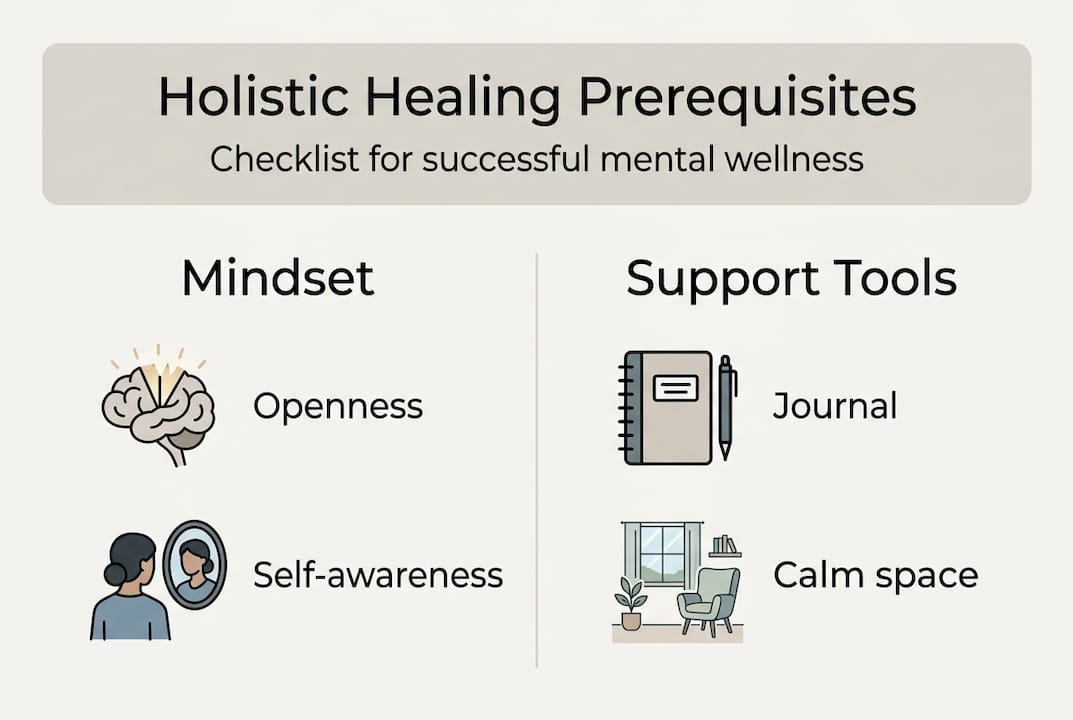
Your physical environment plays a crucial role in supporting healing work. Create a dedicated space in your home where you can practice without interruptions. This doesn’t require an entire room; a corner with a comfortable cushion, soft lighting, and minimal distractions works perfectly. Keep this area clean and organized, as external order often supports internal clarity.
Gather essential tools before beginning your practice. A journal for tracking insights and emotions becomes invaluable for monitoring progress. Consider acquiring items that support traditional practices: meditation cushions, calming essential oils, herbal teas, or gentle music. For modern therapy integration, research qualified practitioners and treatment centers that align with your goals and values.
Several prerequisites increase your chances of success. Openness to new experiences allows you to engage fully with unfamiliar practices. Commitment to consistency matters more than intensity; practicing 15 minutes daily outperforms sporadic three-hour sessions. Most importantly, consult healthcare professionals before combining therapies, especially if you take medications or have existing health conditions. Research shows that extend beyond physical health to encompass emotional resilience and mental clarity.
Pro Tip: Set your healing space near a window with natural light. Sunlight exposure regulates circadian rhythms and boosts mood, creating an optimal environment for introspective work and meditation practices.
Step-by-step methods to integrate traditional and modern holistic therapies
Integrating traditional wellness practices with modern therapeutic approaches requires a structured sequence. Follow these steps to build a comprehensive healing routine that addresses multiple dimensions of wellbeing.
Traditional Practice Integration:
- Start with basic breathwork and meditation. Dedicate 10 minutes each morning to simple breath awareness, gradually extending to 20-30 minutes as comfort increases.
- Introduce gentle movement practices like yoga, tai chi, or qigong. These ancient disciplines connect breath, movement, and awareness while releasing physical tension.
- Explore herbal support under professional guidance. Adaptogenic herbs like ashwagandha or rhodiola can support stress resilience when used appropriately.
- Practice energy balancing techniques such as acupressure or self-massage. These methods promote circulation and release blocked energy patterns.
- Establish consistent sleep hygiene and nutrition habits. Quality rest and whole foods provide the foundation for all other healing work.
Modern Therapy Integration:
- Schedule an initial consultation with qualified practitioners specializing in integrative approaches. Discuss your goals, health history, and readiness for advanced modalities.
- Complete any required medical screenings or psychological assessments. These ensure safety and identify contraindications before beginning treatment.
- Engage in preparatory sessions that combine mindfulness and psychedelic-assisted therapies to build coping skills and set intentions.
- Participate in professionally supervised treatment sessions, whether ketamine-assisted psychotherapy, Spravato treatments, or other evidence-based modalities.
- Attend integration sessions that help you process insights and translate experiences into lasting behavioral changes.
- Maintain ongoing support through therapy, peer groups, or coaching to sustain progress over time.
| Approach Type | Primary Benefits | Key Considerations | Timeline |
|---|---|---|---|
| Traditional Practices | Accessible, low cost, builds daily resilience, minimal side effects | Requires consistent practice, slower visible results, self-discipline essential | 4-12 weeks for noticeable shifts |
| Modern Therapies | Rapid breakthrough potential, professional guidance, evidence-based protocols | Higher cost, requires medical screening, integration work necessary | 1-6 sessions for initial impact |
| Combined Approach | Synergistic effects, comprehensive healing, addresses multiple dimensions | Coordination needed, time investment, professional oversight important | 8-16 weeks for integrated results |
The sequence matters significantly. Establishing traditional practices first creates stability and self-awareness that enhance modern therapy outcomes. You develop observational skills through meditation that help you navigate intense therapeutic experiences. Your nervous system becomes more regulated through breathwork, allowing deeper processing during advanced treatments.

Explore various holistic healing programs that combine these approaches systematically. Structured programs remove guesswork and provide expert sequencing based on clinical experience. They also offer accountability and community support that sustain motivation during challenging phases.
Many people find that designed for busy lifestyles help maintain consistency. You don’t need hours of free time; strategic 15-minute practices throughout your day accumulate significant benefits.
Pro Tip: Pace your integration carefully by adding only one new practice every two weeks. This prevents overwhelm and allows you to assess each method’s individual impact before layering additional techniques.
Monitoring progress and troubleshooting common challenges in holistic healing
Tracking your healing journey helps you recognize subtle shifts that might otherwise go unnoticed. Emotional indicators include increased resilience when facing stressors, faster recovery from setbacks, and more frequent moments of genuine contentment. Mental signs involve clearer thinking, improved focus, reduced rumination, and enhanced creativity. Physical markers encompass better sleep quality, increased energy, reduced chronic pain, and improved digestion.
Keep a simple daily log rating your mood, energy, sleep quality, and stress levels on a 1-10 scale. Review weekly patterns rather than obsessing over daily fluctuations. Notice trends over 4-6 week periods, as holistic healing rarely produces linear progress. You might experience plateaus, temporary regression, or sudden breakthroughs that reshape your entire perspective.
Common challenges emerge predictably during healing work. Emotional resistance often surfaces as you approach deeply buried pain or trauma. Your psyche naturally protects you from overwhelming experiences, so resistance indicates you’re touching significant material. Rather than forcing through, slow down and increase support resources.
Integration difficulties occur when insights from therapy sessions don’t translate into daily life changes. You might have profound realizations during treatment but struggle to embody new patterns afterward. This gap requires deliberate integration practices: journaling, therapy processing, lifestyle adjustments, and community support.
Plateaus feel frustrating but serve important purposes. Your system needs consolidation time to stabilize new patterns before advancing further. During plateaus, maintain your practices without adding intensity. Trust that invisible restructuring continues beneath surface awareness.
Troubleshooting Strategies:
- If meditation feels agitating rather than calming, switch to movement-based practices temporarily or reduce session length to 5 minutes.
- When emotional overwhelm occurs, prioritize grounding techniques like nature walks, physical exercise, or connecting with supportive friends.
- If you experience physical symptoms during healing work, consult healthcare providers to rule out medical issues requiring separate treatment.
- When motivation drops, reconnect with your original intentions and review progress notes to recognize how far you’ve traveled.
- If specific practices trigger anxiety or discomfort, pause them and discuss alternatives with qualified practitioners.
| Progress Type | Healthy Signs | Stalled Progress Indicators |
|---|---|---|
| Emotional | Increased resilience, appropriate emotional range, faster recovery from setbacks | Persistent numbness, extreme mood swings, inability to access feelings |
| Mental | Clearer thinking, reduced rumination, creative problem-solving | Obsessive thoughts, decision paralysis, cognitive fog |
| Physical | Improved sleep and energy, reduced pain, better digestion | Chronic fatigue, new physical symptoms, sleep disturbances |
| Spiritual | Sense of meaning, connection to something larger, inner peace | Existential emptiness, disconnection, loss of purpose |
| Relational | Healthier boundaries, authentic communication, meaningful connections | Isolation, conflict patterns, inability to trust |
Research demonstrates that personalized treatment plans with ongoing adjustments produce superior outcomes compared to rigid protocols. Your healing journey is unique, requiring flexibility and responsiveness to your changing needs. Regular check-ins with practitioners help identify when modifications serve your progress.
Seeking professional guidance becomes essential when you encounter persistent obstacles, intense emotional material, or questions about combining therapies safely. Holistic treatment programs provide structured support while allowing personalization based on your responses. Studies on confirm that combining approaches with expert guidance accelerates results while minimizing risks.
Remember that setbacks don’t erase progress. Healing follows a spiral pattern where you revisit similar themes at deeper levels. Each cycle through familiar territory offers opportunities for more profound integration and understanding.
Explore holistic healing programs at Mystic Health
Transforming your mental health and personal growth requires more than information; it demands expert guidance and proven frameworks. Mystic Health specializes in psychedelic medicine programs that combine cutting-edge therapies with traditional wisdom practices. Their approach integrates ketamine-assisted psychotherapy, Spravato treatments, and other evidence-based modalities within a compassionate, safety-focused environment.
Their mindfulness course specifically supports psychedelic-assisted therapy by building essential skills for navigating intense experiences and integrating insights. You’ll work with experienced practitioners who create personalized treatment plans addressing your unique needs, goals, and circumstances.
The integrative mental health services at Mystic Health extend beyond symptom management to facilitate genuine transformation. Whether you’re addressing depression, anxiety, trauma, or seeking deeper self-understanding, their comprehensive programs provide the structure and support necessary for sustainable change. Visit their website to learn how professional guidance can accelerate your holistic healing journey.
Frequently asked questions
What is holistic healing and how does it differ from conventional medicine?
Holistic healing addresses your mental, physical, and spiritual dimensions simultaneously rather than isolating specific symptoms. While conventional medicine excels at treating acute conditions and specific diseases, holistic approaches focus on prevention, root causes, and overall wellbeing. This integration creates comprehensive healing that transforms your entire life experience, not just alleviates individual complaints.
How do I combine modern therapies with traditional holistic practices safely?
Consult qualified healthcare providers to create a personalized plan that accounts for your health history, medications, and goals. Start gradually with one or two practices, monitoring your responses closely before adding complexity. Evidence-based programs with professional oversight provide the safest framework for integration, ensuring therapies complement rather than contradict each other.
What are the signs that a holistic healing approach is working?
Improved emotional resilience, mental clarity, physical vitality, and inner peace indicate meaningful progress. You’ll notice faster recovery from stressful events, reduced reactivity to triggers, and more frequent experiences of contentment. Positive lifestyle changes emerge naturally as you feel better, including healthier relationship patterns, improved self-care habits, and reduced reliance on numbing behaviors.
Can psychedelic-assisted therapy be part of holistic healing?
Psychedelic-assisted therapy supports holistic mental health treatment when integrated carefully with preparation and follow-up care. These therapies catalyze rapid insights and emotional breakthroughs that complement ongoing traditional practices. Combining them with mindfulness training, integration therapy, and lifestyle modifications creates a comprehensive healing framework that addresses consciousness, behavior, and wellbeing simultaneously for optimal personal growth outcomes.
How long does it take to see results from holistic healing practices?
Timelines vary based on your starting point, consistency, and specific practices chosen. Traditional methods like meditation typically show noticeable benefits within 4-8 weeks of daily practice. Modern therapies can produce rapid shifts within single sessions, though integrating those insights into lasting change requires ongoing work. Most people experience meaningful transformation within 3-6 months of committed, multi-dimensional practice.
Recommended

Mystic Health Blog








FAQs
1. Am I eligible for ketamine therapy?
2. Does insurance cover the cost of ketamine therapy?
3. How many ketamine treatments will I need?
We recommend two initial treatments to determine suitability and adjust dosage. After these sessions, additional treatments are available based on your progress and specific requirements.