Understanding Supportive Care: Holistic Approaches for Serious Illness
TL;DR:
- Supportive care is a comprehensive, team-based approach that begins at diagnosis and addresses physical, emotional, social, spiritual, and informational needs throughout illness. It is distinct from palliative and hospice care, serving anyone with serious or chronic conditions from early stages through survivorship. Starting supportive care early enhances quality of life, reduces suffering, and fosters hope by integrating holistic therapies alongside active treatment.
Many people hear the phrase “supportive care” and assume it means one thing: end-of-life care. That assumption leads families to hold off, to wait until things feel truly desperate before asking for this kind of help. But that waiting comes at a real cost, emotionally, physically, and even practically. Supportive care is not a last resort. It is a living, breathing approach to illness that can begin the moment someone receives a difficult diagnosis, running alongside active treatment and continuing well into survivorship or beyond. Understanding what it actually is, and what it can do for you, changes everything about how you show up for yourself during one of life’s hardest chapters.
Table of Contents
- What is supportive care and why does it matter?
- Key components of supportive care: Multidimensional and team-based
- Supportive care for pain and mental health: A holistic, coordinated approach
- How is supportive care measured and delivered in practice?
- Supportive care versus palliative care: Clearing up confusion
- Why embracing supportive care early changes everything
- Explore holistic supportive care with Mystic Health
- Frequently asked questions
Key Takeaways
| Point | Details |
|---|---|
| Not just end-of-life | Supportive care starts at diagnosis and continues throughout all illness phases. |
| Holistic and team-based | Effective supportive care addresses physical, emotional, social, and spiritual needs using multidisciplinary teams. |
| Better chronic pain & mental health results | Integrating mental health and complementary therapies improves pain and quality of life outcomes. |
| Measurement guides care | Standardized assessment tools help teams track symptoms and tailor interventions continuously. |
| Early access makes a difference | Accessing supportive care early can greatly reduce suffering and improve long-term well-being. |
What is supportive care and why does it matter?
Supportive care resists easy categorization. There is no single universal definition, and that can feel frustrating when you’re trying to understand your own care options. At its core, though, supportive care addresses informational, emotional, spiritual, social, and physical needs across every phase of illness. It is a methodology, not a place you go or a single appointment you make.
Think about what it means to live with a serious illness. On any given day, you might be managing physical pain, processing fear about your prognosis, navigating insurance paperwork, or trying to explain your situation to a frightened family member. Supportive care holds space for all of that. It recognizes that illness touches every dimension of who you are, not just the part that can be scanned or biopsied.
“Supportive care is not something that begins when curative treatment ends. It begins at diagnosis and continues through treatment, recovery, palliation, and even the grief that follows loss.”
That framing matters. It means integrative mental health approaches belong in the supportive care conversation just as much as pain medication or physical therapy. It also means that supportive care is distinct from, though often overlapping with, palliative care and hospice.
| Care model | When it applies | Primary focus | Who receives it |
|---|---|---|---|
| Supportive care | Diagnosis through bereavement | Whole-person symptom and needs management | Anyone with serious or chronic illness |
| Palliative care | Advanced or life-limiting illness | Comfort and quality of life | Patients with serious prognosis |
| Hospice care | Final months of life (typically 6 months or less) | End-of-life comfort | Patients who have stopped curative treatment |
These distinctions are genuinely important. Knowing them means you can advocate for the right kind of help at the right time.
Key components of supportive care: Multidimensional and team-based
The reason supportive care feels different from a single doctor’s appointment is because it is genuinely different in structure. Multidisciplinary team delivery is one of its defining characteristics, bringing together medical professionals, psychologists, social workers, spiritual care providers, and rehabilitation therapists under a shared framework of support.
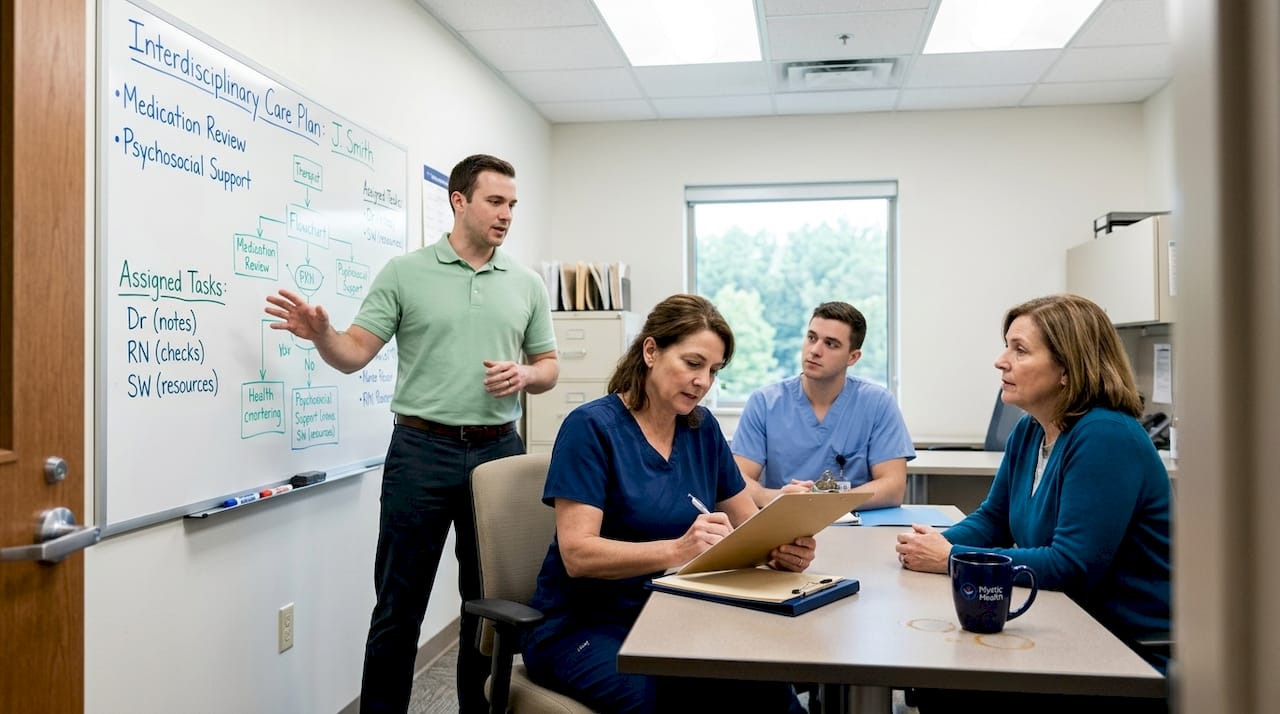
Each member of this team contributes something the others cannot fully cover. Your physician manages disease-related symptoms. A counselor helps you process grief or fear. A social worker navigates community resources and family dynamics. A chaplain or spiritual care provider may sit with you in the questions that medicine cannot answer. Together, they build a kind of safety net that catches things that would otherwise slip through the cracks of standard medical care.
What does this look like in practice? Here are the core domains a good supportive care program typically addresses:
- Physical needs: Pain, fatigue, nausea, sleep disturbance, and other symptoms that affect daily functioning
- Emotional needs: Anxiety, depression, fear, grief, and the psychological weight of illness
- Social needs: Family communication, caregiver support, financial guidance, and access to community resources
- Spiritual needs: Questions of meaning, purpose, and existential peace, regardless of religious affiliation
- Informational needs: Clear explanations of diagnosis, treatment options, and what to expect at each stage
For practical coping strategies that connect to these needs, the evidence points consistently in one direction: earlier is better. You can also find real grounding in what emotional and spiritual support looks like in practice for those navigating serious illness. For people managing long-term conditions, can complement clinical care in meaningful ways.
Pro Tip: Don’t wait until symptoms feel unbearable before asking about supportive care. Research consistently shows that earlier integration, even at diagnosis, produces better physical and emotional outcomes over the long run. Raise it with your care team now, not later.
Supportive care for pain and mental health: A holistic, coordinated approach
Pain and mental health are rarely separate problems. They inform and amplify each other in ways that make treating just one of them, in isolation, a losing strategy. Someone living with cancer-related pain who also carries unaddressed depression will find that the pain feels more overwhelming and harder to manage. And someone whose anxiety goes untreated may experience physical symptoms that seem to have no clear medical cause.
Chronic pain outcomes improve significantly when care addresses co-occurring mental health concerns and uses a biopsychosocial model that integrates both pharmacologic treatments, like medication, and nonpharmacologic approaches, like mindfulness, physical therapy, and counseling. That word “biopsychosocial” is worth unpacking. It simply means treating the biology (the physical body), the psychology (thoughts, emotions, and behavior), and the social context (relationships, environment, and support systems) as inseparable parts of one experience.
Here is what a holistic, coordinated approach to pain and mental health can look like in real terms:
- Comprehensive assessment: Identifying not just pain intensity but also mood, sleep, functional capacity, and relationships
- Individualized treatment planning: Selecting modalities based on your specific needs, not a one-size-fits-all protocol
- Medication review and management: Addressing physical symptoms while minimizing side effects that could worsen mood or cognition
- Counseling and psychotherapy: Processing trauma, fear, or grief that may be woven into the pain experience
- Mindfulness and body-based practices: Helping regulate the nervous system and shift the relationship with pain over time
- Rehabilitation therapies: Physical and occupational therapy to restore function and confidence
- Regular reassessment: Adjusting the plan as your needs evolve, rather than treating supportive care as a one-time intervention
Consider someone living with late-stage cancer who reports that pain is a seven out of ten on a typical day. When their care team adds structured psychological support alongside pain medication, many patients report feeling like they finally have space to breathe again. Not because the pain disappeared, but because the fear, helplessness, and isolation around it began to ease. This is the power of integrative emotional healing when applied with intention and care.
For personalized holistic therapy, the goal is almost never the complete elimination of all symptoms. It is realistic, meaningful improvement, the kind that lets you reconnect with what matters most to you. You can also find additional guidance on that complement clinical care.
Pro Tip: Ask your care team specifically about non-drug approaches to pain. Mindfulness-based stress reduction, occupational therapy, and cognitive-behavioral therapy for pain are all evidence-supported options that many people do not know to request. You deserve access to the full range of tools available.
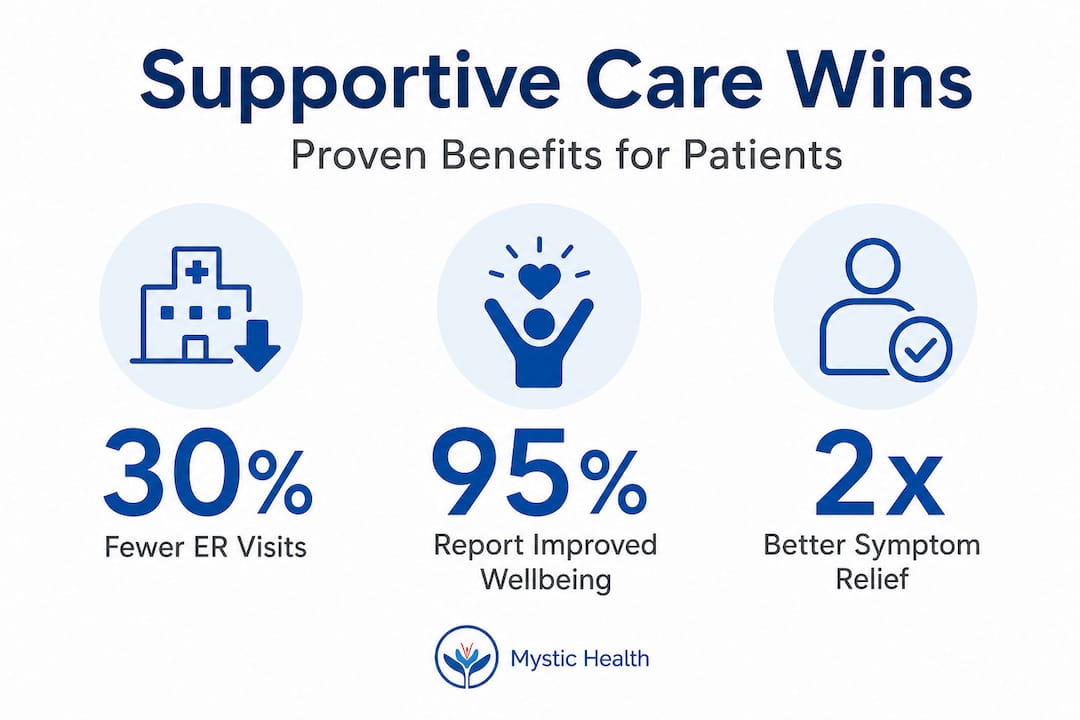
Statistic to know: Studies show that patients who receive integrated mental health support alongside physical pain management report measurably higher quality-of-life scores and lower rates of emergency care use. The body and mind are not separate systems, and your care should reflect that.
How is supportive care measured and delivered in practice?
One thing that surprises many people is how structured and data-driven supportive care has become. It is not just a series of kind conversations. It uses validated measurement tools to track how you are doing over time and to ensure that interventions are actually working. This kind of accountability matters because it keeps care responsive to your changing needs.
Structured symptom assessment tools like the Edmonton Symptom Assessment System (ESAS) and the Palliative Outcome Scale (POS) are widely used to gather regular, standardized data on how patients are feeling. These tools measure things like pain intensity, fatigue, nausea, anxiety, depression, appetite, and overall sense of wellbeing, usually on a simple numerical scale that patients complete themselves.
| Assessment tool | What it measures | How it’s used |
|---|---|---|
| Edmonton Symptom Assessment System (ESAS) | Pain, fatigue, nausea, anxiety, depression, appetite, and more | Regular check-ins to track symptom trends |
| Palliative Outcome Scale (POS) | Physical, psychological, existential, and family concerns | Structured outcome tracking over time |
| Patient Health Questionnaire (PHQ-9) | Depression severity | Mental health screening and monitoring |
| Generalized Anxiety Disorder Scale (GAD-7) | Anxiety severity | Mental health screening and monitoring |
Here is how integrated supportive care delivery models typically work in practice:
- Universal referral programs offer supportive care to every patient with a serious diagnosis, not just those in crisis
- Screening at diagnosis ensures needs are captured early rather than reactively
- Interdisciplinary team meetings allow providers across specialties to align care plans and flag concerns
- Regular reassessment adjusts the plan as circumstances change
For people navigating cancer and serious illness, exploring cancer and palliative care options helps clarify which of these frameworks applies to your current stage of care. Understanding the between supportive, palliative, and curative models is also useful when discussing options with your medical team.
Supportive care versus palliative care: Clearing up confusion
This is one of the most common points of confusion, and honestly, it is understandable. The terms overlap, and different institutions and countries use them differently. Even many clinicians use them interchangeably, which does not help.
Here is what you need to know. Both supportive and palliative care aim to improve quality of life and reduce suffering. But they are not exactly the same thing.
“Palliative care improves quality of life for patients facing life-threatening illness by preventing and relieving suffering through early identification and impeccable assessment and treatment of pain and other problems, physical, psychosocial, and spiritual.” The palliative care definition grounds it specifically in the context of life-threatening illness.
Supportive care, on the other hand, applies more broadly. Someone in remission who is still managing fatigue and anxiety is a candidate for supportive care. Someone who had surgery for a chronic condition and is rebuilding strength and confidence is a candidate for supportive care. It does not require a terminal or life-limiting prognosis.
Key distinctions worth holding onto:
- Palliative care is commonly triggered by a serious or life-limiting diagnosis; supportive care begins at diagnosis regardless of prognosis
- Supportive care explicitly includes survivorship and bereavement phases; palliative care is less clearly defined in those contexts
- The language of palliative care carries a cultural weight that supportive care does not, which affects how and when people choose to ask for it
- Some institutions use “supportive care” deliberately to reduce the fear and stigma associated with “palliative care”
If you want to go deeper into what this looks like holistically, palliative care approaches from an integrative perspective offer a grounding starting point.
Why embracing supportive care early changes everything
Here is what I have seen, and what the research confirms: most families wish they had asked for supportive care sooner. Not at the moment of crisis. Not when the pain was unbearable or the depression had grown so heavy it was hard to get out of bed. Earlier. Much earlier.
There is a deeply ingrained cultural habit of enduring, of waiting until things become truly unmanageable before asking for help. And in healthcare, that habit is especially costly. When supportive care is integrated early, the emotional burden on both patients and caregivers shifts. Communication becomes clearer. Self-management skills build gradually rather than being thrown together in a panic. People often report a sense of hope, not because their illness has improved, but because they feel genuinely held by a team that sees all of them.
The financial implications are real too. Early supportive care tends to reduce emergency room visits, hospital readmissions, and the kind of crisis-driven costs that accumulate when needs go unmet for too long. This is not a minor point for families already stretched thin by treatment expenses.
What we believe at Mystic Health is that whole-person health is not a luxury tier of care reserved for those in the final chapter of illness. It is what care should look like from the very beginning. The science supports this. More importantly, the lived experience of people who have walked this path supports it.
If you take one thing from this guide, let it be this: you do not have to earn the right to full, integrated support by reaching a certain level of suffering. You deserve it now, wherever you are in your journey.
Explore holistic supportive care with Mystic Health
If this guide has given you a clearer sense of what supportive care can look like, we would love to help you take the next step.
At Mystic Health, we offer integrative mental health programs designed around exactly the principles explored here: team-based, whole-person, deeply compassionate care that does not wait for a crisis to begin. Whether you are navigating chronic pain, emotional exhaustion, a serious illness diagnosis, or the complex grief that can come with all of the above, our supportive care programs bring together evidence-based therapies and holistic modalities in one coordinated space. For those looking to build foundational resilience and nervous system support, our mindfulness and compassion course is a meaningful place to start.
Frequently asked questions
Is supportive care only for cancer patients?
No, supportive care is for anyone with a serious or chronic illness, including those managing pain, mental health concerns, or life-limiting conditions. Supportive care spans diagnostic, treatment, survivorship, palliation, and bereavement phases, making it relevant across many illness journeys.
How does supportive care improve quality of life?
By meeting physical, emotional, social, and spiritual needs through multidisciplinary team-based integrated care, supportive care reduces daily suffering and helps people stay more connected to what matters most to them.
What are examples of supportive care therapies?
Examples include pain and symptom management, counseling, family meetings, spiritual support, mindfulness, and rehabilitation therapies. The best outcomes come from multimodal approaches that address both physical and psychological needs simultaneously.
How is supportive care different from palliative care?
Supportive care covers the entire illness experience and is not limited to end-of-life, while palliative care focuses specifically on relieving suffering in life-threatening illness. The two models often overlap but serve somewhat different populations and timeframes.
When should supportive care start?
Supportive care can and should begin at diagnosis, running alongside active medical treatment rather than after it ends. The supportive care methodology is designed to span the entire arc of illness from early stages through recovery or beyond.
Recommended

Mystic Health Blog







FAQs
1. Am I eligible for ketamine therapy?
2. Does insurance cover the cost of ketamine therapy?
3. How many ketamine treatments will I need?
We recommend two initial treatments to determine suitability and adjust dosage. After these sessions, additional treatments are available based on your progress and specific requirements.