Safety in psychedelic-assisted therapy: your essential guide
TL;DR:
- Safety in therapy is a dynamic, co-created process that depends on session-to-session regulation and trust.
- Understanding its multidimensional nature helps prepare individuals and providers for responsible, informed psychedelic-assisted work.
Safety in therapy sounds straightforward until you actually sit with it. Most people assume it means “nothing bad will happen.” But if you’re considering integrative or psychedelic-assisted therapy, that assumption can leave you underprepared and, paradoxically, less safe. Real safety in this context is alive. It shifts from session to session, moment to moment, depending on what you bring into the room and how your therapist responds. Understanding how safety works, not just that it exists, is one of the most empowering things you can do before you begin.
Table of Contents
- What does ‘safety’ mean in modern therapy?
- Safety protocols in psychedelic-assisted therapy
- Common safety challenges and how they are addressed
- Safety is a shared process: the client’s role and self-advocacy
- The truth most people miss about safety in therapy
- Discover integrative therapy options designed for safety and support
- Frequently asked questions
Key Takeaways
| Point | Details |
|---|---|
| Safety is dynamic | It fluctuates with each session and is actively co-created by therapist and client. |
| Multiple safeguards matter | Physical, psychological, and ethical protocols all play a role, especially with psychedelics. |
| Vigilant risk management | Ongoing monitoring and clear communication help minimize and address real-world risks. |
| Client empowerment | Clients have an essential part in advocating for and helping maintain therapeutic safety. |
| No guarantee of zero risk | Transparency and shared responsibility are more realistic and effective than seeking perfect safety. |
What does ‘safety’ mean in modern therapy?
To ground our understanding, let’s break down what “safety” truly means in therapy settings today.
Many of us grew up thinking safety meant the absence of danger. In integrative therapy, that’s only part of the picture. Safety is better understood as an active, co-created process between you and your therapist. It isn’t established once during an intake form and then left alone. It is built, tested, repaired, and rebuilt throughout your work together.
At the heart of this process is something called nervous-system co-regulation. When you’re in the presence of a calm, attuned therapist, your own nervous system actually begins to settle. This isn’t poetic language. It reflects real physiological shifts that make it possible for you to explore painful material without being overwhelmed. Holistic therapy benefits go far beyond symptom reduction precisely because they attend to this kind of embodied safety.

A process-level safety view emphasizes that “safety” fluctuates moment-to-moment and can be co-regulated. Therapists monitor safety at the edge of tolerance and adjust pacing, distance, and emotional intensity to prevent rupture and disengagement. Think about what that means in practice. If you’re approaching a memory that feels unbearable, a skilled therapist doesn’t push you through. They slow down, check in, and help you find solid ground before moving forward.
Here are the core pillars of safety in modern integrative therapy:
- Physical safety: A secure, private, and comfortable environment where you feel protected
- Emotional safety: The assurance that your feelings will be received without judgment or dismissal
- Relational safety: Trust in your therapist, including their consistency, honesty, and repair of any misattunements
- Contextual safety: Clarity about what will happen, why, and what your options are at every stage
“Safety is not a destination. It’s a practice, and it’s something both client and therapist tend to together, session by session.”
None of these pillars stands alone. When one weakens, the others are affected too. That’s why safety in therapy, especially integrative and psychedelic-assisted work, is genuinely multidimensional rather than a single checkbox.
Safety protocols in psychedelic-assisted therapy
Having clarified the concept, let’s see how layered and intentional safety becomes within psychedelic-assisted approaches.
Psychedelic-assisted therapy doesn’t operate on intuition alone. It runs on carefully structured protocols that address your physical health, your psychological readiness, your environment, and your integration process after the session. This is one area where psychedelic therapy differs substantially from conventional talk therapy, and understanding those differences helps you ask better questions and make more informed decisions.
Within psychedelic-assisted therapy, safety is not only pharmacologic. It includes psychological safeguards, harm-reduction education, monitoring of contraindications and adverse-event risks, and careful set-and-setting and integration supports. Let’s break that down.
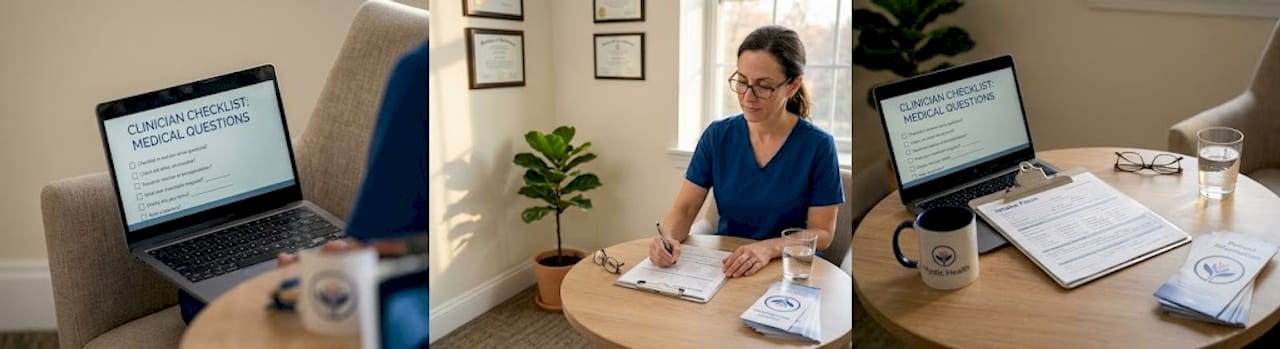
Clinical safeguards begin before you ever take a substance. Comprehensive screening evaluates your medical history, current medications, psychiatric background, and personal goals. Exclusion criteria exist for good reason, and a responsible provider will be transparent about who is and isn’t a suitable candidate. Emergency planning, including protocols for medical or psychological crises during sessions, is built into the structure from the start.
Psychological safeguards focus on preparation. You and your therapy team spend time building relational trust, clarifying intentions, and practicing grounding techniques before any medicine work begins. This is not preliminary filler. It is foundational.
| Safety dimension | Traditional therapy | Psychedelic-assisted therapy |
|---|---|---|
| Screening depth | Standard intake | Extensive medical and psychiatric review |
| Session monitoring | Weekly 50-minute check-ins | Real-time observation, physiological monitoring |
| Environment management | Standard office | Intentionally curated set and setting |
| Integration support | Ongoing as needed | Structured post-session integration sessions |
| Emergency planning | Standard crisis protocol | Specialized adverse-event response protocols |
The concept of “set and setting” is central here. “Set” refers to your mindset walking in, including your emotional state, intentions, and fears. “Setting” is the physical and social environment, including lighting, sound, the presence of trusted guides, and the overall feeling of the space. Both matter enormously for how safe you feel during a session and how well you’re able to process what arises.
The patient consultation workflow at integrative clinics typically moves through screening, preparation, the medicine session itself, and then structured integration. Each phase carries its own safety considerations.
Pro Tip: Before beginning any psychedelic-assisted program, ask your provider these specific questions: “What is your screening process for contraindications?” “What happens if I have a difficult psychological experience during a session?” “What integration support is available after the session ends?” Clear, confident answers signal a safety-first culture.
Common safety challenges and how they are addressed
Understanding the measures in place, let’s look squarely at real risks and how professionals responsibly respond.
No honest conversation about psychedelic-assisted therapy skips the risks. There are real ones, and naming them clearly is itself an act of care. Safety planning for psychedelic use includes anticipating psychologically challenging experiences and monitoring for serious adverse events. A consensus statement on integrating psilocybin into routine care flags potential distress, anxiety, emergence of psychotic symptoms, and a possible signal for increased suicidal thinking and behavior, citing a small phase-II treatment-resistant depression study with specific event rates and suicidal ideation occurrences.
It’s also important to understand that harm reporting quality and risk-of-bias can be significant limitations in psilocybin depression research, which affects how confidently safety conclusions can be generalized. This is not a reason to avoid treatment. It is a reason to choose providers who are honest about what the evidence does and doesn’t confirm.
Here is a practical look at reported adverse event considerations by session type:
| Session context | Common adverse events | Serious adverse event signals |
|---|---|---|
| Low-dose ketamine | Dissociation, nausea, elevated blood pressure | Rare; cardiovascular monitoring advised |
| Moderate-dose psilocybin | Anxiety, emotional intensity, confusion | Psychotic symptom emergence in vulnerable individuals |
| High-dose psychedelic sessions | Ego dissolution, fear, challenging imagery | Suicidal ideation signals noted in some trial data |
“Acknowledging risk is not pessimism. It is what makes genuine informed consent possible.”
The outcomes of psychedelic therapy are genuinely compelling for many people, and that’s exactly why it matters to engage with risks honestly rather than glossing over them in the excitement of promising results.
Here are five steps that responsible practitioners take to anticipate and address safety risks:
- Pre-screening for contraindications: Every client completes a thorough medical and psychiatric review before any medicine session begins.
- Titrated dosing: Starting with lower doses and adjusting based on individual response reduces the likelihood of overwhelming experiences.
- In-session monitoring: Trained guides remain present throughout the session, tracking physiological signs and emotional state in real time.
- Grounding and containment techniques: Therapists use breath work, physical grounding, and verbal anchoring when distress arises during a session.
- Structured post-session integration: The days and weeks following a psychedelic experience are when much of the psychological processing happens. Integration support is a safety measure, not a bonus.
Safety is a shared process: the client’s role and self-advocacy
Safety isn’t simply delivered by providers. It’s co-created. Here’s how your actions play a vital part.
This is something we feel strongly about at Mystic Health: you are not a passive recipient of safety. You are an active participant in it. Mechanistically, safety in therapy is best thought of as a co-regulated process combining nervous-system regulation, relational trust, and pacing and containment, rather than a one-time checkbox. When safety shifts, therapists may need to repair alliance ruptures, slow pacing, and modulate exposure to stay within what’s called affective tolerance, the range of emotional intensity you can experience without becoming overwhelmed or shutting down.
Your preparation matters enormously. Coming to sessions with honesty about your current state, your fears, and your goals gives your therapist the information they need to support you well. Personalized psychedelic therapy plans work best when you bring your whole self into the process, including the parts that feel uncertain or afraid.
Green flags for a safe therapeutic relationship:
- Your therapist asks regularly how you’re feeling about the pace of treatment
- You feel genuinely heard when you raise concerns or discomfort
- Boundaries and informed consent are revisited, not just signed once
- Integration is treated as essential, not optional
Red flags that warrant a direct conversation or second opinion:
- Pressure to continue when you’ve expressed hesitation
- Vague or evasive answers to questions about protocols and risks
- Lack of clear emergency procedures
- Integration support is not offered or is treated as unnecessary
Pro Tip: After each session, take ten minutes to write down what felt safe, what felt uncomfortable, and any questions that arose. Bring that to your next session. This practice builds self-awareness and keeps communication open with your therapist, which is one of the most protective things you can do.
Advocating for yourself also means asking questions before you commit to anything. A provider who welcomes your questions isn’t just being polite. They are demonstrating the kind of relational safety that good therapy actually requires.
The truth most people miss about safety in therapy
Now that we’ve explored the essentials, let’s step back to examine an often-overlooked truth about safety, one that can empower and protect you as you move forward.
Here’s something I’ve come to believe deeply through years in this field: safety cannot be guaranteed. And the providers who tell you otherwise are, ironically, offering you less protection than those who are honest about uncertainty.
Psychedelic-assisted therapy can produce genuinely powerful, positive outcomes. We see this across the science behind psychedelic healing and in the lives of people who have moved through treatment with care and intention. But even when psychedelic therapies show favorable safety profiles in controlled trials, exclusion criteria and monitoring requirements matter. Evidence also highlights that harm reporting can be incomplete and adverse psychological reactions can occur, so safety cannot be inferred from efficacy alone.
That’s a critical distinction. A treatment working well for many people in a clinical trial does not mean it is automatically safe for every individual in every context. Real safety requires ongoing assessment, honest communication, and the humility to acknowledge what we don’t yet know.
What I find most meaningful in this work is the shift that happens when both client and therapist stop treating safety as a destination and start treating it as an ongoing conversation. That’s when healing becomes possible at a deeper level. Not because everything is controlled and comfortable, but because both people in the room are committed to tending to it together.
The most resilient therapeutic relationships I’ve witnessed are not the ones where nothing difficult happens. They’re the ones where difficulty is met honestly, adjusted to thoughtfully, and integrated with care.
Discover integrative therapy options designed for safety and support
If you’re inspired to take the next step toward safe, transformative healing, here’s where to find trusted, integrative resources.
We built Mystic Health around one core belief: that effective therapy and genuine safety are not competing priorities, they strengthen each other. If what you’ve read here resonates, we’d like to be part of your journey.
Our integrative mental health care approach brings together evidence-based psychedelic-assisted therapies, holistic modalities, and compassionate clinical support under one roof. Whether you’re just beginning to explore your options or you’re ready to take the next step, our programs are designed to meet you where you are. We also make our clinical evidence available so you can review the research that informs every protocol we use. Healing that honors both your vulnerability and your strength starts with a conversation.
Frequently asked questions
What does ‘set and setting’ mean in psychedelic therapy safety?
“Set” refers to the mindset and emotional state of the individual, while “setting” is the physical and social environment. Both are key to ensuring psychological safety during psychedelic-assisted therapy, and preparation in both areas begins well before the medicine session itself.
Are there specific risks to watch for in psychedelic-assisted treatment?
Yes, potential risks include distressing psychological experiences, anxiety, the emergence of psychotic symptoms, and rarely, increased suicidal thinking, especially in vulnerable individuals. Consensus statements and clinical research both flag these as areas requiring careful screening and monitoring throughout treatment.
How is safety monitored during psychedelic therapy sessions?
Therapists use ongoing supervision, co-regulation, and careful monitoring for emotional or physical distress, adapting session pacing and support as needed. Therapists monitor safety at the edge of tolerance, adjusting pacing, distance, and emotional intensity in real time to prevent overwhelm or disengagement.
Why do safety outcomes in clinical trials sometimes differ from real-world therapy?
Clinical trials often have strict exclusion criteria and intensive monitoring, while real-world therapy settings may vary. Harm reporting in psychedelic trials is not always consistent, which affects how confidently safety conclusions from controlled research can be applied to everyday clinical practice.
Recommended

Mystic Health Blog






FAQs
1. Am I eligible for ketamine therapy?
2. Does insurance cover the cost of ketamine therapy?
3. How many ketamine treatments will I need?
We recommend two initial treatments to determine suitability and adjust dosage. After these sessions, additional treatments are available based on your progress and specific requirements.