How therapy transforms cancer care for patients and caregivers
TL;DR:
- Therapy is a vital component of cancer care, improving quality of life and extending survival for patients and caregivers. Integrating psychological support early, through tailored modalities like CBT or mindfulness, builds resilience, reduces distress, and enhances overall well-being. Personalized, accessible therapy approaches are essential for holistic treatment, addressing emotional, spiritual, and physical needs throughout the cancer journey.
A cancer diagnosis changes everything. The body becomes a battleground, and most of the energy, attention, and resources get poured into medical treatments. But here’s something that surprises many people: the mind matters just as much as the medicine. Research shows that psychosocial interventions improve HRQoL in 35% of studies for incurable cancer, and therapy is directly linked to longer survival. This guide walks through why therapy belongs at the center of cancer care, what options are available, and how both patients and caregivers can access real support.
Table of Contents
- Why therapy matters in cancer treatment
- Therapy options during cancer care
- Patients vs. caregivers: Unique needs and therapy approaches
- When and how to start therapy for holistic cancer care
- Limitations, myths, and evolving evidence
- What most cancer care guides don’t tell you about therapy
- Explore integrative therapy options with Mystic Health
- Frequently asked questions
Key Takeaways
| Point | Details |
|---|---|
| Therapy boosts survival | Psychosocial therapy can extend cancer survival and enhance quality of life. |
| Caregivers benefit too | Therapy relieves caregiver distress and supports emotional resilience for loved ones. |
| Early integration works best | Starting therapy early in the cancer journey leads to greater overall well-being. |
| Many therapy options | You can choose from individual, group, mindfulness, and other modalities to fit your needs. |
| Evidence continues to evolve | Not all therapies are equally effective, and ongoing research helps refine best practices. |
Why therapy matters in cancer treatment
Most people expect a cancer care plan to include surgery, chemotherapy, or radiation. Very few expect it to include a therapist. But the evidence for integrating psychological support into cancer treatment is strong, and it goes well beyond just “feeling better.”
Psychosocial interventions improve HRQoL in measurable ways: cognitive behavioral therapy (CBT) increases resilience with a significant effect size (g=1.211, p<0.001 post-intervention), and psychosocial support is linked to a survival benefit of nearly 4 months (HR 0.80, 95% CI [0.71, 0.90]). Those are not small numbers. For someone navigating a serious illness, nearly four additional months of life is profound.
“Healing is not only about the body. It’s about the whole person, including the fear, grief, uncertainty, and love that travel alongside every diagnosis.”
Therapy also directly supports caregivers, who often carry as much weight as patients. Caregiver distress and the role of therapy research shows that 78% of caregivers experience clinically relevant distress, with 46% reporting severe distress. Their quality of life drops, their own emotional needs go unmet, and they often feel invisible in the medical system. Therapy builds resilience and helps them stay present for their loved ones without losing themselves.
Key benefits of integrating therapy early in cancer care:
- Improved emotional regulation during diagnosis and active treatment
- Reduced anxiety and depression through structured psychological support
- Stronger coping skills for managing treatment side effects and uncertainty
- Better communication with medical teams and family members
- Enhanced survival outcomes through improved immune function and treatment adherence
The best time to start is now. The earlier therapy is introduced, the more deeply it can take root. Waiting until someone is in crisis means playing catch-up with emotional pain that has already compounded. Integrating emotional support in palliative care from the beginning creates a foundation of psychological safety that sustains patients and caregivers across the entire journey.
Therapy options during cancer care
Not all therapy looks the same. This is actually good news. It means there are real choices, and the right fit depends on the individual’s needs, preferences, cancer stage, and personal goals.
Therapy methodologies in cancer care include a broad spectrum of approaches: individual counseling, cognitive-behavioral therapy (CBT), supportive-expressive therapy, group therapy, mindfulness-based stress reduction (MBSR), psychoeducation, and solution-focused brief therapy. These can be delivered by psychologists, nurses, or social workers, and they can happen in person or remotely.
Here is a comparison of the most common options:
| Therapy type | Best suited for | Format | Key benefit |
|---|---|---|---|
| Cognitive-behavioral therapy (CBT) | Anxiety, depression, unhelpful thought patterns | Individual or group | Builds resilience, restructures thinking |
| Supportive-expressive therapy | Processing grief, existential fears | Group, in-person | Emotional release, community |
| Mindfulness-based stress reduction | Stress, pain, sleep issues | Individual, group, or app | Present-moment calm, reduced reactivity |
| Psychoeducation | Understanding diagnosis, treatment | Group or remote | Empowerment, informed decision-making |
| Solution-focused brief therapy | Specific goals, short-term support | Individual | Practical, fast-acting results |
| Group therapy | Isolation, community building | Group, in-person or remote | Shared experience, peer support |
One thing worth knowing: distress and therapeutic strategies in head/neck cancer research shows that chronic distress can suppress immune function via the HPA axis (the body’s stress response system), reduce radiotherapy completion rates by 25%, and increase mortality by 55%. For cases involving advanced or incurable cancer, individual multiple-method approaches tend to outperform group-only formats.
Exploring practical mindfulness for cancer patients is one of the most accessible starting points, particularly for those new to therapy or hesitant about traditional clinical settings.
Pro Tip: If you feel unsure about one-on-one therapy, starting with a mindfulness group or psychoeducation session can lower the barrier to entry while still delivering real psychological benefits.
Patients vs. caregivers: Unique needs and therapy approaches
Patients and caregivers both need support, but they don’t always need the same things. Treating them as a single unit misses the deeply different emotional terrain each person is navigating.
For patients, the primary concerns often involve fear of death, loss of identity, physical pain, and the anxiety of waiting for test results. Treatment decisions can feel overwhelming, and the body’s rapid changes can create a sense of disconnection. Therapy helps patients:
- Process the emotional shock of diagnosis without shutting down
- Develop coping strategies for treatment side effects, including nausea, fatigue, and cognitive changes
- Navigate major decisions about treatment with greater clarity
- Find meaning and connection even in the most difficult stages of illness
- Work through existential questions about identity, purpose, and mortality
For caregivers, the terrain is different. They are watching someone they love suffer while trying to hold the household, the emotions, and the logistics together. Caregiver distress and the role of therapy data makes this starkly clear: 78% experience clinically relevant distress, and their own health needs often go completely unaddressed.
| Caregiver need | Therapy approach | Goal |
|---|---|---|
| Emotional overwhelm | Individual counseling, mindfulness | Regulation, grounding |
| Isolation and loneliness | Group therapy, peer support | Community, shared experience |
| Spiritual distress | Spiritual care, meaning-centered therapy | Purpose, peace |
| Burnout and fatigue | Self-care planning, CBT | Sustainable capacity |
| Grief and anticipatory loss | Supportive-expressive therapy | Emotional processing |
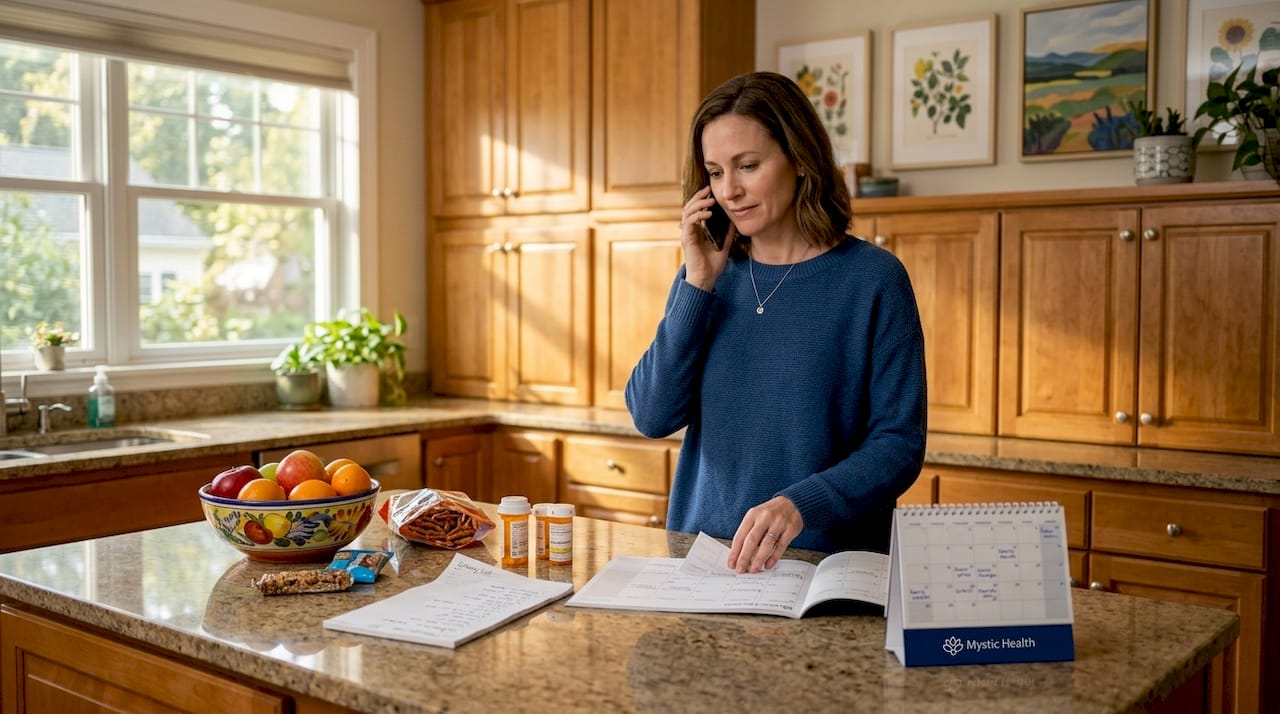
Caregiver support and spirituality research highlights that caregivers with higher levels of spiritual well-being show significantly stronger resilience and quality of life outcomes. This does not mean therapy has to be religious. It means that connecting to something larger than immediate suffering, whether that is community, nature, purpose, or faith, provides a meaningful buffer against despair.
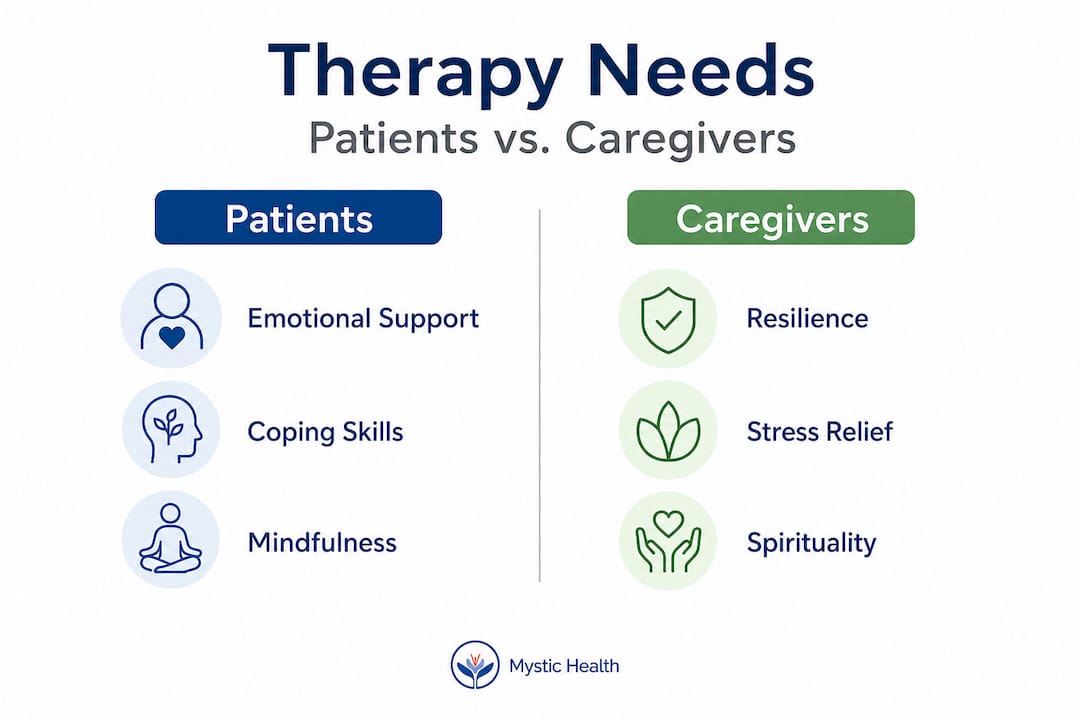
Learning mindfulness for caregiver stress is one practical way to build that buffer. And for families navigating serious illness together, accessing cancer and palliative care services that support the whole unit, not just the patient, can be genuinely transformative.
Pro Tip: Caregivers often resist seeking therapy because they feel it is “not their turn” to need help. Reframe it this way: supporting your own mental health is how you sustain your ability to show up for the person you love.
When and how to start therapy for holistic cancer care
The most common mistake is waiting too long. Many patients and caregivers assume they should “see how things go” before adding therapy to an already complex care plan. But therapy integration and personalization in cancer care research is clear: integrating therapy early as standard care, running parallel to medical treatment, produces the best outcomes for both psychological well-being and physical resilience.
Here is a practical framework for getting started:
- Request a psychological screening at your first oncology appointment. Many cancer centers have distress screening tools available. Use them. They identify emotional needs early and connect you to resources faster.
- Talk openly with your oncologist. Mention emotional symptoms just as you would physical ones. Fatigue, anxiety, and sleep disruption are clinical concerns, not personal weaknesses.
- Ask for a referral to a licensed mental health professional who has specific experience with oncology patients or serious illness. This expertise matters.
- Identify your primary concerns. Are you dealing mostly with fear? Grief? Relationship strain? Physical pain? Different concerns respond better to different therapy types.
- Start with one modality and build from there. You don’t have to commit to multiple therapies immediately. Start with mindfulness in cancer journey practices or a single counseling session, then expand as feels right.
- Revisit your therapy plan at each stage. What you need during diagnosis is different from what you need during active treatment, recovery, or end-of-life care. Flexibility is strength, not inconsistency.
Personalizing therapy to match cultural background, spiritual orientation, language, and personal values makes a significant difference in engagement and outcome. There is no shame in trying one approach and pivoting to another. What matters is staying connected to support.
Pro Tip: Remote therapy has expanded access enormously. If getting to a clinic feels impossible during treatment, telehealth therapy sessions can bring support directly to your home with no loss of clinical effectiveness.
Limitations, myths, and evolving evidence
It would be incomplete to talk about therapy in cancer care without acknowledging where the evidence gets complicated. Not every therapy works for every person, and the research is still catching up to the diversity of patient needs.
Limitations and evidence on therapy interventions research points out that many trials suffer from low statistical power (as low as 17% in post-hoc analyses), which leads to inconsistent results across studies. There is also a real problem with definitions: “psychosocial,” “psychological,” and “spiritual” interventions are often lumped together, making it hard to know exactly what is driving positive outcomes in any given study.
Interestingly, mobile and group-based CBT appear to outperform traditional face-to-face individual therapy in certain populations. That challenges the assumption that more intensive or traditional formats are always better.
Common myths worth addressing directly:
- “Therapy is only for people who can’t cope.” This is one of the most damaging misconceptions in cancer care. Seeking therapy requires courage and wisdom, not weakness.
- “If the cancer is physical, the treatment should be physical.” Mind and body are not separate systems. Emotional stress directly impacts immune function, inflammation, and treatment tolerance.
- “Group therapy is less effective than individual.” Evidence actually shows group formats can be highly effective and provide something individual sessions cannot: community and shared understanding.
- “Therapy takes too long to help during active treatment.” Solution-focused and mindfulness-based approaches can offer relief within just a few sessions.
“The biggest barrier to therapy in cancer care isn’t access. It’s the belief that you don’t deserve to prioritize your own emotional health during someone else’s illness, or even during your own.”
The field is moving forward. Better-designed trials, clearer intervention categories, and the rise of digital mental health tools are all improving the quality and accessibility of evidence. What is already clear is that doing nothing is rarely the better option.
What most cancer care guides don’t tell you about therapy
Here’s something we have learned, working closely with people navigating cancer and serious illness: the research tells you what works, but it rarely tells you why it works for you specifically.
Therapy in cancer care is not a prescription. It’s a relationship. It’s a process. And frankly, it requires honesty, sometimes uncomfortable honesty, about what you are actually feeling versus what you think you should be feeling. The real benefits of mindfulness come not from practicing perfectly, but from showing up consistently, even on the hardest days.
What we see most often is this: people expect emotional healing to follow the medical timeline. Treatment ends, and they expect the fear and grief to lift along with the IV lines. It rarely works that way. Emotional processing has its own pace. Flexibility in therapy, the willingness to keep adjusting the approach as the journey evolves, is not a sign that therapy isn’t working. It’s a sign that you are doing it right.
The most sustainable outcomes come from mixing modalities. Combining CBT with mindfulness practice, layering social connection through group support, weaving in spiritual care when it resonates. No single thread holds the whole weight. But woven together, they create something strong enough to carry you through.
Explore integrative therapy options with Mystic Health
We know how much courage it takes to seek support when you are already carrying so much. At Mystic Health, we have built our programs specifically for people in this space, navigating cancer, serious illness, grief, and the emotional terrain that medical care alone cannot touch.
Our integrative mental health services bring together evidence-based therapy, mindfulness, and holistic care in one place. Whether you are looking for a structured mindfulness program for healing or want to explore all therapy and wellness programs available, we are here to help you find the right fit. You deserve support that is personalized, compassionate, and built for where you actually are, not where you think you should be.
Frequently asked questions
Does therapy really improve survival rates for cancer patients?
Yes. Psychosocial interventions are linked to a median survival benefit of 3.9 months (HR 0.80), making psychological support a genuine part of whole-person cancer care, not just comfort.
How does therapy help cancer caregivers?
Therapy reduces severe distress and builds resilience. Caregiver distress research shows that caregivers with strong therapeutic and spiritual support report meaningfully better quality of life compared to those without it.
When is the best time to start therapy for cancer care?
Starting early produces the greatest benefits. Integrating therapy early alongside medical treatment, rather than waiting for crisis, gives both patients and caregivers the best foundation for emotional and physical resilience.
Is group therapy or individual therapy more effective?
It depends on the context and individual needs. Evidence shows that mobile and group-based CBT can actually outperform face-to-face individual sessions for some populations, particularly those benefiting from peer connection and shared experience.
Recommended

Mystic Health Blog







FAQs
1. Am I eligible for ketamine therapy?
2. Does insurance cover the cost of ketamine therapy?
3. How many ketamine treatments will I need?
We recommend two initial treatments to determine suitability and adjust dosage. After these sessions, additional treatments are available based on your progress and specific requirements.