What is psychedelic therapy? Guide to healing & mental health
TL;DR:
- Psychedelic therapy uses supervised substances like psilocybin and MDMA to treat mental health conditions.
- The therapy involves three phases: preparation, guided dosing, and integration for lasting change.
- Success depends more on the supportive environment and therapeutic relationship than on the specific drug used.
Most people hear the words “psychedelic therapy” and picture something far outside a doctor’s office. The reality is quite different, and the science behind it is hard to ignore. Psychedelic therapy is a structured, clinically supervised treatment using substances like psilocybin, MDMA, and DMT to address depression, anxiety, PTSD, and substance use disorders. It is not about getting high. It is about healing in a safe, intentional space with trained professionals by your side. This guide will walk you through what psychedelic therapy actually is, how it works, what the research shows, the real risks involved, and how to decide if it might be right for you.
Table of Contents
- What is psychedelic therapy? Defining the basics
- How psychedelic therapy works: The three key phases
- Evidence and effectiveness: What does research show?
- Risks, safety, and controversies in psychedelic therapy
- Is psychedelic therapy right for you? Practical steps and considerations
- What most guides miss: The essential ingredient for meaningful psychedelic therapy
- Explore evidence-based psychedelic therapy with Mystic Health
- Frequently asked questions
Key Takeaways
| Point | Details |
|---|---|
| Clinical supervision is essential | Psychedelic therapy must be professionally guided for safety and results. |
| Integration drives lasting change | Processing therapeutic insights after the session is key to psychological healing. |
| Effectiveness is evidence-backed | Studies show psychedelics can outperform traditional antidepressants in some cases. |
| Know the risks and fit | Certain mental health conditions make psychedelic therapy unsafe; personal screening is crucial. |
What is psychedelic therapy? Defining the basics
At its core, psychedelic therapy is the use of psychedelic compounds, including psilocybin, LSD, MDMA, DMT, mescaline, and ibogaine, within a structured therapeutic setting to treat mental health conditions. This is not self-experimentation. Every session takes place under clinical supervision, with trained therapists guiding the process from start to finish.
The conditions these treatments address are serious and often treatment-resistant. People who have tried multiple antidepressants without success are finding real hope here. The primary conditions include:
- Depression, including major depressive disorder and treatment-resistant forms
- Anxiety disorders, including end-of-life existential anxiety
- PTSD (post-traumatic stress disorder)
- Substance use disorders, including alcohol and opioid dependence
Psychedelics have been used in indigenous healing traditions for centuries, long before Western medicine took notice. The modern clinical resurgence began in earnest in the 1950s and 1960s, stalled due to political pressure, and has roared back over the past two decades with rigorous research from institutions like Johns Hopkins and NYU.
If you are curious about alternative therapies for emotional healing beyond conventional medications, psychedelic therapy sits at a fascinating intersection of ancient wisdom and modern neuroscience.
Statistic spotlight: Clinical trials on psilocybin have shown response rates that consistently outperform placebo in treatment-resistant depression, with some studies reporting over 50% of participants achieving remission.
Pro Tip: Psychedelic therapy always involves clinical supervision. If someone offers you a session without a licensed therapist present and a formal screening process, that is not psychedelic therapy. That is something else entirely.
Now that we’ve established the basics, let’s break down the typical process involved in psychedelic therapy.
How psychedelic therapy works: The three key phases
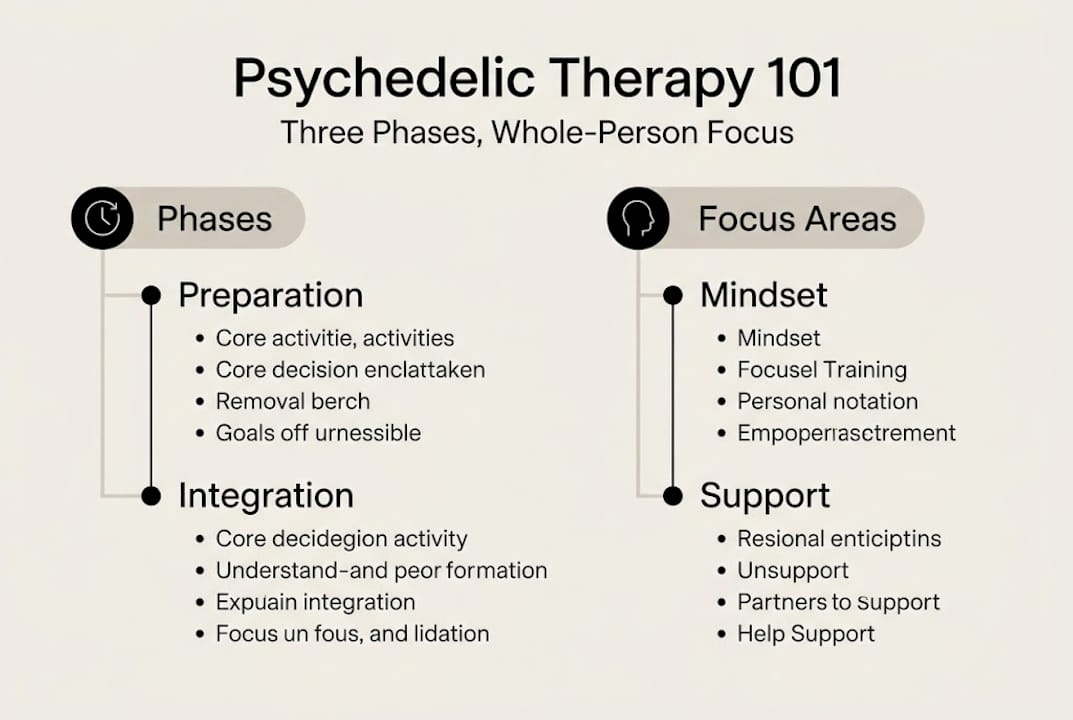
What separates psychedelic therapy from a simple medication prescription is its structured, relational process. Standard methodology involves three phases: preparation, the dosing session, and integration. Each phase matters deeply, and skipping any one of them undermines the whole.
| Phase | Goal | Key practices |
|---|---|---|
| Preparation | Build trust, set intentions | Interviews, mindfulness, goal-setting |
| Dosing session | Guided therapeutic experience | Supervised substance administration, music, grounding |
| Integration | Process and apply insights | Talk therapy, journaling, lifestyle reflection |
Here is what each phase actually looks like in practice:
- Preparation. You meet with your therapist multiple times before any substance is involved. This phase is about building rapport, discussing your history, and setting clear intentions. Mindfulness in therapy preparation often plays a central role here, helping you arrive at the dosing session with a grounded, open state of mind.
- Dosing session. A moderate-to-high dose of the chosen substance is administered under direct supervision. The therapist does not direct your inner experience but stays present to offer support. Music is often used to guide emotional flow. You are never left alone.
- Integration. This is where lasting change is made or lost. You work with your therapist to make meaning of what arose during the session and figure out how to carry those insights into daily life. Personalized therapy planning during this phase is essential for real transformation.
Pro Tip: Integration is just as vital as the experience itself. Many people focus all their energy on the dosing session, but it is the weeks of reflective work afterward that turn a powerful experience into lasting change. Think of the session as planting a seed. Integration is the watering.
Exploring holistic therapy benefits can help you understand why this whole-person approach tends to outperform single-modality treatments. Understanding the process, it helps to see how effective these approaches are and what the research shows.

Evidence and effectiveness: What does research show?
The research on psychedelic therapy has moved well beyond early promise. We are now looking at rigorous clinical trials with real data, and the results are genuinely striking.
For depression specifically, psilocybin meta-analyses show moderate-to-large antidepressant effects with a pooled effect size of approximately 0.66, compared to SSRIs which average around 0.30. That is more than double the effect size of the medications millions of people take every day.
“Intensity of mystical experiences during psilocybin sessions correlates with clinical improvement at r = .33, p < .0001, meaning the deeper the experience, the better the outcome.”
DMT has also entered the clinical spotlight. A phase IIa randomized controlled trial for major depressive disorder found IV DMT produced significantly greater reductions on the MADRS depression scale at two weeks (mean difference of 7.35 points versus placebo, P=0.023), with effects persisting up to three months.
Here is a simplified comparison of the main compounds currently being studied:
| Compound | Primary use | Strength | Limitation |
|---|---|---|---|
| Psilocybin | Depression, anxiety | Strong evidence, durable effects | Still Schedule I in most U.S. states |
| MDMA | PTSD | High response rates in phase III trials | Risk of overstimulation; cardiac concerns |
| Ketamine/Esketamine | Treatment-resistant depression | FDA-approved (Spravato); fast-acting | Effects may be shorter-lasting |
| DMT | Depression | Emerging phase II data | Research still early stage |
For those exploring holistic psychedelic healing, understanding which compound fits which condition is a crucial first step. While effectiveness is promising, it is crucial to consider potential risks, contraindications, and the ongoing debate over how psychedelics should be used in therapy.
Risks, safety, and controversies in psychedelic therapy
Honesty matters here. Psychedelic therapy carries real risks, and anyone telling you otherwise is not giving you the full picture. These treatments are powerful precisely because they work at a deep psychological level, and that depth can cut both ways.
Absolute contraindications include schizophrenia and bipolar mania. In people with these conditions, psychedelics can trigger or worsen psychotic episodes. Other serious risks include:
- Increased psychosis risk in vulnerable individuals
- Ethical concerns around consent during altered states
- Potential for boundary violations with therapeutic touch
- Psychological distress during challenging sessions (sometimes called “difficult trips”)
- Re-traumatization if not properly supported
Beyond individual risks, there are ongoing debates about therapy integration in the research community. One of the most significant is whether formal psychotherapy is necessary alongside the substance, or whether the compound alone is sufficient. There is also the well-known challenge of blinding in randomized controlled trials. When a participant takes a high dose of psilocybin, they know it. That makes placebo-controlled research genuinely difficult to design.
“Set and setting, meaning a person’s mindset going in and the physical and relational environment around them, are considered critical predictors of session outcome and safety.”
Exploring integrative approaches to therapy can help you understand how safety and structure are woven into responsible practice. With all these nuances in mind, how can you decide if and how to pursue psychedelic therapy, and what should you look for?
Is psychedelic therapy right for you? Practical steps and considerations
Deciding whether to pursue psychedelic therapy is not a decision to make lightly. But it is also not as complicated as it might feel. The key is taking it one step at a time, with good information and the right support in place.
Standard methodology always begins with thorough screening. A reputable provider will not rush you into a dosing session. Here are the steps to take if you want to explore this path safely:
- Assess your situation. Are you dealing with treatment-resistant depression, PTSD, or a condition that has not responded to conventional care? Psychedelic therapy is often most appropriate when other options have fallen short.
- Rule out contraindications. Be honest with any provider about your full mental health history, including any family history of psychosis or bipolar disorder.
- Research qualified providers. Look for licensed clinicians with specific training in psychedelic-assisted therapy. Check credentials, ask about their supervision model, and trust your gut about whether you feel safe.
- Ask the right questions. Find out what the preparation process looks like, how many sessions are included, and what integration support is offered afterward.
- Review your psychedelic therapy step-by-step options. A personalized treatment plan, tailored to your history and goals, is far more effective than a one-size-fits-all approach.
Pro Tip: Always ask about integration support and medical screening before committing to any program. A provider who skips those steps is cutting corners in the places that matter most.
To round out this guide, let’s explore the expert perspective on what most people get wrong about psychedelic therapy.
What most guides miss: The essential ingredient for meaningful psychedelic therapy
Here is something I have come to believe deeply, both through research and through watching people heal: the psychedelic itself is not the most important variable. The container around it is.
Most conversations about psychedelic therapy focus on the compound. Which substance? What dose? How long does it last? But the outcomes that hold, the ones that show up six months and a year later, are shaped far more by the quality of the therapeutic relationship, the depth of the integration work, and the safety of the environment than by any pharmacological detail.
The concept of “set and setting” is not a footnote. It is the foundation. Your mindset walking in, the trust you have built with your therapist, and the intentional space created around the experience predict more about your outcome than the specific molecule you consume. Psycho-spiritual integration is where the real work happens, and most people underestimate it.
If you are considering this path, invest as much thought in choosing your support team as you do in researching substances. The human context is everything.
Explore evidence-based psychedelic therapy with Mystic Health
If reading this has stirred something in you, whether curiosity, hope, or a quiet recognition that you are ready for a different kind of healing, you do not have to figure out the next step alone.

At Mystic Health, we offer integrative, research-backed psychedelic therapy programs built on safety, compassion, and personalized care. You can explore our clinical evidence to understand the science behind our approach, join our mindfulness-based support programs to prepare your mind and body, and access our full range of integrative mental health resources to find what fits your journey. Healing is not a straight line, but it becomes a lot more possible when you have the right people walking alongside you.
Frequently asked questions
What mental health conditions can psychedelic therapy help treat?
Psychedelic therapy is used clinically to treat depression, anxiety, PTSD, and substance use disorders, particularly in cases where standard treatments have not provided enough relief.
What are the main phases of psychedelic therapy?
The three core phases are preparation (building rapport and setting intentions), the supervised dosing session, and integration (processing insights into everyday life).
Are there risks or people who should not use psychedelic therapy?
Yes. It is contraindicated for people with schizophrenia or bipolar mania, and risks include increased psychosis, ethical concerns around consent during altered states, and potential psychological distress.
How effective is psychedelic therapy compared to traditional treatments?
Psilocybin meta-analyses show antidepressant effect sizes of approximately 0.66, more than double the average for SSRIs (0.30), with stronger outcomes linked to the intensity of the therapeutic experience.
Why is integration support important after a psychedelic session?
Integration translates the raw material of the dosing experience into lasting psychological shifts, helping you understand, apply, and build on what emerged during the session.
Recommended

Mystic Health Blog








FAQs
1. Am I eligible for ketamine therapy?
2. Does insurance cover the cost of ketamine therapy?
3. How many ketamine treatments will I need?
We recommend two initial treatments to determine suitability and adjust dosage. After these sessions, additional treatments are available based on your progress and specific requirements.