

Discover the real benefits of mindfulness techniques
TL;DR:
- Mindfulness practices promote deep emotional healing through acceptance and neuroplasticity, not just relaxation.
- Effective mindfulness involves personalized techniques, combining formal and informal methods, for sustained benefits.
- While powerful, mindfulness is not a cure-all; tailored, integrated approaches yield the best long-term outcomes.
Most people think of mindfulness as a way to relax. Light a candle, close your eyes, breathe slowly. And while those moments of stillness do matter, they barely scratch the surface of what mindfulness can actually do. Research shows that mindfulness techniques reduce symptoms of anxiety, depression, and stress through mechanisms like acceptance training and neuroplasticity, changes that run far deeper than simple relaxation. If you’ve been searching for something that genuinely supports emotional and psychological healing, this guide will walk you through the science, the nuances, and the real-world ways mindfulness can become part of your path forward.
Table of Contents
- What mindfulness techniques really are
- How mindfulness supports emotional and psychological healing
- Expert perspectives and common critiques
- Practical approaches to integrating mindfulness for holistic wellness
- A deeper perspective: Mindfulness as a tool, not a cure-all
- Ready to deepen your healing journey?
- Frequently asked questions
Key Takeaways
| Point | Details |
|---|---|
| More than relaxation | Mindfulness techniques offer proven benefits for emotional and psychological healing via acceptance and awareness. |
| Evidence-based impact | Clinical trials confirm mindfulness reduces anxiety, depression, and stress when used consistently. |
| Not one-size-fits-all | Personalization, ethical context, and integration with therapy or holistic care optimize results. |
| Daily practice matters | Short, regular mindfulness practices yield the greatest and most lasting benefits for mental well-being. |
What mindfulness techniques really are
There’s a lot of noise around mindfulness right now. Apps, retreats, corporate wellness programs. But at its core, mindfulness is the practice of purposefully paying attention to the present moment without judgment. That’s it. Simple in concept, but genuinely transformative in practice.
The foundational components are attention regulation, acceptance, and moment-to-moment awareness. You’re not trying to empty your mind. You’re learning to notice what’s happening inside you, thoughts, feelings, physical sensations, without immediately reacting or pushing them away. That shift alone can change how you relate to your own pain.
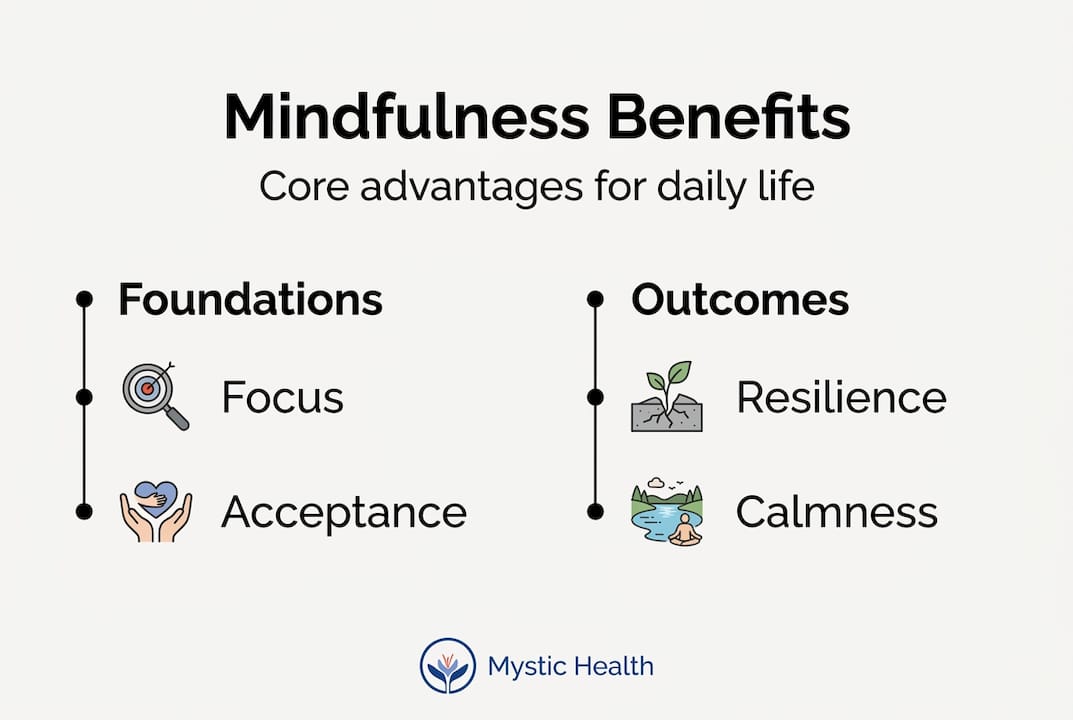
Mindfulness techniques for healing range from highly structured formal practices to simple everyday habits. Understanding the difference matters:
Formal practices are dedicated, scheduled sessions:
- Breath-focused meditation (following the natural rhythm of your inhale and exhale)
- Body scan (slowly moving awareness through each part of the body)
- Open awareness meditation (observing thoughts and sensations without fixing attention on any single thing)
- Loving-kindness meditation (cultivating compassion toward yourself and others)
Informal practices are woven into daily life:
- Mindful eating (fully attending to taste, texture, and hunger cues)
- Mindful walking (noticing the sensation of each step)
- Conscious pausing before responding in difficult conversations
Here’s a quick comparison of core techniques:
| Technique | Primary focus | Best for |
|---|---|---|
| Breath meditation | Attention and calm | Beginners, anxiety relief |
| Body scan | Physical awareness | Stress, chronic pain |
| Open awareness | Broad, flexible attention | Emotional regulation |
| Loving-kindness | Compassion and self-worth | Depression, self-criticism |
As research confirms, present-moment awareness paired with non-judgmental acceptance forms the true engine of mindfulness, not the act of sitting quietly. You can also explore holistic and psychedelic therapy tips to see how mindfulness fits within a broader healing picture.
How mindfulness supports emotional and psychological healing
Let’s get into what the evidence actually shows, because this is where things get genuinely interesting.
Mindfulness reduces cortisol, the body’s primary stress hormone, and strengthens emotional resilience over time. Regular practice increases positive affect, meaning you start to experience more moments of ease and warmth, even when life stays hard. That’s not wishful thinking. That’s measurable biology.

Clinically structured programs have been studied extensively. The results are striking:
| Program | Condition targeted | Key finding |
|---|---|---|
| MBSR (Mindfulness-Based Stress Reduction) | Anxiety | As effective as escitalopram (a common antidepressant) |
| MBCT (Mindfulness-Based Cognitive Therapy) | Recurrent depression | Significantly reduces relapse rates |
| Mindfulness integrated with ACT | Chronic stress | Improves self-regulation and quality of life |
Those numbers matter. They tell us this isn’t an alternative to real treatment. It is real treatment.
One of the most important discoveries in recent mindfulness research is the role of acceptance. It’s not enough to simply pay attention. Acceptance drives benefits more than attention alone, meaning the willingness to sit with discomfort, without fighting it, is where much of the psychological healing actually lives.
Self-compassion matters enormously here, too. When you stop judging your own emotional responses so harshly, you create space to actually process them. That’s how trauma begins to loosen its grip.
Dose also matters. Longer, more consistent practice tends to produce stronger results. But personality plays a role. Someone high in agreeableness may respond quickly, while someone with high neuroticism may need a more adapted approach. The emotional healing workflow you build should reflect your actual starting point, not someone else’s.
“Mindfulness is not a technique that works on you. It’s a practice you grow into, at your own pace, with your own needs in mind.”
Pro Tip: If you’re new to mindfulness and feel frustrated that it “isn’t working,” try shifting your focus from achieving calm to simply noticing. The noticing is the practice. See also the deep healing evidence for a closer look at what the research shows about long-term outcomes.
Expert perspectives and common critiques
Mindfulness is genuinely powerful. But it’s important to say clearly: it is not a cure-all. And the way it’s often sold today deserves honest scrutiny.
A growing body of critical thinking has pointed to what some researchers call “McMindfulness”, the commodification of mindfulness stripped of its ethical roots, its communal purpose, and its depth. When mindfulness becomes just another productivity hack or a way to help stressed employees work harder, it loses much of what makes it meaningful. That critique is worth taking seriously.
Here are some honest limitations to keep in mind:
- Mindfulness alone may not be sufficient for complex trauma, severe depression, or PTSD
- Effects vary based on personality, especially for those with high neuroticism who may need adapted approaches
- Without proper guidance, turning toward difficult emotions can feel overwhelming
- Overhyped claims reduce scientific credibility and set unrealistic expectations
- Mindfulness isn’t a panacea, and treating it as one can actually discourage people who need more intensive care
Personalization is not optional. Research confirms that individual adjustment, in terms of duration, context, and integration with other therapies, is what produces the best outcomes. A one-size practice rarely fits all wounds.
“The moment we stop asking ‘is this right for this person?’ is the moment mindfulness becomes dogma rather than medicine.”
Integrating mindfulness with cognitive behavioral therapy (CBT) or psychedelic-assisted therapy can address the layers that pure mindfulness practice might not reach on its own. See how integrating CBT and mindfulness can create a more complete path for deep emotional healing.
Pro Tip: If you’ve tried mindfulness and felt like it made things worse, that experience is valid. It may mean you need more support around the practice, not that mindfulness itself is wrong for you. Explore psychological healing methods that pair mindfulness with broader therapeutic tools.
Practical approaches to integrating mindfulness for holistic wellness
Knowing mindfulness works is one thing. Actually building it into your life is another. Here’s how to make it real.
The most important principle is that your practice should fit you, not a template. Optimal results come when mindfulness is adapted to the individual, paired with ethical intention, and integrated into broader therapeutic frameworks. That’s not just good advice. That’s what the evidence consistently shows.
Here’s a step-by-step way to build your personal mindfulness routine:
- Start small. Five to ten minutes of breath-focused practice in the morning creates a foundation without overwhelming you. Consistency beats duration early on.
- Choose one formal practice. Pick breath meditation, body scan, or loving-kindness and stay with it for at least three weeks before adding anything else.
- Add one informal practice. Mindful eating at lunch or a two-minute pause before bed can quietly reinforce the same mental skills.
- Track how you feel, not how well you performed. Note shifts in mood, sleep, or emotional reactivity in a simple journal. Mindfulness effectiveness research supports the value of self-monitoring for sustaining practice.
- Pair mindfulness with compassion. Deliberately include loving-kindness or self-compassion elements. Healing that leaves out kindness often stalls.
- Integrate with your broader care. If you’re working with a therapist, share your practice. If you’re exploring holistic approaches, look at how mindfulness fits within that framework, not beside it.
Building emotional resilience takes time, and mindfulness is one of the most accessible tools you have. The key is showing up consistently, even on the days when it feels like nothing is happening.
Pro Tip: Don’t wait until you feel “ready” to start. The practice itself creates the readiness. Start with just one breath today.
A deeper perspective: Mindfulness as a tool, not a cure-all
I want to be honest with you about something. Across years of working in integrative wellness, I’ve seen mindfulness genuinely change lives. I’ve also seen people feel like failures because a meditation app didn’t fix their grief or their trauma. Both of those experiences are real.
The truth is that mindfulness is a powerful tool. But tools work best in skilled hands, within a thoughtful context. When it’s stripped of community, of ethical grounding, of compassion, it becomes just another thing to do and potentially fail at.
Mindfulness’s most powerful outcomes happen when it’s paired with tailored, ethical, and integrative practices. That means working with a guide or practitioner, pairing mindfulness with therapy, and approaching it with genuine curiosity rather than performance pressure.
True healing rarely comes from one thing alone. It comes from the combination of good science, compassionate community, and practices that honor who you actually are. Explore the evidence for deep healing to understand how integrative approaches stack up.
Ready to deepen your healing journey?
If this article has opened something in you, whether it’s curiosity, recognition, or a quiet sense of hope, we’d love to help you take the next step. Mystic Health offers a structured mindfulness program designed to meet you where you are, with guidance rooted in both clinical evidence and compassionate care.

Our integrative mental health services go further, combining mindfulness with psychedelic-assisted therapy, somatic approaches, and personalized support so healing doesn’t have to happen in isolation. Browse our full range of healing programs and find the path that feels right for you. You don’t have to figure this out alone.
Frequently asked questions
Can mindfulness techniques help with severe mental health issues?
Mindfulness can meaningfully reduce symptoms of anxiety and depression, and clinical trials show it matches medication effectiveness for anxiety. For severe conditions, combining it with professional therapy typically produces stronger, safer outcomes.
Is mindfulness suitable for everyone?
Mindfulness is generally safe and broadly beneficial, but effects vary based on personality traits and individual needs, so some people benefit most when practices are adapted or paired with other therapies.
What is the most effective way to practice mindfulness daily?
Short, consistent practices like mindful breathing or body scans are highly effective when personalized. Both formal and informal daily mindfulness show benefit, and longer sessions can enhance psychological distancing over time.
Does mindfulness replace medication or therapy?
Mindfulness can complement medication and therapy but rarely replaces them entirely. While it may match antidepressants for mild-to-moderate anxiety, full replacement is not appropriate for everyone.
Are there risks to mindfulness practice?
Mindfulness is safe for most people, though it can surface difficult emotions. Turning toward hard experiences is part of the methodology, and having ethical guidance and professional support makes that process safer and more effective.
Recommended

Mystic Health Blog



FAQs
1. Am I eligible for ketamine therapy?
2. Does insurance cover the cost of ketamine therapy?
3. How many ketamine treatments will I need?
We recommend two initial treatments to determine suitability and adjust dosage. After these sessions, additional treatments are available based on your progress and specific requirements.