Insurance coverage for mental health: What you need to know
Most people assume that having insurance means getting the care they need. But when it comes to mental health, that assumption often falls apart quickly. Uninsured adults with mental illness have 63% lower odds of receiving outpatient treatment compared to those with private insurance. That gap is staggering, and it tells a story many of us know personally. Whether you are exploring therapy for the first time or looking into innovative treatments like ketamine-assisted psychotherapy, understanding how insurance actually works can mean the difference between getting help and going without.
Table of Contents
- Insurance coverage for mental health: The fundamentals
- Comparing mental health and medical coverage: Parity and practice
- Challenges and gaps in real-world access
- Insurance coverage for innovative therapies: The path forward
- Navigating your insurance options for mental health care
- Connect your coverage to modern mental health care
- Frequently asked questions
Key Takeaways
| Point | Details |
|---|---|
| Insurance drastically impacts access | Having insurance makes it far more likely to receive mental health treatment, especially outpatient care. |
| Parity laws protect coverage | Federal rules require insurers to cover mental health on equal terms with medical care. |
| Coverage gaps remain | Many patients face cost, provider shortages, and lower payment rates for behavioral health services. |
| Innovative therapies evolving | Emerging treatments like psychedelics are not always covered but advocacy and regulation are improving access. |
| Patients can appeal and advocate | Understanding your policy and leveraging parity laws can help challenge coverage denials. |
Insurance coverage for mental health: The fundamentals
Let’s start with the legal foundation, because it matters more than most people realize. The Mental Health Parity and Addiction Equity Act (MHPAEA) requires health insurance plans to provide mental health benefits that are no more restrictive than medical or surgical benefits. In plain terms, your insurer cannot make it harder to access a therapist than it is to see a cardiologist.
In practice, coverage typically includes:
- Inpatient psychiatric care for crisis stabilization or intensive treatment
- Outpatient therapy including individual, group, and family sessions
- Emergency mental health services for acute crises
- Office visits with psychiatrists and licensed counselors
- Prescription medications for mental health conditions
But coverage does not mean unlimited access. Most plans include copays, deductibles, and sometimes visit caps. Many require prior authorization, which means your provider must get approval before treatment begins. This process can delay care by days or even weeks.
“Medical necessity” is the standard insurers use to decide what gets covered. If a treatment is not deemed clinically essential, it may be denied, regardless of what your doctor recommends.
Pro Tip: Before your first appointment, call your insurer and ask specifically about mental health benefits, prior authorization requirements, and whether your provider is in-network. Getting this in writing protects you later.
If you want to explore what a full spectrum of care looks like, reviewing available mental health programs can help you understand what to ask your insurer about. You can also look into integrative mental health options that combine evidence-based and holistic approaches.
Comparing mental health and medical coverage: Parity and practice
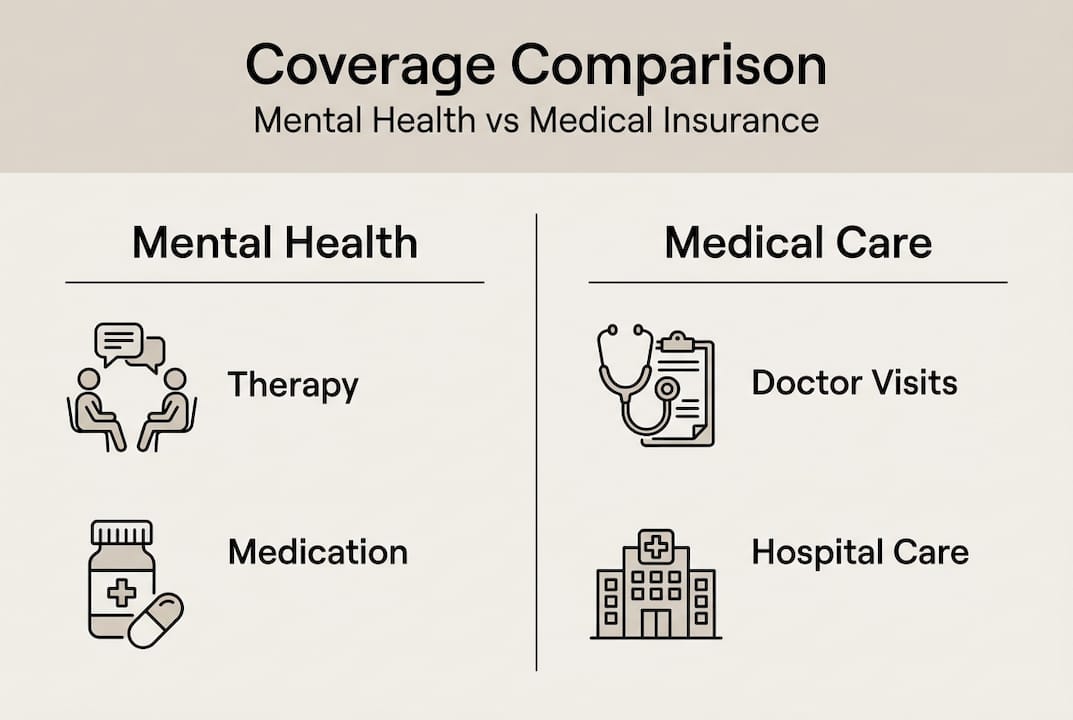
Parity sounds simple. Equal treatment for mental health and physical health. But the reality is more complicated. The MHPAEA mandates parity across six service classifications, including inpatient in-network, inpatient out-of-network, outpatient in-network, outpatient out-of-network, emergency care, and prescription drugs.
Here is how mental health coverage often compares to medical coverage in practice:
| Coverage area | Medical/surgical | Mental health |
|---|---|---|
| Prior authorization | Occasionally required | Frequently required |
| Network availability | Broad | Often limited |
| Out-of-pocket costs | Moderate | Often higher |
| Visit limits | Rarely capped | Sometimes capped |
| Reimbursement rates | Standard | Often lower |
Common parity violations patients encounter include:
- Stricter prior authorization rules for mental health than for comparable medical procedures
- Narrower provider networks with fewer in-network mental health specialists
- Higher out-of-pocket costs for behavioral health visits
- More frequent treatment reviews and documentation requirements
You can review mental health coverage details to better understand what a well-structured plan should include. Knowing what parity requires gives you a stronger foundation when questioning your insurer.
Challenges and gaps in real-world access
Parity laws set the standard. But laws and lived experience are not always the same thing. Even with insurance, many people find that getting mental health care is harder than it should be.

Here is a snapshot of the most common barriers:
| Barrier | Impact on patients |
|---|---|
| Provider shortages | Long wait times, limited choices |
| Inaccurate directories | Calling providers who are not actually available |
| Low reimbursement rates | Fewer therapists accepting insurance |
| Prior authorization delays | Treatment postponed or abandoned |
| Surprise out-of-network bills | Unexpected financial burden |
Behavioral health providers are reimbursed at lower rates than physical health providers, sometimes by as much as 22%. That financial reality pushes many therapists and psychiatrists to stop accepting insurance altogether, which shrinks the in-network pool for patients.
Here are the most common steps people take when they hit these walls:
- Call multiple providers from the insurer’s directory, only to find most are unavailable
- Accept an out-of-network provider and face unexpected costs
- Delay or abandon treatment due to financial pressure
- Seek care through community mental health centers with long waitlists
- Go without treatment entirely
Pro Tip: If you are struggling to find an in-network provider, ask your insurer for a “network adequacy” exception. This can sometimes allow you to see an out-of-network provider at in-network rates.
Reading about patient experiences with therapy can help you feel less alone in this process. And if you want to understand what the research actually supports, exploring clinical evidence for various treatments is a grounding place to start.
Insurance coverage for innovative therapies: The path forward
This is where things get genuinely exciting, and honestly, a little uncertain. Innovative therapies like ketamine-assisted psychotherapy, Spravato (esketamine), and other psychedelic-assisted treatments are showing real promise for conditions like treatment-resistant depression, PTSD, and anxiety. But insurance coverage for these approaches is still catching up.
Here is where things currently stand:
- Spravato (esketamine) is FDA-approved and covered by many insurance plans under specific criteria
- Ketamine infusions are often considered off-label and may require out-of-pocket payment
- Psychedelic-assisted therapy with substances like psilocybin remains in clinical trial phases in most states
- Integration therapy (the counseling that supports psychedelic experiences) is sometimes covered as standard psychotherapy
- Mindfulness and somatic therapies may be covered depending on how they are coded and billed
Coverage for emerging treatments tends to follow regulatory approval, not scientific momentum. That means patients often wait years for insurance to catch up with what the research already supports.
The good news is that enforcement is improving. EBSA investigations have led to changes that expanded access for millions of patients, with most violations relating to network adequacy and prior authorization disparities. Annual parity reviews are now required, which creates more accountability.
Patient advocacy is also making a difference. When people speak up, document their denials, and push back through formal appeals, it creates a paper trail that regulators and lawmakers can act on. Reading about psychedelic healing insights from clinicians working in this space can help you understand what these therapies actually involve and how to talk about them with your insurer.
Navigating your insurance options for mental health care
Knowing your rights is one thing. Using them is another. Here is a practical path forward if you are trying to access mental health care through insurance.
- Verify your benefits in writing. Call your insurer, ask about mental health coverage, and request a summary of benefits. Note the date, time, and name of the representative.
- Confirm your provider is in-network. Do not rely solely on the online directory. Call the provider directly and confirm they accept your specific plan.
- Ask about prior authorization upfront. Find out which services require approval before you start, so you are not caught off guard.
- Document everything. Keep records of all communications, approvals, and denials. This documentation is essential if you need to appeal.
- Appeal denied claims. If a claim is denied, you have the right to appeal. Cite the MHPAEA and request a written explanation of the denial.
- Request a parity analysis. Under current law, you can ask your insurer for a parity compliance analysis, which includes medical necessity reviews and comparative analyses of how mental health benefits are applied.
- Seek external help if needed. State insurance commissioners, patient advocates, and legal aid organizations can support you through complex disputes.
Pro Tip: When appealing a denial, use the exact language from the MHPAEA. Phrases like “non-quantitative treatment limitation” and “comparative analysis” signal to insurers that you understand your rights, and that often changes the tone of the conversation.
If you want to understand what the scientific support for therapies looks like before your next conversation with an insurer, that knowledge gives you real leverage.
Connect your coverage to modern mental health care
Understanding your insurance is the first step. Finding care that actually meets you where you are is the next one. At Mystic Health, we work with patients to navigate coverage questions while offering treatments that go beyond the standard model.
Whether you are exploring a mindfulness course for therapy, looking into an integrative mental health program, or ready to explore mental health programs that include ketamine-assisted psychotherapy and Spravato, we are here to help you figure out what is possible within your coverage. You deserve care that honors the full complexity of who you are. Let’s find a path forward together.
Frequently asked questions
How does insurance define medical necessity for mental health?
Insurers use clinical guidelines to determine whether a treatment is essential, typically based on evidence-based standards and annual comparative reviews that assess how mental health criteria compare to medical criteria.
Why are some innovative therapies like psychedelic treatment not covered?
Coverage for new therapies often lags behind the science because insurers wait for formal regulatory approval before updating their benefit structures, even when clinical evidence is already compelling.
What should I do if my insurance denies mental health treatment?
You can appeal the denial by gathering your documentation, requesting a written explanation, and citing the MHPAEA’s parity compliance requirements to strengthen your case.
Does insurance cover both inpatient and outpatient mental health services?
Yes, both are covered under parity laws, though they may differ in network availability, cost-sharing, and pre-authorization requirements depending on your specific plan.
Are there still significant barriers to accessing insured mental health care?
Yes. Even with insurance, cost and provider shortages remain serious obstacles, and low reimbursement rates continue to push many providers out of insurance networks entirely.
Recommended

Mystic Health Blog








FAQs
1. Am I eligible for ketamine therapy?
2. Does insurance cover the cost of ketamine therapy?
3. How many ketamine treatments will I need?
We recommend two initial treatments to determine suitability and adjust dosage. After these sessions, additional treatments are available based on your progress and specific requirements.