The Role of Caregivers in Palliative Care: 2026 Guide
TL;DR:
- Caregivers in palliative care provide essential support that directly influences a patient’s comfort, dignity, and quality of life.
- Their clinical, emotional, and logistical responsibilities require attention and proper training to ensure optimal outcomes.
The role of caregivers in palliative care is to provide physical, emotional, and logistical support that directly shapes a patient’s comfort, dignity, and quality of life during serious illness. Family members and loved ones who step into this role become the primary bridge between the patient and the healthcare system, often managing medications, tracking symptoms, and offering the kind of steady human presence that no clinical team can fully replicate. Nearly 42 million Americans provide unpaid care to older adults, and the majority of hospice patients are over 65. That means millions of families are navigating this work right now, often without enough preparation or support. This guide is for you.
What are the core responsibilities of caregivers in palliative care?
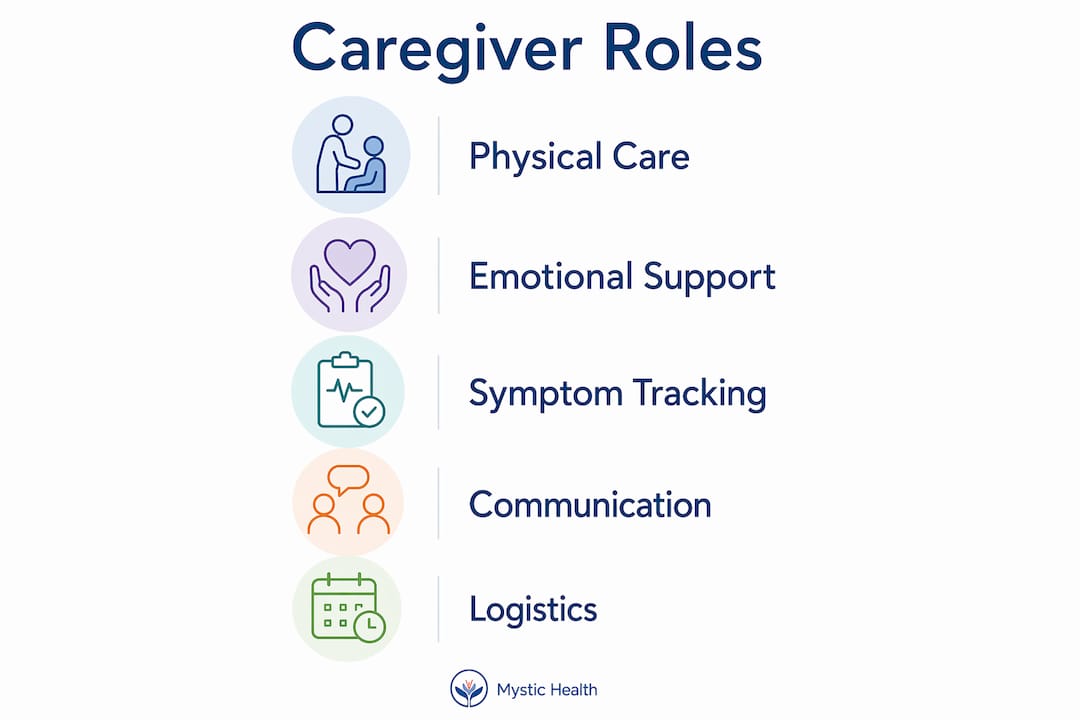
Family caregivers in palliative settings carry a wide range of responsibilities that span clinical observation, personal care, and emotional support. These are not passive tasks. They require attention, consistency, and a willingness to learn skills most people never expected to need.
The core duties include:
- Medication management: Administering prescribed medications on schedule, monitoring for side effects, and reporting changes to the hospice nurse. Family caregivers manage medication administration and symptom monitoring as central hospice responsibilities.
- Symptom documentation: Keeping detailed logs of pain levels, breathing changes, appetite, and sleep patterns. Caregivers maintain symptom logs that hospice nurses rely on for care adjustments. Without this documentation, treatment decisions are delayed.
- Personal care assistance: Helping with bathing, dressing, repositioning, and mobility to preserve the patient’s comfort and dignity.
- Care coordination: Scheduling and attending medical appointments, communicating updates to the care team, and relaying information between specialists, social workers, and family members.
- Emotional companionship: Sitting with the patient, listening, and offering reassurance. This is not a soft add-on. It is a clinical need.
Families act as care managers, communicators, and educators throughout the palliative care process. The coordination demands are real and significant.
Pro Tip: Keep a simple daily log using a notebook or a free app like CaringBridge. Record medication times, symptom changes, and any questions for the care team. This log becomes your most powerful tool at every clinical visit.
How do caregivers impact patient wellbeing and care outcomes?
The impact of caregivers on patient wellbeing in palliative settings is direct and measurable. When caregivers are attentive and well-supported, patients experience better symptom control, fewer emergency hospitalizations, and greater psychological comfort.
“Treating caregivers as co-recipients of care improves care quality. Neglecting their needs harms patient outcomes.” This finding reframes the caregiver not as a helper on the sidelines but as an active participant whose wellbeing is inseparable from the patient’s.
Caregivers serve as the primary observers in the home. They notice when breathing patterns shift, when pain medication is no longer effective, or when a patient stops eating. These observations, when communicated clearly to the hospice team, enable timely interventions that prevent suffering. No nurse or physician has that level of continuous access.
Emotional support from caregivers also protects patient dignity. Patients who feel seen, accompanied, and loved report lower anxiety and greater peace at end of life. The importance of emotional support in palliative care cannot be separated from clinical outcomes. They are the same thing.
Effective communication with the care team is another area where caregivers shape outcomes. Hospice teams, which include social workers, chaplains, and nurses, depend on family members to report changes accurately. Hospice care teams integrate social workers and chaplains to address advance directives, family communication, and spiritual support. Caregivers who understand this structure can use it fully.
What are the common emotional and physical challenges faced by caregivers?
Caregiving in palliative settings is one of the most demanding roles a person can take on. The emotional and physical toll is real, and recognizing it is the first step toward getting the support you deserve.
| Challenge | What it looks like |
|---|---|
| Depression and anxiety | Persistent sadness, worry, or numbness that interferes with daily functioning |
| Anticipatory grief | Grieving the loss of a loved one before death occurs, often in isolation |
| Physical exhaustion | Sleep deprivation, back pain, and fatigue from hands-on care tasks |
| Role shift strain | Adjusting to being a caregiver rather than a spouse, child, or sibling |
| Social isolation | Withdrawing from friends and community due to time demands and emotional weight |
Between 40% and 70% of family caregivers for terminal patients report clinical depression, and about 50% of advanced cancer caregivers face anxiety or depression. These are not signs of weakness. They are predictable responses to an extraordinarily difficult situation.
Physical strain compounds the emotional weight. Lifting, repositioning, and providing round-the-clock care without adequate sleep creates real injury risk. Many caregivers develop chronic back pain or immune suppression from sustained stress. The body keeps score even when the mind is focused entirely on someone else.
Pro Tip: Schedule one 30-minute block each day that belongs only to you. Use it for mindfulness practices like deep breathing, a short walk, or simply sitting quietly. Protecting this time is not selfish. It is how you stay capable of showing up.
What practical strategies can support caregivers in their roles?
Supporting patients in palliative care requires caregivers to be resourced, not just willing. The following strategies are grounded in what actually works for families navigating this terrain.
- Use your hospice team as partners, not just providers. The hospice model exists to support the entire family unit. Ask your nurse case manager directly what resources are available to you, including counseling, aide hours, and equipment.
- Request respite care. Respite care is a Medicare-certified hospice benefit that gives caregivers short relief periods. It is significantly underutilized because many families do not know to ask for it. You can request up to five consecutive days of inpatient respite care under Medicare hospice benefit.
- Get trained in symptom recognition. Ask the hospice nurse to walk you through what changes to watch for, including breathing patterns, skin color, and responsiveness. This knowledge reduces fear and improves your ability to respond calmly.
- Engage peer support. Caregiver support groups, whether in person or through platforms like the Family Caregiver Alliance, provide a space to be honest about what you are experiencing without feeling like a burden.
- Consider professional counseling. Anticipatory grief and caregiver burnout respond well to therapy. Integrative mental health approaches that combine talk therapy with mindfulness or somatic work can be particularly effective for caregivers carrying complex grief.
- Review the palliative care workflow with your team. Understanding the palliative care process helps you anticipate what comes next and reduces the anxiety of the unknown.
How can caregivers prepare for transition phases in palliative care?
Transitions in palliative care, particularly the move from hospital to home and the approach of active dying, are among the most demanding periods for caregivers. Preparation makes a real difference.
Key areas to address during transitions:
- Hospital-to-home planning: This is a high-needs period that requires structured support. Families need structured support during hospital-to-home transitions to manage new care demands safely. Before discharge, confirm that medications, equipment, and a clear contact protocol with the hospice team are all in place.
- Communicating changes: As the patient’s condition shifts, your role as communicator becomes more urgent. Keep the hospice nurse informed of any new symptoms, behavioral changes, or signs of distress. Do not wait for the next scheduled visit.
- Recognizing active dying: Caregivers trained to recognize signs like Cheyne-Stokes breathing, mottling of the skin, and decreased responsiveness are better equipped to manage comfort measures calmly. Training caregivers to recognize active dying signs improves symptom management and reduces caregiver panic in those final hours.
- Emotional preparation: There is no way to fully prepare for the death of someone you love. What you can do is give yourself permission to grieve before, during, and after. Hospice bereavement support continues for 13 months after a patient’s death. Use it.
- Logistical planning: Know in advance who to call when death occurs, what the process looks like, and what your own needs will be in the hours and days that follow.
Key takeaways
Caregivers in palliative care are not support staff. They are co-participants in care whose wellbeing directly determines the quality of the patient’s final chapter.
| Point | Details |
|---|---|
| Caregivers hold clinical weight | Symptom logs and direct observation by caregivers drive timely medical decisions. |
| Emotional presence is care | Companionship and reassurance from caregivers reduce patient anxiety and protect dignity. |
| Caregiver distress is common | Between 40% and 70% of palliative caregivers experience clinical depression. Seek support early. |
| Respite care is available | Medicare-certified respite care gives caregivers designated breaks. Ask your hospice team for it. |
| Transitions require preparation | Hospital-to-home and end-of-life phases need structured planning, clear communication, and emotional readiness. |
What I’ve learned about caring for the caregiver
I’ve worked alongside families in palliative care long enough to know that the caregiver is almost always the last person in the room to ask for help. There is a quiet heroism in that, and also a real danger.
The conventional framing treats caregivers as helpers. I think that framing is wrong, and the research backs me up. When caregivers are treated as co-recipients of care, outcomes improve for everyone. The patient feels less alone. The caregiver feels less invisible. The care itself becomes more sustainable.
What I’ve found is that the families who do best are not the ones who sacrifice the most. They are the ones who ask for help early, stay honest with the hospice team, and give themselves permission to grieve while still showing up. That balance is hard. It is also possible.
The quiet workforce of family caregivers sustains the entire home-based hospice model. That deserves formal recognition, not just gratitude. My hope is that more care programs, including the ones at Mystic, begin treating caregiver support not as an add-on but as a clinical priority from day one.
— Kabir
How Mystic supports caregivers and patients in palliative care
Caregiving through serious illness is one of the hardest things a person can do. You should not have to figure it out alone.

Mystic offers integrative palliative care programs designed to support both patients and the families walking alongside them. From whole-person symptom management to mental health support for caregivers navigating grief and burnout, Mystic’s approach treats the entire family unit as part of the care plan. Whether you are looking for emotional support, education on end-of-life care, or access to integrative therapies that address pain and psychological distress, Mystic’s team is here to help. Reach out to schedule a consultation and find out which programs are the right fit for where you are right now.
FAQ
What is the primary role of a caregiver in palliative care?
The primary role is to provide physical, emotional, and logistical support that keeps the patient comfortable and connected to care. This includes managing medications, observing symptoms, coordinating with the hospice team, and offering consistent emotional presence.
How do caregivers affect patient outcomes in hospice?
Caregivers who observe and document symptoms accurately enable timely clinical interventions, reducing hospitalizations and improving comfort. Research confirms that caregiver wellbeing directly affects the quality of patient care.
What emotional challenges do palliative caregivers commonly face?
Between 40% and 70% of family caregivers for terminal patients experience clinical depression, with anxiety equally prevalent among advanced cancer caregivers. Anticipatory grief, physical exhaustion, and social isolation are also common.
What is respite care and how do caregivers access it?
Respite care is a Medicare-certified hospice benefit that provides caregivers with short breaks from caregiving duties, including up to five consecutive days of inpatient relief. Many caregivers do not use it simply because they are unaware it exists. Ask your hospice nurse directly.
When does caregiver support end after a patient’s death?
It does not end immediately. Hospice bereavement programs typically provide emotional and spiritual support to family caregivers for up to 13 months after the patient’s death, recognizing that grief extends well beyond the moment of loss.
Recommended

Mystic Health Blog







FAQs
1. Am I eligible for ketamine therapy?
2. Does insurance cover the cost of ketamine therapy?
3. How many ketamine treatments will I need?
We recommend two initial treatments to determine suitability and adjust dosage. After these sessions, additional treatments are available based on your progress and specific requirements.