Best bhambspine.com Alternatives for Integrated Spine Care
TL;DR:
- Several providers combine spinal care with mental health support and non-surgical therapies, including psychedelic-assisted treatments. Mystic Health uniquely offers integrated mental health programs alongside physical care, addressing emotional and psychological roots of chronic pain. Choosing the right provider depends on specific needs for surgical expertise, rehab, or emotional healing, and early evaluation of credentials and insurance options is essential.
What are the top alternatives to bhambspine.com?
If you’re searching for bhambspine.com alternatives, the clearest answer is this: the strongest options combine spinal care with mental health support, non-surgical therapies, and in some cases, psychedelic-assisted treatment for chronic pain and emotional healing. Four providers stand out across the US for different reasons.
| Provider | Specialties | Patient care approach | Integrative or psychedelic therapies | Insurance and financing | Geographic reach |
|---|---|---|---|---|---|
| California Comprehensive Spine Institute | Minimally invasive spine surgery, non-surgical options | Personalized, non-surgical first | Limited integrative options | Major PPO/HMO plans | San Ramon, CA |
| Birmingham Neurosurgery and Spine Group | Neurosurgery, brain, spine, peripheral nerve | Multi-physician group model | Conventional neurological focus | Accepts major insurers | Birmingham, AL |
| Signe Spine & Rehab | Interventional spine, physical medicine, rehab | Reduce surgery and opioid use | Physical therapy, injections, spinal cord stimulation | Not publicly listed | Mount Pleasant, SC |
| Mystic Health | Psychedelic-assisted therapy, mental health, palliative care | Whole-person, compassionate partnership | Ketamine, Spravato, mindfulness, sound therapy | Insurance compatible, financing available | National (US) |
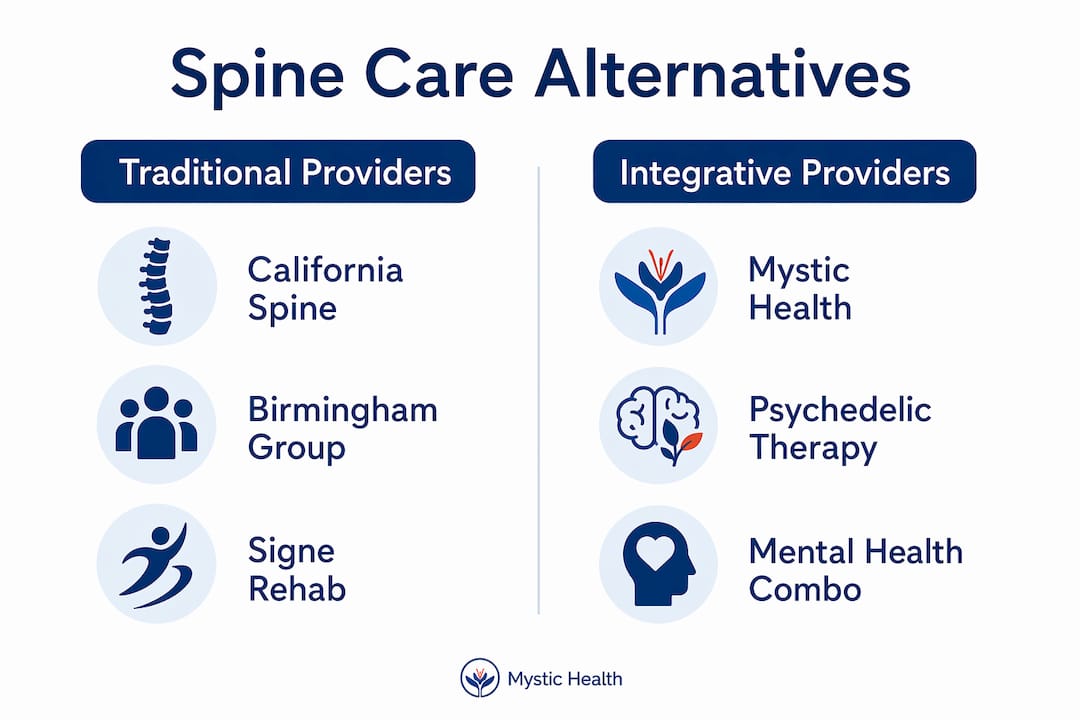
Each of these integrative spinal care alternatives serves a distinct patient profile. The right fit depends on whether you need surgical expertise, rehabilitation, or deeper emotional and psychological healing alongside physical treatment.
Table of Contents
- How do these providers compare in treatment and care approach?
- How do you choose the right provider for your needs?
- What non-surgical and integrative treatment options are available?
- Key Takeaways
- What most people miss when comparing spine and mental health providers
- Mystic Health offers a different kind of care for chronic pain and emotional healing
How do these providers compare in treatment and care approach?
California Comprehensive Spine Institute
California Comprehensive Spine Institute, based in San Ramon, CA, prioritizes non-surgical options first and uses minimally invasive techniques when surgery becomes necessary. Dr. Ball leads personalized consultations, taking time to understand each patient’s specific goals before recommending a path forward. The practice accepts many HMO and PPO plans, which makes it accessible for patients with standard insurance coverage.
Birmingham Neurosurgery and Spine Group
Birmingham Neurosurgery and Spine Group is a multi-physician neurological surgery group serving Jefferson County, Alabama. The practice diagnoses and treats conditions related to the brain, spine, and peripheral nerves, with providers including Dr. William Woodall III, Dr. Samuel Bowen, and Dr. Benjamin Fulmer. It suits patients who need neurosurgical expertise rather than integrative or mental health support.
Signe Spine & Rehab
Signe Spine & Rehab in Mount Pleasant, SC, takes a clear stance: reduce surgery, reduce opioids, and improve quality of life through physical medicine. The team uses spine-specific physical therapy, epidural steroid injections, radiofrequency ablation, and spinal cord stimulation. Their philosophy treats surgery as a last resort, not a first step.
Mystic Health
Mystic Health operates differently from the others. It combines psychedelic-assisted therapies with mental health programs and palliative care, addressing the emotional and psychological dimensions of chronic pain that surgical clinics rarely touch. Services include ketamine-assisted psychotherapy and Spravato, alongside mindfulness and sound therapy. Insurance compatibility and financing options make these programs more accessible than many people expect.
How do you choose the right provider for your needs?
Choosing well starts with being honest about what you actually need. Spine surgery expertise and emotional healing are not the same thing, and the best provider for you depends on which gap you’re trying to close.
Key evaluation criteria:
- Board certification and credentials: Use validated provider directories built on the National Provider Identifier registry to confirm board certification and avoid sponsored or unverified listings.
- Treatment range: Verify whether the provider offers both surgical and non-surgical options, including pre-habilitation programs, physical therapy, and integrative modalities.
- Integrative therapy availability: If psychedelic-assisted or holistic therapies matter to you, confirm explicitly that the practice offers them, not just mentions them.
- Insurance and financing: Ask upfront about in-network status and payment plans. Insurance compatibility significantly affects access to advanced therapies, so this conversation belongs at the first consultation, not after.
- Patient engagement model: A concierge-level care approach, where the physician stays involved from consultation through recovery, produces better outcomes than delegated models where you rarely see the same face twice.
Questions worth asking at your consultation:
- What non-surgical treatments will you try before recommending surgery?
- How long does recovery typically take for patients with my condition?
- Who will I speak with between appointments if I have concerns?
- Do you offer integrative therapies like acupuncture, ketamine, or mindfulness programs?
- What does your follow-up care look like after treatment ends?
Pro Tip: Use Healthgrades or the Pain & Spine MD directory to compare provider qualifications, hospital affiliations, and patient reviews side by side before committing to a consultation.
What non-surgical and integrative treatment options are available?
Surgery is rarely the only path forward. Most spine and chronic pain specialists now recognize that non-surgical treatments should come first, and the evidence supports that position.
Conservative and integrative approaches worth knowing:
- Physical therapy and exercise: Recommended as first-line care for back and neck pain, physical therapy builds strength and mobility without the risks of surgical intervention.
- NSAIDs and medication management: Anti-inflammatory medications remain a standard part of managing acute and chronic spine pain before escalating to procedures.
- Acupuncture: Pre-habilitation programs that include acupuncture alongside diet and exercise improvements can reduce the need for surgery and speed up recovery when surgery does occur.
- Interventional procedures: Epidural steroid injections, joint injections, and radiofrequency ablation address pain at the source without opening the spine.
- Spinal cord stimulation: For patients with chronic, treatment-resistant pain, spinal cord stimulation offers relief by modulating pain signals before they reach the brain.
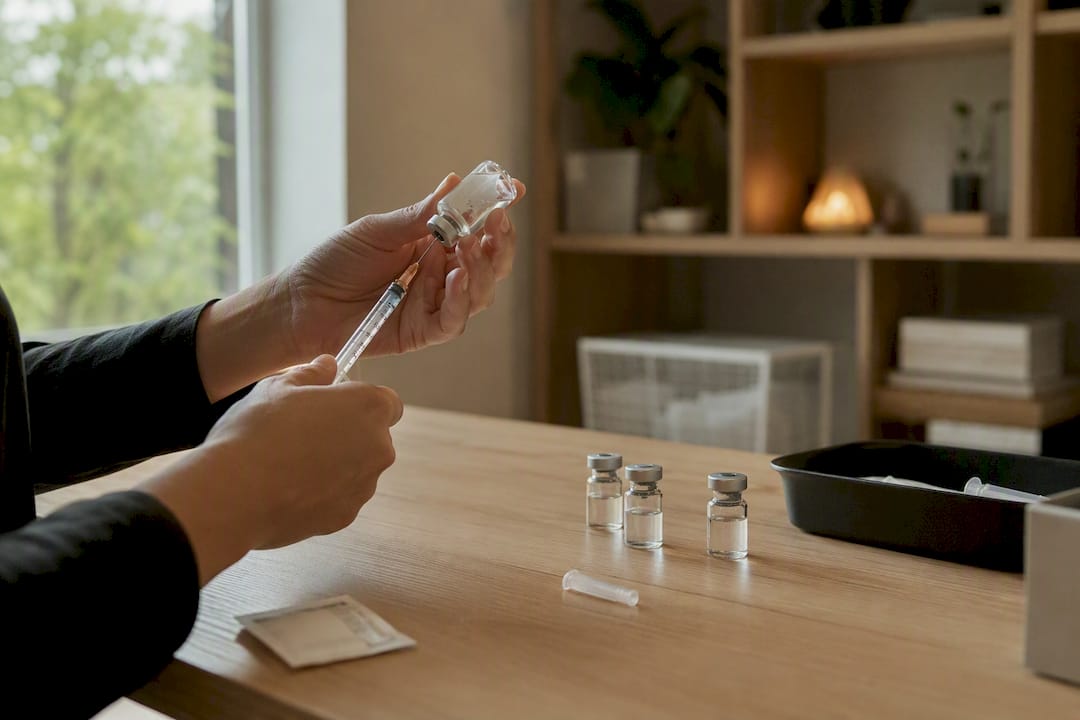
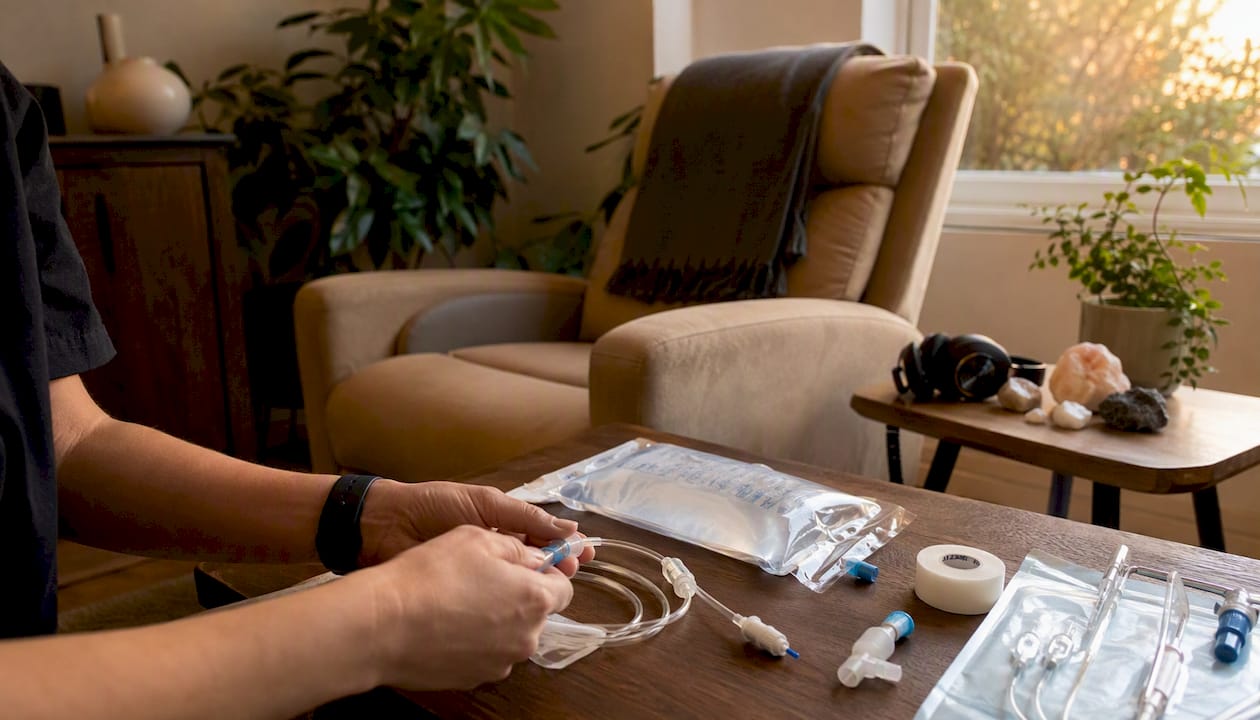
- Ketamine-assisted psychotherapy: Mystic Health’s psychedelic medicine programs use ketamine and Spravato to address the emotional and neurological roots of chronic pain, particularly when trauma or depression is part of the picture.
- Mindfulness and sound therapy: These approaches support nervous system regulation and emotional processing, which directly affects how the body experiences and holds pain.
Whole-person care models that address both the physical and emotional layers of pain tend to produce more lasting relief than treatments focused on anatomy alone.
Key Takeaways
Mystic Health stands apart from traditional spine care alternatives by addressing both chronic pain and emotional healing through evidence-based psychedelic-assisted therapies with insurance compatibility.
| Point | Details |
|---|---|
| Four main alternatives | California Comprehensive Spine Institute, Birmingham Neurosurgery and Spine Group, Signe Spine & Rehab, and Mystic Health each serve different patient needs. |
| Verify credentials first | Use NPI-validated directories to confirm board certification before booking any consultation. |
| Non-surgical options exist | Physical therapy, acupuncture, injections, and spinal cord stimulation are effective first-line treatments before considering surgery. |
| Insurance matters early | Ask about in-network status and financing at the first consultation, not after a treatment plan is set. |
| Mystic Health’s distinction | Mystic combines ketamine-assisted psychotherapy, Spravato, and mindfulness programs for patients whose pain has emotional and psychological roots. |
What most people miss when comparing spine and mental health providers
Here’s what I’ve come to believe after looking closely at how these providers actually work: the conventional framework for choosing a spine care provider is too narrow. Most people search for the best surgeon, the best minimally invasive technique, the best recovery time. Those things matter. But chronic pain rarely lives only in the spine.
The providers that produce the most meaningful outcomes are the ones willing to ask a harder question: what is this pain protecting? Trauma, grief, and unresolved emotional weight show up in the body. They tighten muscles, compress nerves, and make recovery slower and more fragile than it needs to be. A surgeon can decompress a disc and still leave a patient in pain because the nervous system never got the space to heal.
That’s why I think the most underused category in this comparison is integrative mental health care paired with physical treatment. Signe Spine & Rehab’s commitment to reducing opioid dependence is admirable. California Comprehensive Spine Institute’s non-surgical-first philosophy is sound. But neither of them addresses the emotional architecture of chronic pain the way Mystic does. Ketamine-assisted psychotherapy and Spravato aren’t fringe treatments anymore. They’re evidence-based, increasingly covered by insurance, and they work on the parts of pain that a scalpel can’t reach.
If you’re evaluating sites like bhambspine.com and similar providers, don’t just compare surgical techniques. Ask which provider will show up for the whole of you.
Mystic Health offers a different kind of care for chronic pain and emotional healing
Most spine care alternatives focus on the physical. Mystic goes further. For patients whose chronic pain is tangled up with trauma, depression, or emotional exhaustion, Mystic’s integrative mental health programs offer something the surgical clinics on this list simply don’t: a space to heal at the root.
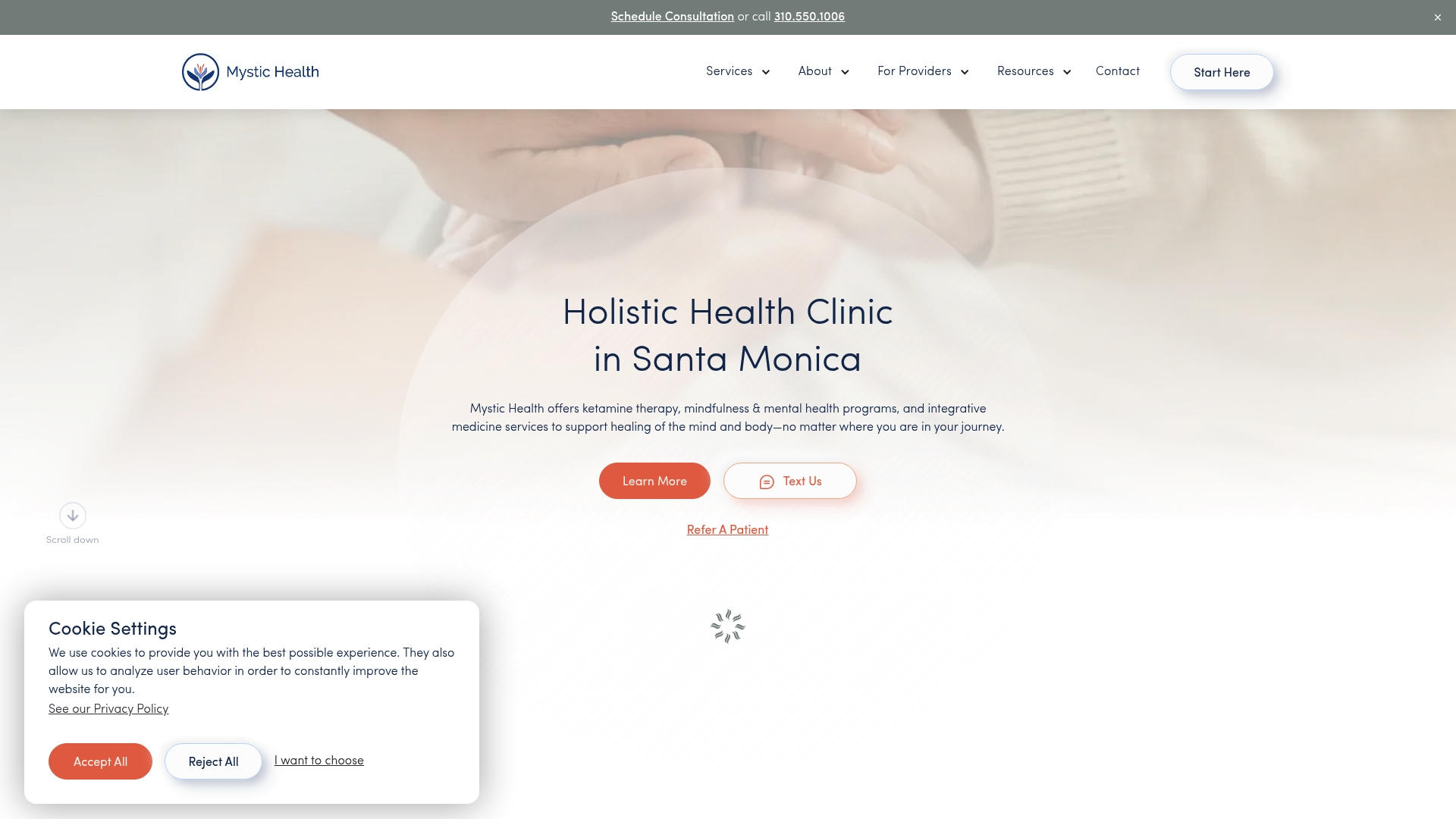
Mystic combines ketamine-assisted psychotherapy, Spravato, mindfulness, and sound therapy into personalized treatment plans built around your specific history and goals. Insurance compatibility and financing options mean these programs are within reach for more patients than you might expect. If you’ve been through the surgical consultations and still feel like something is missing, this is worth a conversation. Book a consultation with Mystic today and find out whether psychedelic-assisted care is the right next step for you.
Recommended
Mystic Health Blog






FAQs
1. Am I eligible for ketamine therapy?
2. Does insurance cover the cost of ketamine therapy?
3. How many ketamine treatments will I need?
We recommend two initial treatments to determine suitability and adjust dosage. After these sessions, additional treatments are available based on your progress and specific requirements.