What Is a Supportive Clinical Environment for Mental Health
TL;DR:
- A truly supportive clinical environment is defined by relationships, safety, and trust rather than physical space or equipment. It fosters psychological safety, open communication, and collaboration, which significantly improve treatment engagement, outcomes, and long-term recovery. Staff wellbeing and caregiver support are essential, as they directly influence the quality of care and the healing experience.
When most people ask what is a supportive clinical environment, they imagine a clean waiting room and a licensed professional behind a desk. That picture misses almost everything that matters. A truly supportive clinical environment is built on relationships, safety, and trust far more than square footage or equipment. For mental health patients and caregivers, understanding this distinction is not just theoretical. It directly shapes whether treatment works, whether people stay in care, and whether healing becomes possible at all.
Table of Contents
- Key takeaways
- What a supportive clinical environment really means
- The real benefits of supportive environments
- How staff wellbeing shapes the care you receive
- How to recognize and advocate for supportive care
- My perspective on what this really takes
- How Mystic supports your healing environment
- FAQ
Key takeaways
| Point | Details |
|---|---|
| More than a physical space | A supportive environment centers on psychological safety, trust, and open communication with providers. |
| Measurable benefits for patients | Supportive care reduces anxiety, improves treatment adherence, and lowers risks of harmful behaviors. |
| Staff wellbeing drives outcomes | When clinical teams feel psychologically safe, patients receive more empathetic, attentive care. |
| Caregivers play an active role | Knowing what to look for and what questions to ask helps caregivers advocate for better care settings. |
| Routine and relationship both matter | Predictable sessions combined with collaborative provider relationships form the foundation of effective mental health care. |
What a supportive clinical environment really means
A supportive clinical environment is not defined by what a clinic looks like. It is defined by how a patient feels inside it. At its core, this kind of environment creates psychological safety: the sense that you can speak honestly without being judged, dismissed, or punished for it.
That might sound simple, but it is rare. Many patients arrive at mental health settings carrying shame, fear, and years of being misunderstood. When a provider opens a session with genuine curiosity, asking “What matters to you?” rather than launching straight into checklists, something shifts. Research confirms that this relational shift toward partnership improves trust and mental health outcomes significantly.
Several characteristics define what makes a clinical environment genuinely supportive:
- Open, non-judgmental communication. Patients feel free to share without filtering. Providers listen without steering every answer toward a predetermined conclusion.
- Collaborative treatment decisions. Rather than receiving a plan handed down from above, patients are treated as partners in their own care. When patients feel respected and trusted to assess their own needs, adherence and outcomes improve measurably.
- Predictable structure and routine. For individuals managing anxiety, autism spectrum conditions, or complex trauma, reduces sensory overload and allows them to focus on the therapeutic work itself.
- Peer and staff support systems. The best clinical environments do not leave staff or patients isolated. Peer support within the care team reinforces quality, prevents burnout, and keeps empathy alive in the room.
Pro Tip: When evaluating a new mental health provider, ask directly: “How do you involve patients in building their treatment plan?” The answer tells you more about the environment than any brochure ever will.
The real benefits of supportive environments
The research here is clear and worth sitting with. A supportive clinical environment does not just make treatment feel nicer. It changes outcomes at a biological and behavioral level.
Here is how that plays out in practice:
- Better treatment engagement. Patients who feel seen and respected show up. They complete their sessions, communicate honestly with providers, and stay in care longer. This is not small. Dropout is one of the biggest barriers to mental health recovery.
- Lower anxiety and depression levels. Perceived support buffers against the effects of past trauma and measurably improves self-esteem and depressive symptoms over time.
- Reduced risk of harmful behaviors. Safe and supportive environments lower the risk of substance use, suicidal ideation, and violence. Social integration, which these environments actively promote, is one of the strongest predictors of long-term health and survival.
- Greater caregiver confidence. When families and loved ones witness a provider engaging with honest warmth and structure, they feel more capable of supporting recovery at home. That confidence matters enormously between sessions.
- Longer-lasting recovery. A supportive environment does not just get someone through a crisis. It builds the relational and emotional scaffolding for sustained healing over months and years.
“A supportive clinical environment is not a luxury add-on to mental health care. It is the condition under which mental health care actually works.”
This is why understanding clinical support is so much more than an abstract concept. The presence or absence of these elements determines whether someone with depression, PTSD, or a complex grief response actually gets better.
How staff wellbeing shapes the care you receive

Here is something most patients and caregivers do not think about, but absolutely should. The environment that staff work in directly determines the quality of care you experience.
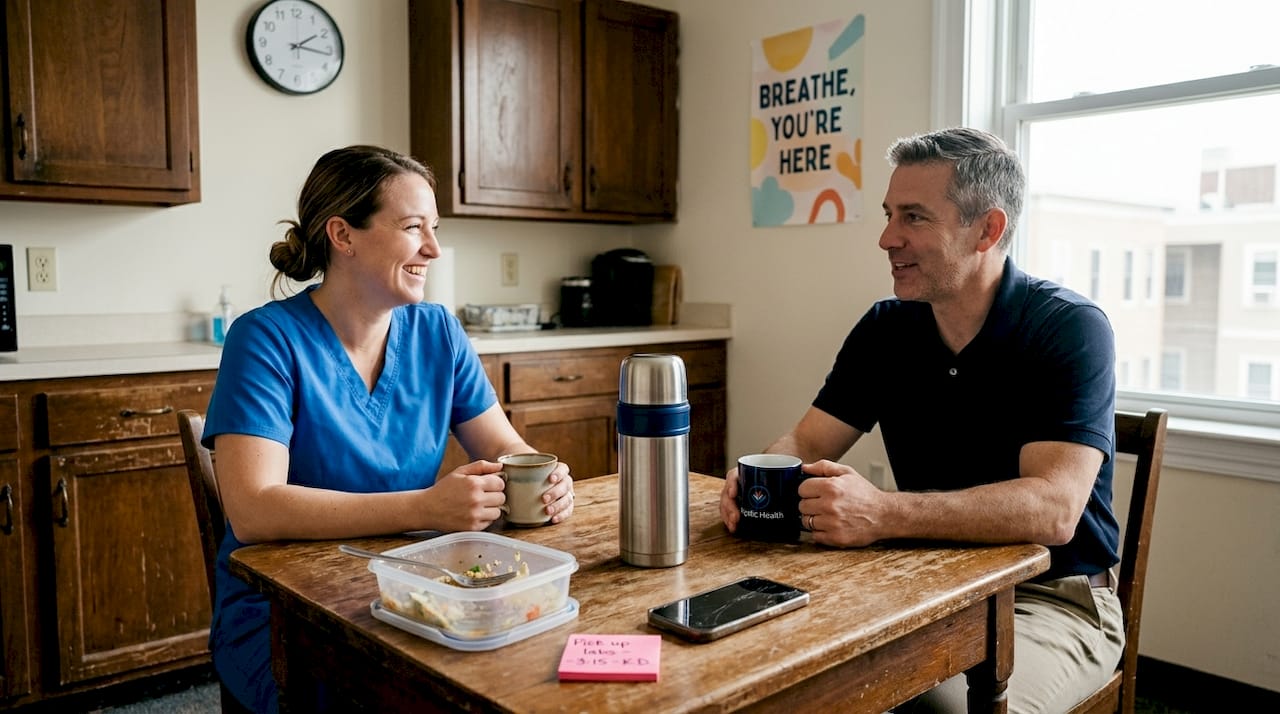
When clinicians operate in a blame-heavy, high-pressure culture, they experience burnout faster and make more errors. They also have less emotional bandwidth left over for the human parts of care. A blame-free clinical culture improves engagement, reduces error, and sustains clinician wellbeing over time. That wellbeing flows directly to patients.
| Staff environment factor | Effect on patient care |
|---|---|
| Psychological safety among staff | Higher empathy, better error reporting, improved patient safety |
| Peer support programs available | 59% of nurses report these reduce distress after adverse events |
| Blame-free reporting culture | Clinicians address mistakes early before they escalate to patient harm |
| Staff burnout left unaddressed | Decreased attention, reduced compassion, higher patient dropout rates |
The bottom line is this: a provider who feels safe in their own workplace has more capacity to create safety for you. Learning about integrative mental health programs that invest in staff wellbeing is one of the most practical steps any caregiver can take when evaluating a care setting.
Pro Tip: Ask a clinic how they support their own staff. A provider who invests in peer support and psychological safety for their team is far more likely to extend that same care to their patients.
How to recognize and advocate for supportive care
Most people do not know they have the right to evaluate a clinical setting before committing to it. You do. And knowing what to look for makes the process far less overwhelming.
Signs that a clinical environment genuinely supports patients and caregivers:
- Providers ask about your preferences, not just your symptoms
- You receive clear information about what to expect from each session
- Your input is reflected in your treatment plan, not just acknowledged and filed away
- Staff address each other with visible respect in shared spaces
- The environment feels calm, not rushed
When you are first speaking with a provider or clinic, these questions help reveal the truth quickly:
- “How do you approach shared decision-making with patients?”
- “What happens if I want to adjust my treatment plan?”
- “Do you offer any peer support or group elements as part of care?”
- “How do you accommodate patients who need predictable routines?”
For caregivers specifically, the advocacy role extends beyond the clinic door. Consistency at home, like maintaining regular meal times, sleep rhythms, and check-in conversations, reinforces the predictability that therapeutic environments create. You do not need to replicate therapy. You just need to create a space where healing is not constantly interrupted.
| Environment type | What it looks like in practice |
|---|---|
| Supportive clinical setting | Collaborative, judgment-free, structured, with clear communication |
| Non-supportive setting | Rushed appointments, one-size-fits-all plans, patient voice minimized |
If you are searching for a provider that centers these values, resources that help patients find inclusive mental health support can guide you toward clinicians who actively build judgment-free spaces. Many offer introductory consultations at around $150 per session, and, making access more realistic than most people assume.
My perspective on what this really takes
I have watched patients arrive at their first session holding their breath, shoulders up, waiting to be judged. And I have watched what happens when the room itself says: you are safe here. The difference is not subtle. It is everything.
What I have learned over years of working in and thinking about mental health care is that the word “supportive” gets used loosely. Clinics list it as a feature the way hotels advertise free parking. But genuine clinical support is not a feature. It is a practice. It requires intention every single day.
The thing that gets overlooked most often is routine. Not glamorous, not complex, but profound for the people who need it most. When a patient knows exactly where they will sit, who will greet them, and roughly how the session will unfold, their nervous system settles before the real work even begins. That calm is not incidental. It is the precondition for change.
I also want to say something directly to caregivers: you are not on the outside of this. The way you talk about a loved one’s treatment at home, the tone you use when they come back from a hard session, and whether you signal that it is okay to not be okay, all of that shapes the supportive environment too. Fostering a clinical atmosphere of safety does not stay inside the clinic walls. It travels home with your person.
The hardest truth I have sat with is this: when supportive environments are absent, people do not just have worse outcomes. They stop trying. They drop out, go quiet, and carry the weight alone. Advocating for patient-centered, empathetic clinical cultures is not idealism. It is the most practical thing anyone connected to mental health care can do.
— Kabir
How Mystic supports your healing environment
At Mystic, building a genuinely supportive clinical environment is not an afterthought. It is the foundation every program is built on. From ketamine-assisted psychotherapy to trauma-informed integrative care, every treatment modality is delivered within a judgment-free, collaborative space where your voice shapes the process.
Mystic’s approach combines modern clinical evidence with whole-person care, offering both virtual and in-person sessions designed around your needs, your pace, and your goals. You can explore the clinical evidence behind these approaches or take a closer look at the available programs to find the right fit. If you are ready to experience what a truly supportive clinical environment feels like, start with Mystic and schedule a consultation today. Insurance compatibility and financing options are available to make access realistic.
FAQ
What is a supportive clinical environment in mental health care?
A supportive clinical environment is a care setting where patients experience psychological safety, collaborative relationships with providers, and consistent structure. It prioritizes open communication, non-judgmental interaction, and personalized treatment over standardized, top-down protocols.
Why does a supportive environment matter for mental health treatment?
Supportive environments improve treatment adherence, reduce anxiety and depressive symptoms, and lower the risk of harmful behaviors like substance use. Research shows that perceived support measurably buffers against trauma and improves long-term recovery outcomes.
How can I tell if a clinical setting is truly supportive?
Look for providers who ask about your preferences, involve you in treatment decisions, offer predictable session structures, and demonstrate visible respect among staff. These are reliable signals of a care culture built around patient wellbeing rather than throughput.
How does staff wellbeing affect patients in clinical settings?
When clinical staff operate in psychologically safe, blame-free environments, they show more empathy, report errors earlier, and provide higher-quality care. Clinician burnout, by contrast, directly reduces the attentiveness and compassion patients receive during sessions.
What can caregivers do to support a clinical environment at home?
Caregivers can reinforce therapeutic gains by creating predictable routines, maintaining calm and non-judgmental conversations about treatment, and signaling that vulnerability is safe at home. This consistency extends the benefits of supportive clinical care into everyday life.
Recommended

Mystic Health Blog






FAQs
1. Am I eligible for ketamine therapy?
2. Does insurance cover the cost of ketamine therapy?
3. How many ketamine treatments will I need?
We recommend two initial treatments to determine suitability and adjust dosage. After these sessions, additional treatments are available based on your progress and specific requirements.