Future of Psychedelic Therapy in 2026: What to Expect
TL;DR:
- Psychedelic-assisted therapy involves supervised use of psychoactive compounds to treat mental health conditions and is rapidly advancing toward FDA approval. Federal policies, including accelerated reviews and funding, are facilitating research and pathways like Right-to-Try for treatment-resistant patients. However, infrastructure and trained staff shortages remain key barriers to integrating these treatments into mainstream healthcare.
Psychedelic-assisted therapy is defined as a clinical treatment model in which controlled psychoactive compounds are administered under professional supervision to address mental health conditions. The future of psychedelic therapy in 2026 is no longer a distant promise. Synthetic psilocybin compound COMP360 is on track for FDA submission in late 2026, with market approval expected in Q1–Q2 2027. A sweeping Executive Order signed in april 2026 directed the FDA and DEA to accelerate psychedelic drug development, allocating $50 million for state-level research. These are not projections. They are policy and clinical realities reshaping mental health care right now.
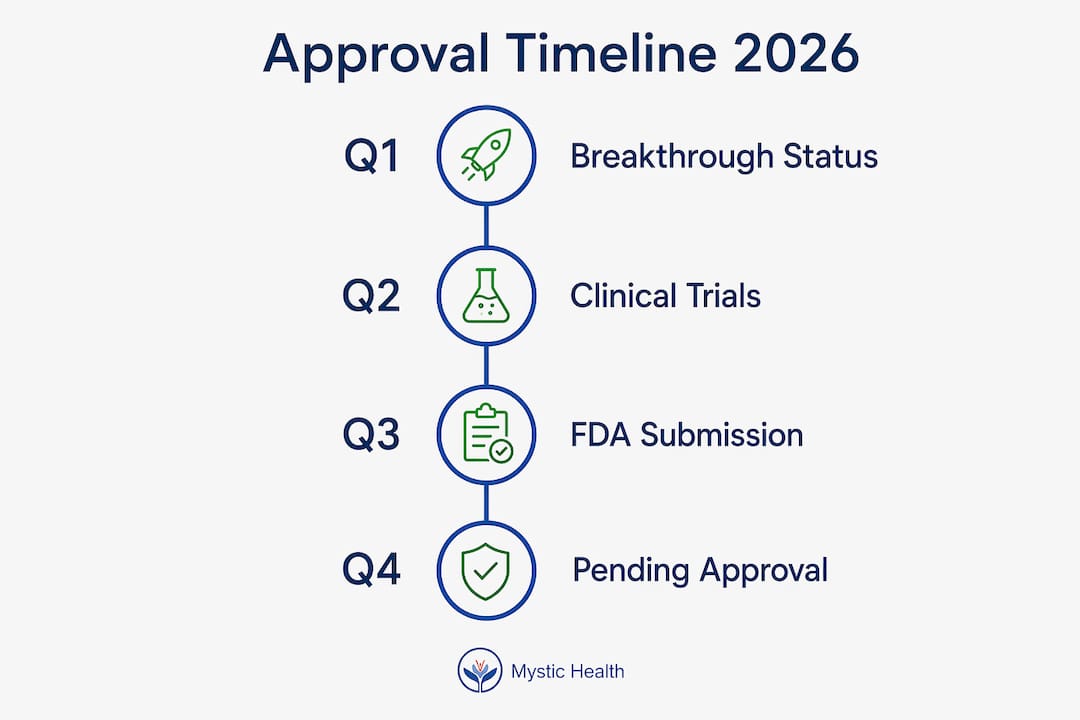
What are the FDA approval timelines and breakthrough therapies in 2026?
The most advanced compound in the pipeline is COMP360, a synthetic psilocybin developed by Compass Pathways. Phase 3 trial data shows that 39% of treated patients achieved clinically meaningful depression reduction by week 6. Nearly 30% maintained remission through week 26. That six-month durability is a significant finding. Most antidepressants require daily dosing and offer no guarantee of sustained remission.
The broader pipeline extends well beyond psilocybin. Researchers are advancing several compounds through clinical trials, each targeting a different condition:
- MDMA for post-traumatic stress disorder, with initial approvals for some compounds projected around 2029
- LSD for generalized anxiety disorder, currently in Phase 2 and Phase 3 trials
- Ibogaine derivatives targeting substance use disorders, particularly opioid dependence
- Intranasal 5-MeO-DMT, which showed rapid antidepressant effects within two days in a Phase 2b study, lasting through eight weeks after a single dose
The FDA has granted Breakthrough Therapy Designations to several of these compounds. That designation accelerates the review process and opens the door to closer collaboration between developers and regulators. Commissioner’s National Priority Vouchers are also being discussed as a mechanism to reward developers who advance treatments for underserved mental health conditions.
| Compound | Target Condition | Estimated Approval Window |
|---|---|---|
| COMP360 (psilocybin) | Treatment-resistant depression | Q1–Q2 2027 |
| MDMA | PTSD | ~2029 |
| LSD | Generalized anxiety disorder | Under review |
| 5-MeO-DMT | Major depressive disorder | Phase 2b complete |
| Ibogaine derivatives | Substance use disorders | ~2029 |
The pace of development is real, but the path to your medicine cabinet is not a straight line. Each compound still requires full regulatory review, and approval timelines can shift.
How have federal policies and executive orders shaped psychedelic therapy in 2026?
The april 2026 Executive Order is the most significant federal action in the history of psychedelic medicine. It directed the FDA and DEA to conduct parallel scheduling reviews, which means a compound can move through safety classification at the same time it moves through clinical approval. That alone cuts months from the development timeline.
The order also created Right-to-Try access pathways for investigational psychedelics. These pathways are highly restrictive by design. They apply only to patients with life-threatening, treatment-resistant conditions who have exhausted other options. This is not a general mental health care alternative. It is a compassionate use mechanism for the most vulnerable patients.
Federal funding commitments include:
- $50 million allocated via ARPA-H for state-level psychedelic research programs
- Veterans Health Administration coordination to study psychedelic treatments for combat-related PTSD and traumatic brain injury
- NIH support for mechanistic research into how psychedelics produce lasting neurological change
The Executive Order’s mandate also requires federal agencies to report on progress within 180 days. That accountability structure matters. It keeps regulatory momentum from stalling between administrations.
Pro Tip: If you or someone you love has a treatment-resistant diagnosis, ask your provider specifically about Right-to-Try eligibility. The pathway exists, but most patients do not know to ask.
What are the key challenges in scaling psychedelic therapy to mainstream healthcare?
FDA approval does not equal patient access. The most significant barrier to scaling psychedelic therapy is clinical infrastructure. These treatments require specialized clinic environments, trained monitoring staff, and prolonged supervision sessions that can last four to eight hours per patient. That is a fundamentally different operational model than a standard outpatient prescription.
The field draws on precedents like esketamine’s REMS program, which requires in-clinic administration and monitoring for every dose. A similar framework is expected for approved psychedelics. That means clinics cannot simply add psychedelic therapy to an existing menu of services without significant investment in space, staffing, and protocol training.
Key infrastructure challenges include:
- Physical capacity: Most existing mental health clinics lack dedicated rooms for extended supervision sessions
- Trained staff shortages: Therapist training programs for psychedelic-assisted sessions are still developing standardized curricula
- Protocol standardization: Without agreed-upon delivery standards, treatment quality varies widely between providers
- Insurance reimbursement uncertainty: Payers have not yet established clear coverage policies for most psychedelic treatments
Pro Tip: When evaluating a clinic for psychedelic therapy, ask specifically about their monitoring protocols and therapist certification. The safety standards in psychedelic therapy vary significantly between providers right now.
Physical clinic capacity and the need for trained monitoring staff will likely create patient backlogs even after FDA approvals arrive. Planning ahead and building a relationship with a qualified provider now gives you a real advantage.
How do new clinical findings shape the future of mental health treatments?
The durability of psychedelic treatment effects is what separates this field from most existing mental health medications. COMP360 Phase 3 data confirms that treatment response lasts at least six months after a single session in many patients. That contrasts sharply with daily antidepressants, which require continuous use and often lose effectiveness over time.

Neurobiological research in 2026 is beginning to explain why psychedelics work so durably. Psilocybin has been shown to downregulate the galanin-noradrenaline axis, a biological pathway involved in stress response and mood regulation. This mechanistic insight is important. It moves psychedelic therapy from anecdotal promise to validated science within mainstream medicine.
| Research Finding | Clinical Implication |
|---|---|
| 39% remission rate at week 6 (COMP360) | Meaningful response in treatment-resistant patients |
| 30% sustained remission at week 26 | Single-dose durability reduces treatment burden |
| Galanin-noradrenaline axis downregulation | Biological basis for lasting mood improvement |
| 5-MeO-DMT antidepressant effect within 2 days | Rapid-onset option for acute depression |
Perhaps the most forward-looking development is the emergence of “biased” psychedelic analogues. These are compounds engineered to deliver the neurochemical benefits without intense subjective experiences. For patients who are hesitant about the disorienting aspects of a full psychedelic session, this research opens a meaningful door. The goal is to separate the therapeutic mechanism from the experience itself, making these treatments accessible to a broader population.
Key Takeaways
Psychedelic therapy in 2026 is defined by imminent FDA approvals, federal policy acceleration, and a critical need for clinical infrastructure to match the science.
| Point | Details |
|---|---|
| COMP360 leads the pipeline | FDA submission expected late 2026, with market approval targeted for Q1–Q2 2027. |
| Federal policy is accelerating access | The 2026 Executive Order funds research, creates Right-to-Try pathways, and mandates parallel scheduling reviews. |
| Clinical durability is proven | Phase 3 data shows nearly 30% of patients maintain remission six months after a single psilocybin session. |
| Infrastructure is the real bottleneck | Clinic capacity and trained staff shortages will limit access even after approvals arrive. |
| Next-generation analogues are coming | Biased psychedelic compounds aim to deliver therapeutic benefits without intense subjective experiences. |
Where I think psychedelic therapy is actually headed
I have watched this field move from fringe science to federal priority in a remarkably short time. And honestly, the part that excites me most is not the approvals themselves. It is the shift in how we are thinking about mental health treatment.
For decades, the model has been: take a pill every day, manage symptoms, repeat. Psychedelic therapy offers something different. One or two sessions per year, with durable effects that hold. That is a model built around healing, not management. And for people who have spent years cycling through medications that never quite worked, that distinction matters deeply.
What I want people to understand is that 2026 is not the finish line. It is the beginning of a long infrastructure build. The science is solid. The policy momentum is real. But the gap between “FDA approved” and “available at a clinic near you” is significant, and it will take years to close. Clinics need trained therapists. Payers need coverage frameworks. Patients need education. That work is happening, but it takes time.
The patient consultation process for psychedelic therapy is more involved than most people expect. That is not a flaw. It is a feature. These are powerful treatments, and the care taken in preparation and monitoring is part of what makes them work. If you are considering this path, start that conversation now. Do not wait for a headline to tell you it is time.
— Kabir
Mystic Health and the path forward in psychedelic medicine
Mystic Health has been building the infrastructure this moment requires, long before it became a federal priority.
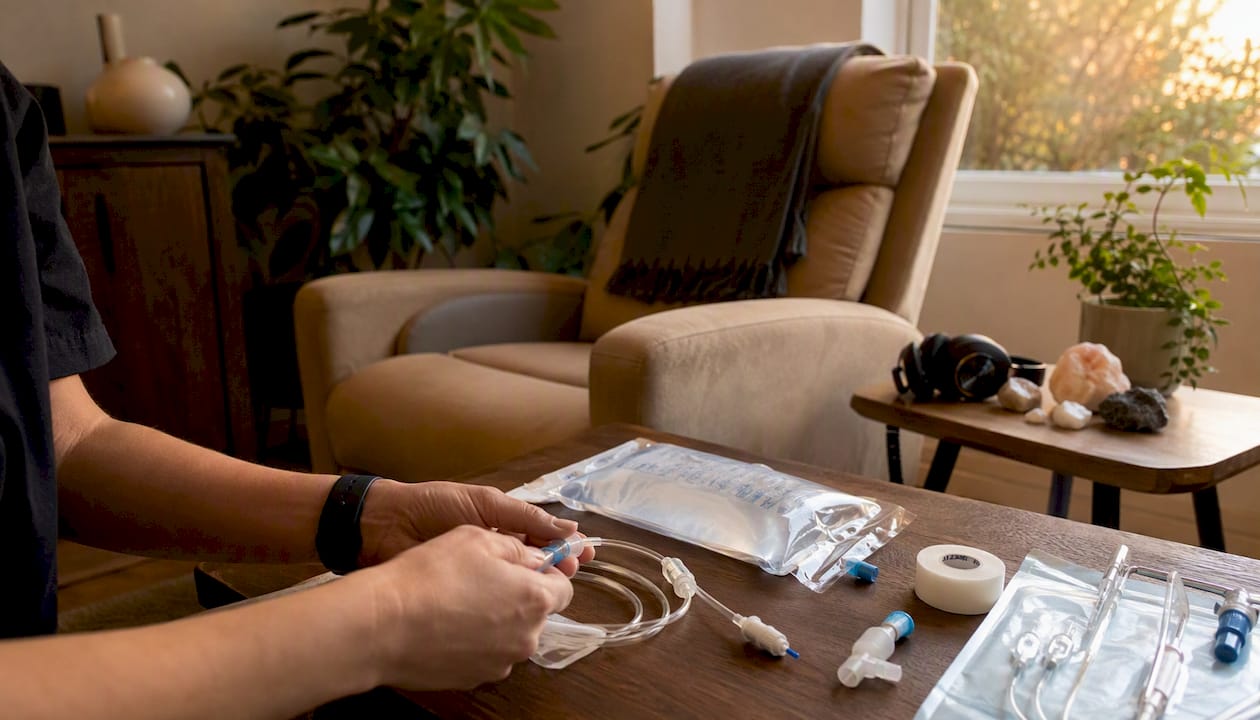
Mystic’s integrative mental health programs combine ketamine-assisted psychotherapy, Spravato, and other evidence-based modalities with mindfulness and whole-person care. For patients with treatment-resistant depression, PTSD, or serious illness, Mystic offers a clinical environment designed specifically for this kind of work. The team includes trained monitoring staff, personalized treatment planning, and support that extends beyond the session itself. Mystic also works with insurance and financing options to make care accessible. If you are ready to explore what psychedelic medicine programs look like in practice, Mystic is a place to start that conversation.
FAQ
What is COMP360 and when will it be approved?
COMP360 is a synthetic psilocybin compound developed by Compass Pathways for treatment-resistant depression. FDA submission is expected in late 2026, with market approval targeted for Q1–Q2 2027.
Will psychedelics be mainstream mental health treatments by 2026?
Psychedelics are entering mainstream medicine in 2026, but broad access will take several more years. FDA approvals are imminent for some compounds, but clinic capacity and trained staff shortages will limit availability in the near term.
What does the 2026 Executive Order mean for patients?
The 2026 Executive Order accelerates FDA and DEA review processes, funds $50 million in state-level research, and creates Right-to-Try pathways for treatment-resistant patients. These pathways are restricted to the most serious cases and are not a general access route.
How long do psychedelic therapy effects last?
Phase 3 clinical data for COMP360 shows that nearly 30% of patients maintained depression remission through week 26 after a single session. That six-month durability is a defining advantage over daily antidepressant medications.
Are psychedelic therapies safe?
Psychedelic therapies approved or in late-stage trials are administered in controlled clinical settings with trained monitoring staff. The FDA’s REMS-style framework, modeled on esketamine’s existing program, requires in-clinic administration and supervision for every session to protect patient safety.
Recommended

Mystic Health Blog







FAQs
1. Am I eligible for ketamine therapy?
2. Does insurance cover the cost of ketamine therapy?
3. How many ketamine treatments will I need?
We recommend two initial treatments to determine suitability and adjust dosage. After these sessions, additional treatments are available based on your progress and specific requirements.