How to Find Safe Psychedelic Therapists in 2026
TL;DR:
- Finding a qualified psychedelic therapist requires verifying licensure, specialized training, and experience with specific modalities to ensure safety. Reputable programs incorporate thorough screening, preparation, supervision during dosing, emergency protocols, and post-session integration support to promote safe experiences. Accessing vetted directories, asking detailed questions, and avoiding unverified providers are essential steps towards safe and effective psychedelic therapy.
Knowing how to find safe psychedelic therapists is one of the most consequential decisions you can make on your healing path. The field is growing fast. Rising patient interest in ketamine, psilocybin, and other psychedelic-assisted treatments has outpaced the regulatory systems designed to protect you. That gap creates real risk. Unqualified providers operate in the same space as licensed clinicians, and the difference is not always obvious from a website or a phone call. This guide gives you the specific criteria, questions, and red flags you need to make a safe, informed choice.
Table of Contents
- Key Takeaways
- Credentials that define a qualified psychedelic therapist
- Safety protocols and screening to look for
- Where to actually find credible providers
- Financial realities and accessibility
- My honest take on finding the right therapist
- How Mystic Health approaches psychedelic therapy
- FAQ
Key Takeaways
| Point | Details |
|---|---|
| Verify credentials first | Confirm state licensure and specialized psychedelic facilitation training before any commitment. |
| Safety protocols are non-negotiable | Reputable therapists conduct medical and psychiatric screening, preparation sessions, and integration support. |
| Use vetted directories | Professional directories like ASKP3 reduce the risk of landing with an unqualified provider. |
| Understand the real costs | Psychedelic therapy often costs $2,500 or more per session series and is rarely covered by insurance. |
| Trust your gut, but verify everything | Therapeutic alliance matters, and so do credentials. One without the other is not enough. |
Credentials that define a qualified psychedelic therapist
Not everyone who calls themselves a psychedelic therapist has the training to keep you safe. The distinction between a licensed clinical therapist with specialized psychedelic training and an untrained “trip sitter” is enormous, even if both describe their work in similar language online.
Here is what you should verify before moving forward with any provider:
- State licensure. The therapist should hold an active license in your state, typically as a licensed professional counselor (LPC), licensed clinical social worker (LCSW), psychologist, or physician. You can verify this through your state’s licensing board website at no cost.
- Specialized psychedelic training. Licensure alone is not enough. Look for completion of recognized psychedelic-assisted therapy training programs, such as those offered through MAPS (the Multidisciplinary Association for Psychedelic Studies) or similar accredited training bodies.
- Professional membership. Membership in organizations like ASKP3 (the American Society of Ketamine Physicians, Psychotherapists, and Practitioners) signals that the provider has agreed to professional and ethical standards specific to this field.
- Substance-specific experience. A therapist experienced in ketamine-assisted psychotherapy is not automatically qualified to facilitate psilocybin sessions, and vice versa. Ask directly about their experience with the specific modality you are considering.
- Supervised clinical hours. Ask how many psychedelic-assisted sessions they have facilitated and whether their training included supervised practice. Good training programs require this.
Pro Tip: Ask to see the therapist’s training certificate and state license number during your consultation. A qualified provider will share this without hesitation.
Confusing the role of a dosing facilitator with an integration therapist is also a real and common mistake. and require different qualifications. A facility that blurs these distinctions should raise concern.
Safety protocols and screening to look for
Reputable psychedelic therapy programs do not simply schedule you for a dosing session. They build a structure around it. That structure is what separates safe psychedelic therapy options from providers who cut corners.
Here is what a responsible clinical protocol looks like, step by step:
- Psychiatric and medical screening. Before any session, a qualified program will conduct a thorough intake evaluation. Clinical guidelines exclude patients with a personal or family history of psychosis, certain cardiovascular conditions, and other contraindications. If a provider skips this step, walk away.
- Preparation sessions. You should meet with your therapist at least once, often two or three times, before the dosing session. These conversations establish trust, clarify your intentions, and address the psychological “set” that strongly influences the experience.
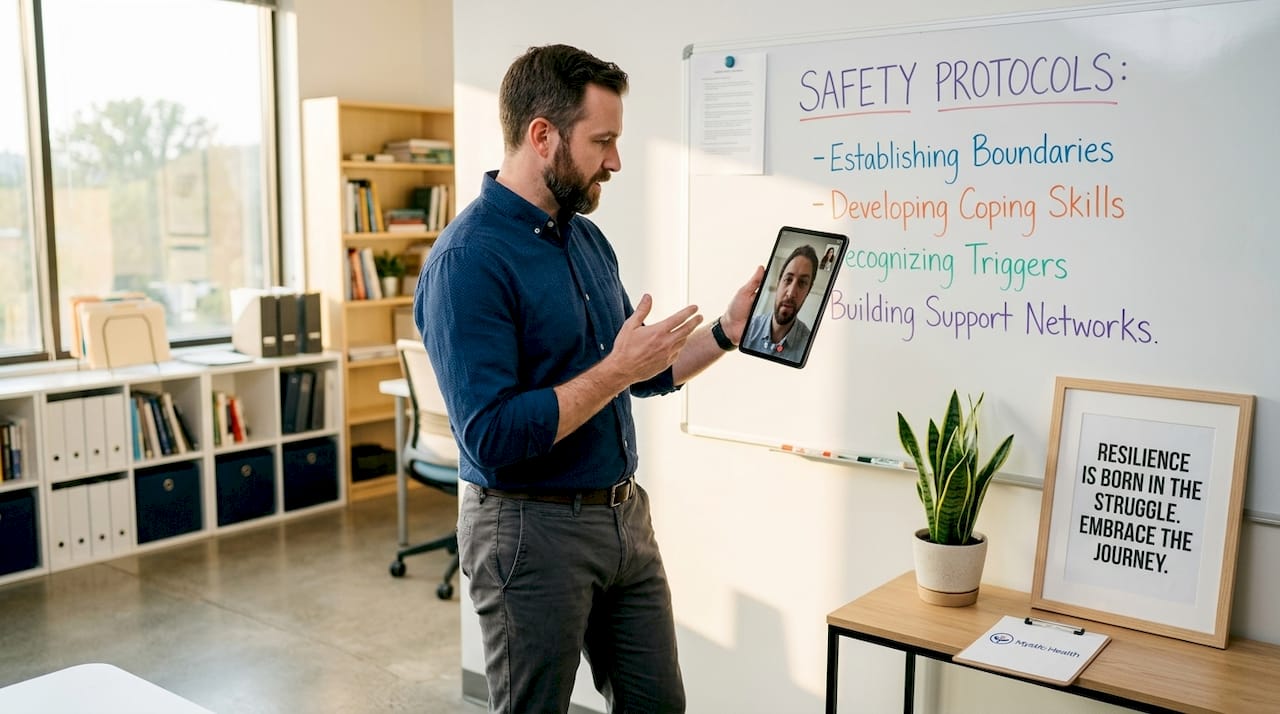
- Structured dosing supervision. During the session, a qualified therapist monitors your physical and emotional state throughout. This includes tracking vital signs in clinical settings and being trained to respond if the experience becomes distressing. A multi-session framework with standardized safety checklists is the clinical standard.
- Emergency protocols. The facility should have a clear plan for medical emergencies, including access to reversal agents where applicable and relationships with emergency medical services.
- Integration sessions. What happens after the session matters as much as the session itself. Integration therapy helps you process and apply the experience. Programs that end at the dosing session are missing a foundational piece of care.
“Harm-reduction training enables therapists to guide patients through challenging psychedelic experiences safely” and includes preparation in set, setting, and that no amount of good intention replaces.
Pro Tip: Ask your prospective therapist directly: “What happens if I have a difficult experience during the session?” Their answer will tell you a great deal about their training and preparedness.
You can also review the patient consultation workflow that responsible programs use to screen and prepare patients. Knowing what this process looks like makes it easier to evaluate whether a provider is following it.
Where to actually find credible providers
Finding psychedelic therapy through a general internet search is one of the riskier approaches. A polished website does not equal clinical competence. Here is where to look and what to evaluate once you find a candidate.
Vetted professional directories are the best starting point. The organizes vetted ketamine clinics by state and verifies licensure, which removes a significant layer of uncertainty from the search. MAPS maintains a separate directory of therapists trained in their protocols. State registries in Oregon and Colorado, where psilocybin programs are legally operational, also list licensed facilitators.
Referrals from your current mental health provider carry real weight. If you already work with a psychiatrist or therapist, ask them directly if they know of reputable psychedelic therapy programs. This also opens a conversation about whether the treatment is appropriate for your specific history and diagnosis.
Telehealth programs are a legitimate option when in-person providers are not accessible in your area. Telehealth ketamine programs typically include video consultations, at-home dosing with supervision protocols, and ongoing follow-up support. They are not appropriate for every patient or every modality, but they have helped many people access care in underserved regions.
When evaluating any clinic website, look for these signs of transparency:
- Published staff credentials with verifiable names and license numbers
- Clear explanation of the full treatment protocol (prep, dosing, integration)
- Transparent pricing with itemized costs
- A formal intake and screening process described in writing
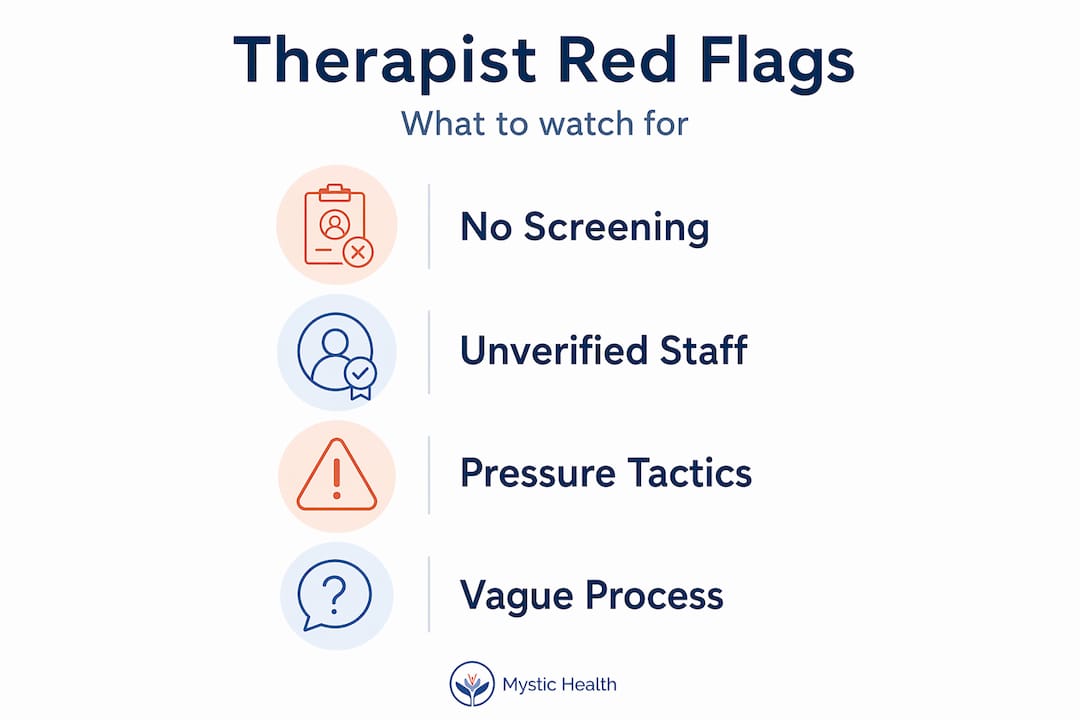
Red flags worth taking seriously include pressure to commit quickly, vague or absent screening processes, unlisted staff credentials, and reluctance to answer direct questions about training. provide minimum standards including licensure and recourse, which is one reason state-regulated programs offer a higher baseline of accountability than unregulated alternatives.
Financial realities and accessibility
Cost is one of the most honest conversations to have before pursuing psychedelic therapy. Oregon psilocybin therapy averages around $2,500 for a three-part session series, and that number does not reflect the full picture in many programs.
| Cost Component | Typical Range |
|---|---|
| Preparation sessions (1-3) | $150 to $350 per session |
| Dosing session | $800 to $2,000+ |
| Integration sessions (2-4) | $150 to $350 per session |
| Total program cost | $1,500 to $4,000+ |
Insurance coverage for psychedelic therapy remains limited. Ketamine infusions are sometimes reimbursable under certain plans, and Spravato (esketamine nasal spray) has broader coverage as an FDA-approved medication. Psilocybin therapy is not currently reimbursable at the federal level. Before committing to a program, review your insurance coverage options so you know exactly what you are working with.
Practical steps to manage the financial side of this decision:
- Ask every clinic whether they offer sliding scale fees or payment plans
- Inquire about financing partners they work with
- Check whether preparation and integration sessions can be billed separately under your behavioral health benefits
- Factor in transportation and time off work, especially for in-clinic dosing sessions that may last several hours
The cost is real. It is also worth understanding what you are paying for. A program that costs $800 and skips screening and integration is not a bargain. It is a liability.
My honest take on finding the right therapist
I’ve spent years working at the intersection of psychedelic medicine and mental health care, and the question I hear most often is some version of: “How do I know who to trust?”
Here is what I’ve learned. Credentials matter, but they are the floor, not the ceiling. I’ve seen clinicians with impeccable training who could not hold space for a patient in distress because the therapeutic relationship was built on clinical distance rather than genuine warmth. And I’ve seen the inverse, providers with tremendous empathy who lacked the medical grounding to recognize a contraindication.
What you are looking for is both. A therapist who can show you their license and make you feel genuinely seen during the intake conversation. The trust and therapeutic alliance are not soft extras. They are predictors of outcome.
My other strong opinion: do not let urgency rush you into a poor choice. I understand the feeling. When you have been in pain for a long time, any door that opens feels like a door you need to walk through immediately. But the psychedelic experience amplifies everything, including poor preparation and mismatched therapeutic relationships. The extra two weeks you spend vetting a provider could be the most protective thing you do for yourself.
The field is evolving in genuinely hopeful ways. Access is expanding, training standards are improving, and more compassionate, qualified people are entering this work every year. You deserve to find one of them.
— Kabir
How Mystic Health approaches psychedelic therapy
If you are ready to take the next step, Mystic Health offers a patient-centered framework built around exactly the safety standards described in this guide.
Mystic’s licensed clinical team conducts thorough psychiatric and medical screening before any treatment begins. Preparation sessions are built into every program, as is structured integration support after your dosing experience. The programs cover ketamine-assisted psychotherapy, Spravato, and other integrative mental health modalities, all delivered with transparent pricing and accessible financing options. You can explore the full range of Mystic Health programs and see exactly what each treatment pathway includes. Scheduling a consultation is straightforward, and the team will walk you through whether treatment is appropriate for your situation before any commitment is made.
FAQ
What credentials should a safe psychedelic therapist have?
A safe psychedelic therapist should hold an active state clinical license (such as LPC, LCSW, or MD) and have completed specialized training in psychedelic-assisted therapy from a recognized program. Membership in professional bodies like ASKP3 is an additional indicator of accountability.
How do I find a qualified psychedelic therapist near me?
Start with vetted directories like ASKP3 or state-regulated registries in Oregon and Colorado. Ask your current mental health provider for referrals and evaluate any clinic by confirming published staff credentials, screening protocols, and integration support.
Is psychedelic therapy covered by insurance?
Most psychedelic therapies, including psilocybin, are not covered by insurance. Ketamine infusions have limited reimbursement under some plans, and Spravato has broader coverage as an FDA-approved medication. Always confirm costs and coverage before beginning a program.
What are the biggest red flags when choosing a psychedelic therapist?
Red flags include no formal psychiatric or medical screening, unlisted or unverifiable staff credentials, pressure to commit quickly, and programs that end after the dosing session without integration support. Any provider who resists answering direct questions about their training is a serious concern.
What questions should I ask a psychedelic therapist before starting?
Ask about their state license and specialized training, how many sessions they have facilitated, what the full protocol includes from preparation through integration, what happens in an emergency during a session, and what the total cost breakdown looks like.
Recommended

Mystic Health Blog







FAQs
1. Am I eligible for ketamine therapy?
2. Does insurance cover the cost of ketamine therapy?
3. How many ketamine treatments will I need?
We recommend two initial treatments to determine suitability and adjust dosage. After these sessions, additional treatments are available based on your progress and specific requirements.