Your Guide to Spravato Treatment: What to Expect
TL;DR:
- Spravato is an FDA-approved nasal spray used under clinical supervision for adults with treatment-resistant depression, requiring a long-term commitment. Preparation steps like fasting, arranging transportation, and understanding side effects are essential for a comfortable experience. Long-term treatment may span several years, with regular sessions monitored closely for safety and effectiveness.
If you’ve tried multiple antidepressants without relief, you already know how exhausting that road feels. This guide to Spravato treatment was written for exactly that moment. Spravato (esketamine) is an FDA-approved nasal spray for adults with treatment-resistant depression, administered under clinical supervision rather than taken at home. Here, you’ll find everything you need to understand how it works, what happens during a session, what side effects to expect, and how to plan for the longer road ahead.
Table of Contents
- Key Takeaways
- Guide to Spravato Treatment: Preparation and Candidacy
- What happens during a Spravato session
- Side effects and what you need to know
- Long-term treatment: what to plan for
- My perspective after working with patients through this process
- How Mystic can support your path forward
- FAQ
Key Takeaways
| Point | Details |
|---|---|
| FDA-approved for two conditions | Spravato treats treatment-resistant depression and major depressive disorder with suicidal ideation in adults. |
| Supervised administration only | Every dose is self-administered under direct clinical supervision as part of a REMS safety program. |
| Minimum 2 hours of monitoring | You stay at the clinic for at least 2 hours after dosing while staff monitor your vital signs and symptoms. |
| Rapid but phased response | Some patients notice improvement within 24 hours, with 22.5% remission at week 4 compared to 7.6% on placebo. |
| Long-term commitment required | Many patients continue treatment for years, making transportation planning and scheduling a practical priority. |
Guide to Spravato Treatment: Preparation and Candidacy
Before your first session, there are several things to understand and prepare for. Knowing what qualifies you for treatment and what the day requires makes the whole experience less uncertain.
Who qualifies for Spravato? The medication is approved for adults who have not responded adequately to at least two oral antidepressants at adequate doses. It can be used alongside an oral antidepressant or, in some cases, as a stand-alone treatment for major depressive disorder with active suicidal ideation.
Here is what preparation looks like in practice:
- Fasting before your session. Avoid eating for 2 hours before dosing, and avoid drinking any liquids in the 30 minutes before your appointment. Nausea and vomiting are among the most common side effects, and fasting significantly reduces your risk.
- Arranging a driver. You cannot drive yourself home after a session. The sedation and dissociation that Spravato can cause make driving unsafe, so you need a caregiver, family member, or trusted friend to pick you up.
- Pausing nasal medications. If you use nasal corticosteroids or decongestant sprays, you’ll need to hold them before your session. These medications affect absorption of the esketamine nasal spray through the nasal lining.
- Disclosing all current medications. Benzodiazepines, opioids, and other sedatives can intensify sedation and respiratory effects. Your care team will review your full medication list before approving treatment, which is standard practice under the REMS program requirements.
- Knowing where you’ll be treated. Spravato is only dispensed through certified healthcare settings enrolled in the REMS program. You cannot receive it at a pharmacy or at home.
Pro Tip: Bring a light, easy-to-digest snack to eat after your session. Many patients feel better with something small to eat once the 2-hour monitoring period ends, particularly if nausea has settled.
The goal of preparation is not just compliance. It is creating the right conditions so your body responds as well as possible. Small things, like fasting and holding nasal sprays, genuinely make a difference in how comfortable the session feels.
What happens during a Spravato session
Understanding the step-by-step process takes away a lot of the anxiety that comes with trying something new. Here is how a typical session unfolds.
- Arrival and intake. You check in at the clinic, where a healthcare provider reviews your current health status, blood pressure, and any medications taken since your last visit.
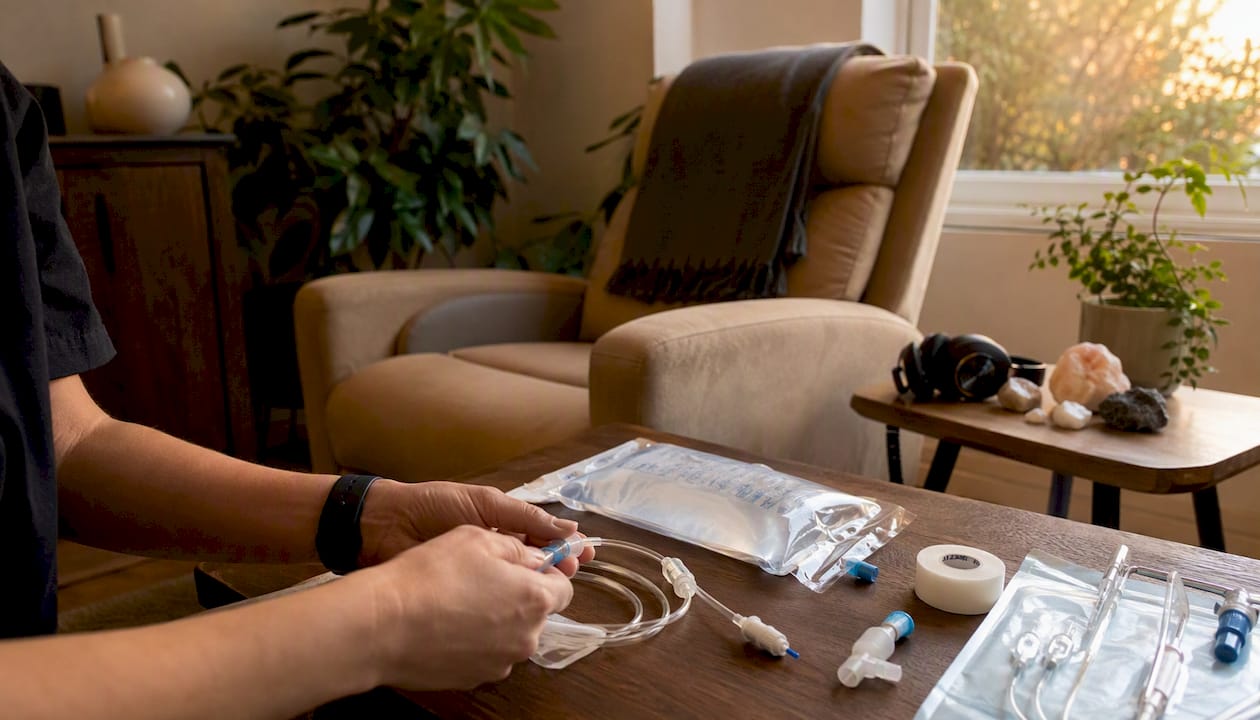
- Device setup. Your provider prepares the nasal spray device. Depending on your prescribed dose (56 mg or 84 mg), you will use either two or three devices per session.
- Self-administration under supervision. You hold the device to one nostril and press the plunger. You then wait 5 minutes before switching to the other nostril. If a third device is needed, you alternate again after another 5 minutes.
- Rest period. After dosing, you rest in a reclined position. Most of the absorption and the peak of the experience happen in the first 30 to 40 minutes.
- Vital signs monitoring. Staff take your blood pressure at regular intervals. Blood pressure peaks around 40 minutes post-dose and is tracked until it returns to a safe baseline.
- Ongoing assessment. Sedation, dissociation, nausea, and mental clarity are monitored continuously throughout the observation window.
- Discharge evaluation. Your provider assesses whether you are alert, oriented, and stable before clearing you to leave. Discharge is a clinical decision that accounts for all of the above, not simply the passing of 2 hours.
Here is a quick reference for dosing phases:
| Phase | Frequency | Duration |
|---|---|---|
| Induction | Twice weekly | First 4 weeks |
| Optimization | Once weekly | Weeks 5 to 8 |
| Maintenance | Every 1 to 2 weeks | Week 9 onward |
Pro Tip: Wear comfortable, loose clothing to your session. You’ll be reclining for at least 2 hours, and being physically at ease supports a calmer experience overall.
The at least 2 hours of monitoring that follow every dose are not just a formality. They exist because the most significant side effects, including blood pressure changes and dissociation, unfold in that window and require real-time clinical oversight.

Side effects and what you need to know
Knowing what to expect from side effects removes the fear of the unknown. This is not a medication with a mild side effect profile, and honesty about that matters.
The two most frequently reported experiences are sedation and dissociation. Across over 1.4 million treatment sessions, sedation occurred in about 62% of patients and dissociation in approximately 66%. Those are high numbers. What they mean, practically speaking, is that most people feel a shift in perception or a sense of floating during the session. It can feel disorienting, but it is temporary and monitored throughout.
Here is what else to know about common side effects:
- Nausea and vomiting. Nausea occurred in 26.8% of patients in clinical studies, and vomiting in 10.4%. Rescue medications like ondansetron are available at the clinic to manage this.
- Elevated blood pressure. BP elevations peak around 40 minutes and can last approximately 4 hours. Staff monitor this closely and will not discharge you until your readings are stable.
- Dizziness and headache. These tend to resolve during the observation period for most patients.
- Cognitive effects. Some patients report difficulty concentrating or a foggy feeling immediately after a session. This clears with rest.
“High rates of sedation and dissociation are expected, but severe complications are rare due to stringent monitoring. Patients should understand that common side effects do not usually indicate danger.”
There are also conditions that may make treatment unsafe or require careful evaluation first. Uncontrolled high blood pressure, certain aneurysmal vascular conditions, and a history of psychosis are among the factors a provider will weigh before approving your first session. Because medication interactions can increase sedation and respiratory risk, your full medication list is reviewed before every course of treatment.
One rule that applies to everyone: do not drive or operate machinery until the day after your session, and only after you have had a full night of restful sleep.
Long-term treatment: what to plan for
Many people picture Spravato as a short course of treatment. In reality, it is often a longer commitment than that. Understanding the shape of the journey helps you plan and stay consistent.
The induction phase covers the first four weeks, with sessions twice a week. Twice-weekly dosing was structured around ketamine research evidence and is designed to build a therapeutic response. From there, the optimization phase transitions you to once-weekly sessions, and maintenance dosing drops to every one to two weeks based on how you’re responding.
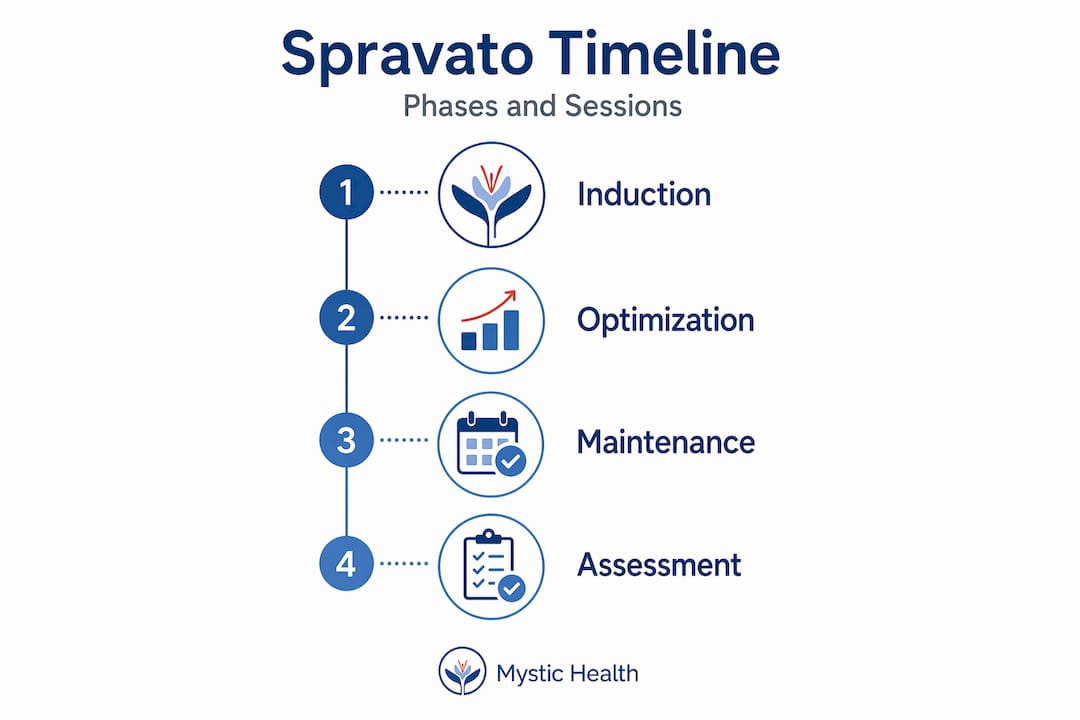
Here is a comparison of what changes and what stays the same across phases:
| Treatment aspect | Induction phase | Maintenance phase |
|---|---|---|
| Session frequency | Twice weekly | Every 1 to 2 weeks |
| Dose amount | 56 mg or 84 mg | Same, adjusted per response |
| Monitoring protocol | Same 2-hour minimum | Same 2-hour minimum |
| Transportation needed | Yes, every session | Yes, every session |
What many patients don’t realize upfront is how long treatment may extend. A long-term study reports a median Spravato exposure of 45.8 months, meaning many patients continue for close to four years. That’s not a discouragement. It’s a practical reality that shapes how you organize your life around treatment.
Pro Tip: Build your transportation plan early. Coordinating a regular driver or a rideshare routine from the start reduces the chance that scheduling difficulties push you to skip sessions. Consistency across the induction phase matters for outcomes.
Your provider will assess therapeutic benefit and tolerability at regular intervals, adjusting dose or frequency if needed. Some patients find they can space out sessions further over time; others find that staying on a weekly schedule preserves their stability. Both paths are valid, and the right one depends on your specific response.
My perspective after working with patients through this process
I’ve sat with a lot of people on the other side of failed treatment attempts. What I’ve noticed is that the ones who do best with Spravato aren’t necessarily the ones with the mildest presentations. They’re the ones who show up prepared and stay honest about what they’re experiencing.
Preparation matters more than people expect. I’ve seen patients who came in having eaten a full meal or skipped their fasting window and spent the majority of their monitoring period managing nausea. That experience doesn’t have to happen. Following the preparation steps isn’t just box-checking. It shapes the entire quality of the session.
What I’ve also learned is that the dissociation side effect frightens people in the abstract far more than it affects them in practice. When patients understand ahead of time that floating or altered perception is expected and monitored, they approach it with far less fear. Setting that expectation in the first appointment changes everything about how comfortable someone feels.
The hardest conversations I have are about long-term logistics. People come in hoping for a four-week fix. When I explain that many patients stay on treatment for years, the reaction is usually silence. But when I explain what that stability actually buys them, the conversation shifts. Planning for the long arc isn’t giving up on getting better. It’s taking getting better seriously.
— Kabir
How Mystic can support your path forward
If you’re reading this and wondering whether Spravato could be right for you, the next step is finding a program that combines clinical rigor with genuine human support.
At Mystic Health, Spravato treatment is offered within a broader framework of integrative mental health care. That means you’re not just receiving a medication session. You’re entering a space where your whole experience, physical, emotional, and psychological, is held with care. The team is REMS-certified, which means every session meets the safety standards required for supervised administration.
Mystic’s integrative mental health programs combine Spravato treatment with holistic support like mindfulness practices and personalized care planning. For people who have tried many things without relief, this kind of whole-person approach offers something different. Insurance compatibility and financing options are also available, because access should not be the thing that stands between you and healing.
Reach out to Mystic to schedule a consultation. The conversation starts with your story, not a form.
FAQ
What is Spravato and how does it differ from other antidepressants?
Spravato is an esketamine nasal spray approved by the FDA for treatment-resistant depression. Unlike oral antidepressants that can take weeks to show effects, some patients notice improvement within 24 hours of their first dose.
How long does a Spravato session take?
Each session requires at least 2 hours of in-clinic monitoring after dosing, so you should plan for approximately 2.5 to 3 hours total including check-in and discharge assessment.
Can I drive myself home after a Spravato session?
No. Due to sedation and dissociation effects, you must have someone drive you home after every session. You should not drive or perform any hazardous activity until the next day after a full night of sleep.
How many Spravato sessions will I need?
The induction phase involves twice-weekly sessions for the first 4 weeks, followed by weekly or biweekly sessions during optimization and maintenance phases. Many patients continue treatment for several years depending on their response.
What should I do if I experience strong dissociation during a session?
Dissociation is an expected and monitored side effect. Stay in your reclining position, let your clinical team know how you are feeling, and remember that the effects are temporary. Staff are trained to support you through the experience safely.
Recommended

Mystic Health Blog





FAQs
1. Am I eligible for ketamine therapy?
2. Does insurance cover the cost of ketamine therapy?
3. How many ketamine treatments will I need?
We recommend two initial treatments to determine suitability and adjust dosage. After these sessions, additional treatments are available based on your progress and specific requirements.