
For hospice &
palliative organizations
A partner that speaks
palliative care
Mystic Health was founded by a palliative care physician. We partner with hospice and palliative organizations on the layer your IDT carries hardest: psychological and existential care for patients, support for their families, and care for your own staff.

 Reports back to your IDT
- Honest declines
- Staff care stays confidential

One partner, four layers
Consult service- Your patientsPsychiatry & therapy
- Their familiesGrief & bereavement
- Your staffConfidential care
- Your organizationIn-services
 Summaries to your IDT, with consent, every time
30 min
A first conversation that costs nothing and commits you to nothing
4 layers
Patients, families, your staff, and your organization
Every time
Clinical summaries back to your IDT, with consent
Free
Our full webinar library, open with no signup

The layer nobody offers
Hospice staff absorb more loss than any profession outside medicine, and are the least likely people in the building to be offered care for it.

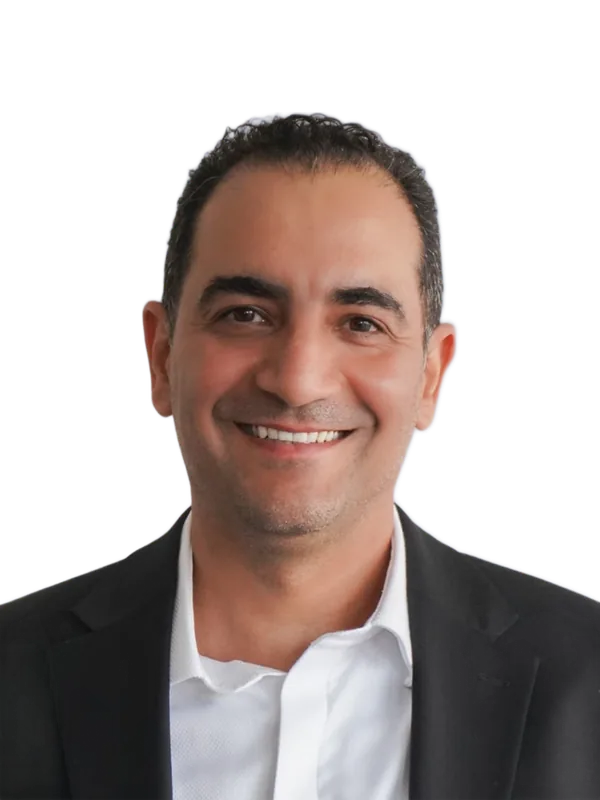
Founded in palliative care
Dr. Houman Farzin, MD
Palliative care physician researcher and educator
Our clinical focus on serious illness, dying, and grief is the founding identity of the practice, not a service line added for reach. His work on existential distress and end-of-life care has been covered by the CBC, La Presse, and Radio-Canada, and presented at ICPR.

What a partnership covers
Patients, families, and
the people who carry them
One partner across four layers of care, including the one almost nobody offers you: care for your own staff.

For your patients
Psychiatric consultation and psychotherapy for depression, anxiety, and existential distress in serious illness: the layer between chaplaincy and sedation that most teams have nowhere to send. Where clinically appropriate, ketamine-assisted psychotherapy upstream in the palliative population.

For their families
Anticipatory grief while caregiving, support through the dying time, and bereavement care after, including grief that has stayed at full intensity a year on, which is a clinical picture with real treatments.

For your staff
Your nurses, social workers, and chaplains absorb more loss in a year than most clinicians see in a career. Individual care and group sessions for grief load, moral distress, and burnout.
 Confidential from the employer, always

For your organization
In-services and education from a palliative care physician who publishes and teaches in this field: existential distress, emerging therapies in palliative care, and communication at the end of life.

Boundaries, before you ask
What we are,
and what we are not
You know frailty and drug interactions better than any referral partner will. So the limits come first.
What you can expect

A specialty consult service that reports back to your IDT, with consent, every time
Case-by-case review with your medical director before any treatment decision
Honest declines, including of referrals we cannot genuinely help
Care for your staff that stays confidential from your leadership, absolutely
What we will not do

We are not a hospice and do not provide hospice services
We never work around an interdisciplinary team or alter goals of care
We do not offer KAP to most enrolled hospice patients; frailty and interactions usually rule it out
We do not offer psilocybin or MDMA. The research is promising; it is not available care.

On ketamine in hospice
How a partnership starts
Thirty minutes,
and an honest answer about fit
From a first call to a named referral pathway.
How a partnership starts
Thirty minutes, and an honest answer about fit
From a first call to a named referral pathway.
 A conversation
Thirty minutes with our clinical team on your population and your gaps. If we wouldn’t add anything, we say so.
 Scope and pathways
Which referrals make sense, how consent and communication run with your IDT, and what comes back at each step.
 Referrals, with updates
Patients and families move through a named pathway, not a front desk, and summaries return to your team every time.
A conversation
Thirty minutes with our clinical team on your population and your gaps. If we wouldn’t add anything, we say so.
Scope and pathways
Which referrals make sense, how consent and communication run with your IDT, and what comes back at each step.
Referrals, with updates
Patients and families move through a named pathway, not a front desk, and summaries return to your team every time.

What a partnership costs
Patient and family care is billed per service, with insurance where it applies. Staff support and education are scoped per organization. The first conversation costs nothing.
Organizational questions
What medical directors ask first
Can our hospice patients receive ketamine-assisted therapy?
Usually not, and we’d rather say that here than in a disappointing consult. Frailty, prognosis, and medication interactions make KAP inappropriate for most patients already enrolled in hospice. Every case is reviewed with your medical director, and a plain no is a common and correct outcome.
Are you trying to replace our interdisciplinary team?
No. We are not a hospice and never work around an IDT. We function as a specialty consult service: your team keeps the patient, sets the goals of care, and receives our summaries. Where our involvement would blur lines rather than help, we decline the referral.
How does staff support stay confidential?
Individual care for your staff is a standard clinical relationship, confidential from the employer regardless of who arranges or pays for the program. Group sessions are facilitated on themes, not case review, and nothing said in either setting travels back to leadership. Without that wall the offer is worthless, and we hold it absolutely.
What does a partnership cost?
Patient and family care is billed per service, with insurance where it applies: psychiatry and psychotherapy are covered on many plans, and we verify before anyone books. Staff support and education are scoped per organization. The first conversation costs nothing and commits you to nothing.
Why should we trust a psychiatry clinic with palliative patients?
Because we were founded by one of your own. Dr. Houman Farzin is a palliative care physician; our clinical focus on serious illness, dying, and grief is the founding identity of the practice, not a service line added for reach. His work in end-of-life care has been covered by the CBC, La Presse, and Radio-Canada, and our team teaches in this field.

Related program
Integrative oncology & palliative care
How we work with referring oncology teams.
Read more
Related program
Grief & end-of-life support
Our patient-facing care for losses that don’t resolve on schedule.
Read more
Resources
News & media
The webinar library: palliative care, neuroscience, and emerging therapies.
Read more