
Ketamine-assisted psychotherapy
The medicine is the easy part. The work is what lasts
Ketamine on its own can lift symptoms. Ketamine with a therapist who prepares you, stays with you, and helps you process it afterward is a different treatment — and the evidence suggests the gains hold longer.
- 3 phases
- preparation, the session, and integration
- Therapist present
- throughout the session, by design
- Self‑pay
- prescribed off-label, so rarely covered
- 3 phases
- preparation, the session, and integration
- Therapist present
- throughout the session, by design
- Self‑pay
- prescribed off-label, so rarely covered
01
Not an infusion. A course of therapy
Ketamine appears to open a window of increased neuroplasticity — a period in which long-held patterns are more available to change. What you do inside that window is the treatment.
In practice, that means a therapist prepares you beforehand so you know what you are walking into and what you want from it, stays with you during the session, and meets you again afterward to turn what surfaced into something usable. The integration work is what makes the difference hold.
02
Three phases, in this order
Every course starts with a medical consultation and screening. Nothing is scheduled until a physician has reviewed your history and agreed it is appropriate.
Before
Preparation
A session with your therapist
Building safety, setting intentions, and covering practically what will happen. You will know what the experience is likely to feel like before you are in it.
The day
In clinic
A monitored session
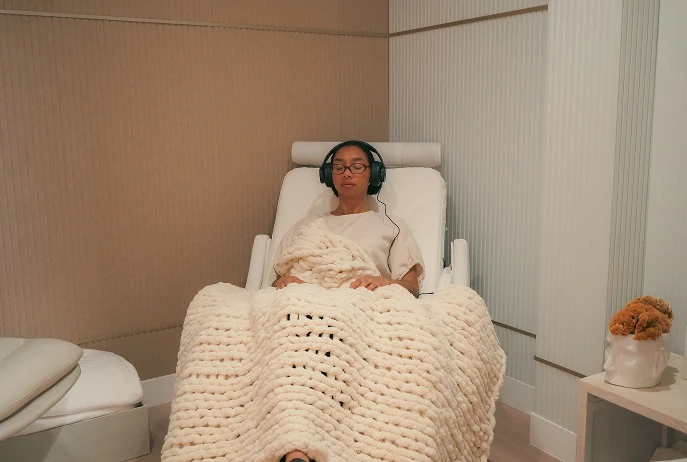
A private room, a comfortable chair, eyeshades and music. A licensed therapist is present throughout and a clinician monitors you. Arrange a ride — you cannot drive for the rest of the day.
Within 72 hours
Integration
Making it usable
A dedicated follow-up session to process what came up and translate insight into something that changes how the next month actually goes.
Ongoing
Review
Deciding what is next
We look at what has moved and adjust. Treatment continues only while it is helping.
- Before
Preparation
A session with your therapist
Building safety, setting intentions, and covering practically what will happen. You will know what the experience is likely to feel like before you are in it.
- The day
In clinic
A monitored session
A private room, a comfortable chair, eyeshades and music. A licensed therapist is present throughout and a clinician monitors you. Arrange a ride — you cannot drive for the rest of the day.
- Within 72 hours
Integration
Making it usable
A dedicated follow-up session to process what came up and translate insight into something that changes how the next month actually goes.
- Ongoing
Review
Deciding what is next
We look at what has moved and adjust. Treatment continues only while it is helping.
03
What the research supports
- 72 studies
- Therapy plus ketamine beats therapy aloneA systematic review of studies combining ketamine with psychotherapy across psychiatric indications found stronger treatment engagement, greater symptom reduction, and longer-lasting gains.Clin Psychol Rev 2025
- Meta-analysis
- Ketamine in treatment-resistant depressionPooled real-world data found rapid, meaningful relief in depression that had not responded to previous treatments.J Psychiatr Res 2022
- Three practices
- Outcomes in ordinary clinical settingsData from three large practices showed meaningful improvement when ketamine was paired with psychotherapy, outside the controlled conditions of a trial.J Psychoactive Drugs 2019
04
How in-clinic care differs
At-home ketamine platforms exist at a lower per-session price. Here is how the two models differ, so you can weigh what matters for your situation.
| Question | In clinic, here | At-home platforms |
|---|---|---|
| Cost per session | Higher | Lower — often around half |
| Who is with you | Clinician-supervised, with option of therapist-guidance | Alone, or a layperson monitor |
| Route | IM or IV clinician dosed | Sublingual lozenge, self-administered |
| Vitals monitored | Throughout the session | Not directly |
| If something goes wrong | Clinical staff in the room | A phone call |
| Screening depth | Full medical intake in person | Usually a video consult |
| Convenience | You travel to Santa Monica | You stay home |
Swipe to compare
Cost per session
- In clinic, here
- Higher
- At-home platforms
- Lower — often around half
Who is with you
- In clinic, here
- Clinician-supervised, with option of therapist-guidance
- At-home platforms
- Alone, or a layperson monitor
Route
- In clinic, here
- IM or IV clinician dosed
- At-home platforms
- Sublingual lozenge, self-administered
Vitals monitored
- In clinic, here
- Throughout the session
- At-home platforms
- Not directly
If something goes wrong
- In clinic, here
- Clinical staff in the room
- At-home platforms
- A phone call
Screening depth
- In clinic, here
- Full medical intake in person
- At-home platforms
- Usually a video consult
Convenience
- In clinic, here
- You travel to Santa Monica
- At-home platforms
- You stay home
Cost per session
- In clinic, here
- Higher
- At-home platforms
- Lower — often around half
Who is with you
- In clinic, here
- Clinician-supervised, with option of therapist-guidance
- At-home platforms
- Alone, or a layperson monitor
Route
- In clinic, here
- IM or IV clinician dosed
- At-home platforms
- Sublingual lozenge, self-administered
Vitals monitored
- In clinic, here
- Throughout the session
- At-home platforms
- Not directly
If something goes wrong
- In clinic, here
- Clinical staff in the room
- At-home platforms
- A phone call
Screening depth
- In clinic, here
- Full medical intake in person
- At-home platforms
- Usually a video consult
Convenience
- In clinic, here
- You travel to Santa Monica
- At-home platforms
- You stay home
Ketamine opens the door. The therapy is how you walk through it.
05
Where this helps, and where it does not
Often a good fit
- Treatment-resistant depression, particularly with a psychological or trauma component
- PTSD that trauma-focused therapy has not been able to reach
- You already have a therapist and want the medicine added to work already underway
- You want more depth and flexibility than the Spravato® protocol allows
- Existential distress in serious illness
Not the right tool
- Spravato® may be the better route if coverage matters most — it is often insured; this is not
- Active, uncontrolled psychosis or mania, or a known allergy to ketamine
- Unstable cardiovascular disease or uncontrolled hypertension, without clinical discussion first
- You cannot arrange a ride home, or cannot commit to the preparation and integration sessions
Eligibility for either treatment is decided in a medical consultation. If Spravato® is the better fit for you, that is what we will recommend.
06
Self-pay, priced in the open
Ketamine is prescribed off-label for psychiatric conditions, which means almost no insurance plan covers the medicine or the session. The medical consultation is often insurance-eligible even when the treatment is not, and we provide a superbill you can submit against out-of-network benefits.
- Ketamine session only
- $500
- 1 session therapy package
- $1,170
- 3 session therapy package
- $2,710
- 6 session therapy package
- $4,300
- Acupuncture add-on, 30 min
- +$150
Packages include the medical consultation (insurance eligible), preparation, the guided sessions, an integration session after each, and a follow-up. Financing is available.
Prices reflect working with our PNP; additional fees may apply when working with an MD. The medical consultation is insurance eligible and may lead to out of pocket savings.
07
Your care team
- Houman Farzin, MDFounder & Chief Medical Officer

- Dustin Z. DeYoung, MDPsychiatrist & Addiction Medicine Physician
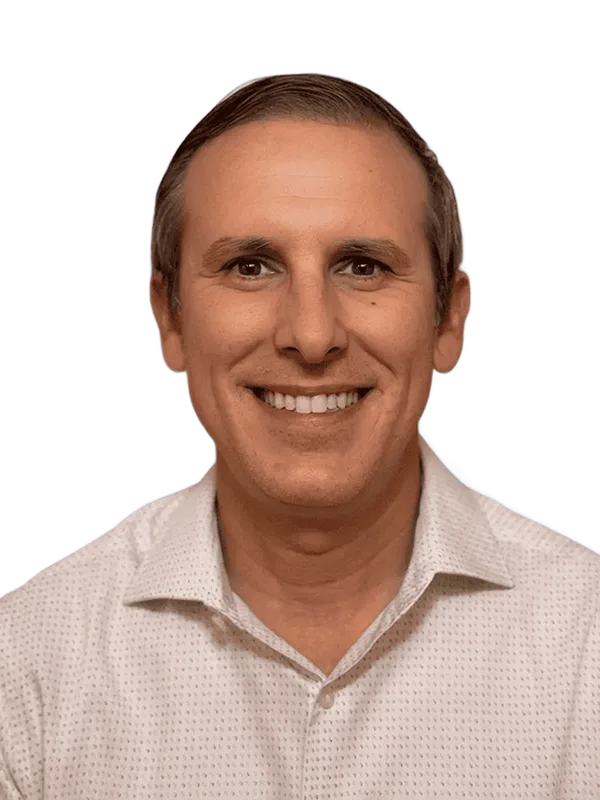
- Victoria Bielma, PMHNP-BCPsychiatric Mental Health Nurse Practitioner

- Dina Karvounides, PsyDLicensed Clinical Psychologist & EMDR Specialist

- Lisa Kring, LCSWIntegrative Therapist

- Stephanie Karzon AbramsClinical Director

08
Other questions
How is this different from Spravato®?
Spravato® is esketamine, FDA-approved for treatment-resistant depression, given as a nasal spray in a REMS-certified clinic, and often covered by insurance. Ketamine-assisted psychotherapy uses a related medicine prescribed off-label, is self-pay, and allows far more flexibility in dose, route, and how much therapy is built around it. Neither is better in the abstract. If you meet the criteria and your plan covers Spravato®, that is often the more sensible place to start.
Can I bring my own therapist?
Yes, and many people do. If you already have a therapist you trust, we can provide the medical screening, prescribing, and monitored session while they handle preparation and integration with you. It keeps the therapeutic relationship you have already built, and it usually costs less than adding one of ours.
What does the session actually feel like?
Most people describe a sense of distance from ordinary thinking, often with vivid imagery, sometimes with strong emotion. Time behaves oddly. It is not usually frightening, particularly with preparation and someone in the room, and it passes well before you leave. Your therapist stays with you throughout, and you can speak or stay quiet as you prefer.
Is it safe?
Ketamine has been used in medicine for over fifty years and has a well-characterised safety profile under supervision. Every patient is screened for contraindications first, sessions are supervised with monitoring throughout. Common short-term effects include dissociation, nausea, dizziness, and a temporary rise in blood pressure, all of which settle inside the session.
How many sessions will I need?
It varies. We usually suggest starting with an initial course to assess response, then building the rest of the plan around what actually happens.
Spravato® is a registered trademark of Janssen Pharmaceuticals, Inc.