Ketamine Tolerance: What It Means for Your Treatment
Yes, ketamine can produce tolerance. How quickly it develops, and how much it matters clinically, depends heavily on how often you use it, at what dose, and for what purpose.
In therapeutic settings, tolerance is less common than in daily anesthetic or recreational contexts, but it still happens. A published case report documents tachyphylaxis, meaning a complete loss of response, after prolonged IV racemic ketamine for treatment-resistant depression. That is a real clinical event, not a theoretical concern. At the same time, preclinical animal models show that 14 days of daily dosing produces measurable anesthetic tolerance, requiring higher doses to reach surgical depth. The mechanism at the center of both patterns is NMDA receptor adaptation: repeated blockade of these receptors triggers compensatory upregulation, gradually reducing the drug’s effect.
The most important practical point: if ketamine seems to be losing its effectiveness for you, contact your prescribing clinician before changing anything yourself. Self-adjusting dose or frequency is the fastest route to the harms described later in this article. A clinician can review your schedule, check for drug interactions, consider spacing sessions further apart, or plan a structured pause.
Key signals that suggest tolerance rather than other causes:
- Shorter duration of benefit after each session
- Needing a higher dose to reach the same dissociative or therapeutic effect
- Symptoms returning sooner between sessions
- Reduced dissociative intensity at the same dose
The distinction between anesthetic tolerance (fast-developing, well-documented in animal and clinical settings) and antidepressant or analgesic tolerance (more variable, less studied in humans) matters enormously for how you and your clinician interpret these signals. The sections below work through both.
Key Takeaways
Ketamine tolerance is real, manageable, and most dangerous when it drives unmonitored dose escalation outside supervised clinical settings.
| Point | Details |
|---|---|
| Tolerance is dose and frequency dependent | Daily or high-frequency use produces faster, more pronounced tolerance than spaced therapeutic protocols. |
| Anesthetic tolerance is best documented | Preclinical studies show 14 days of daily dosing requires higher doses for surgical anesthesia; antidepressant tolerance is more variable. |
| Management options exist before dose escalation | Extending spacing, structured drug holidays of 2–6 weeks, and psychotherapy integration are first-line strategies. |
| Chronic high-dose use carries serious organ risks | The ACMD estimates 5–8% of users develop problematic daily use, linked to uropathy and upper urinary tract damage. |
| Mystic Health offers structured long-term care | Mystic’s ketamine and Spravato programs include maintenance planning, psychotherapy integration, and clinical monitoring to manage tolerance proactively. |
Table of Contents
- What does the research actually show about ketamine tolerance?
- How does the body develop tolerance to ketamine?
- How tolerance plays out differently across clinical settings
- Cross-tolerance with opioids and interactions with other medications
- How do you recognize the signs of tolerance?
- Evidence-based strategies for managing and preventing tolerance
- What are the real risks when tolerance leads to dose escalation?
- What should you do if ketamine seems to be losing effectiveness?
- How experienced clinics plan long-term ketamine care
- A perspective on access, caution, and what tolerance really means
- Mystic Health’s approach to long-term ketamine care
- Sources
What does the research actually show about ketamine tolerance?
The evidence base spans four types of sources, each with different strengths and limitations.
Animal studies provide the most controlled data. A preclinical rat study found that 14 days of daily ketamine produced dose-dependent tolerance to its anesthetic effects: animals required significantly higher doses to reach surgical anesthesia and recovered faster from a cumulative dose. Chronic morphine pretreatment produced cross-tolerance to ketamine in the same models, a finding with direct implications for patients on long-term opioids.
Case reports bring the picture into human clinical reality. The Mayo Clinic tachyphylaxis case referenced above is among the clearest published examples of a patient losing antidepressant response to IV racemic ketamine over time. These reports are limited by their single-patient design, but they document that the phenomenon is real.
Observational clinic data fills in the middle ground. Patient guides summarizing clinic experience note that roughly 30% of patients may not achieve sufficient benefit from ketamine therapy, and that maintenance boosters commonly range from every two weeks to every three months.
Policy-level reviews capture the public-health end of the spectrum. The ACMD’s updated review estimates that 5–8% of ketamine users in response samples develop problematic high-dose daily use, which drives dose escalation, dependence, and long-term organ harms.
Study types represented in the current evidence base:
- Preclinical (animal) controlled dosing studies
- Published human case reports (tachyphylaxis, loss of antidepressant response)
- Observational clinic series and patient-reported outcome data
- Policy and epidemiological reviews (ACMD, addiction resource analyses)
The honest limitation: most human studies are small, dosing routes and schedules vary widely across them, and long-term data on antidepressant tolerance specifically remains thin.
How does the body develop tolerance to ketamine?
Three overlapping mechanisms are most plausible, and they interact in ways that make the clinical picture genuinely complex.
NMDA receptor upregulation. Ketamine works primarily by blocking NMDA receptors. With repeated exposure, the brain compensates by increasing receptor density or sensitivity, a process called homeostatic upregulation. The result is that the same dose produces less blockade over time. This is the most widely cited mechanism and the one most directly supported by preclinical data.

Metabolic enzyme induction. Ketamine is metabolized by hepatic cytochrome P450 enzymes, particularly CYP3A4 and CYP2B6. Repeated dosing can induce these enzymes, accelerating ketamine’s breakdown and reducing the amount that reaches the brain. This pharmacokinetic tolerance is distinct from receptor-level changes and can develop relatively quickly with frequent dosing.
Neuroplastic and synaptic remodeling. Ketamine’s antidepressant effects appear to work partly through AMPA receptor potentiation and BDNF-driven synaptogenesis, a different pathway from its acute dissociative or anesthetic action. This is why antidepressant tolerance may behave differently from anesthetic tolerance: the neuroplastic window that produces mood benefit might be more durable, or it might require different conditions to sustain.
A simple way to map this: frequent dosing → NMDA receptor adaptation + enzyme induction → reduced brain exposure and reduced receptor effect → shorter or weaker clinical response.
Enantiomer-specific differences add another layer. A PLOS One rodent study found that S-ketamine (the active ingredient in Spravato) produced stronger behavioral effects than R-ketamine and also showed tolerance to ataxic outcomes after repeated treatment. R-ketamine showed fewer such effects. This suggests that the formulation you receive, racemic IV/IM versus intranasal esketamine, may influence how quickly tolerance-related changes appear.
Pro Tip: If you are receiving racemic IV ketamine and notice diminishing effects, ask your clinician whether switching to intranasal esketamine (Spravato) or adjusting the enantiomer ratio is appropriate for your situation. The pharmacology genuinely differs.
- NMDA receptor upregulation (pharmacodynamic tolerance)
- Hepatic enzyme induction (pharmacokinetic tolerance)
- Neuroplastic remodeling (potentially protective for antidepressant effects)
- Enantiomer-specific behavioral tolerance patterns
How tolerance plays out differently across clinical settings
The same drug, used in three different contexts, produces three different tolerance profiles. Understanding which one applies to you changes what your clinician should do next.
Anesthesia and procedural sedation
This is where tolerance is best documented and most clinically urgent. Patients requiring frequent sedations, such as those in ICU settings or undergoing repeated procedures, can develop meaningful anesthetic tolerance within days to weeks. A clinical commentary for anesthesiologists notes that managing the ketamine-tolerant patient may require escalating anesthetic doses or switching to alternative agents entirely. For perioperative planning, this means flagging prior ketamine exposure to your anesthesia team before any procedure.
Psychiatric use: induction and maintenance
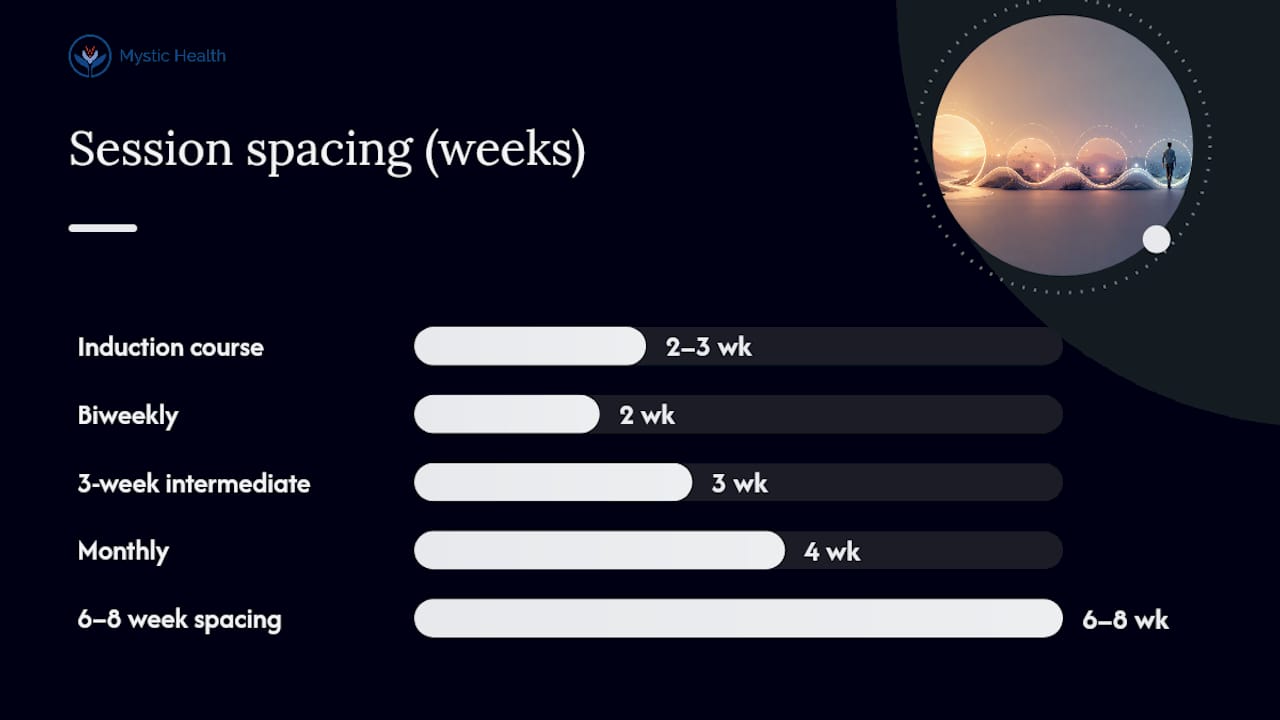
Standard induction protocols typically involve six infusions over two to three weeks, followed by maintenance sessions spaced progressively further apart. The weekly-to-biweekly-to-monthly pattern is not arbitrary; it reflects clinical experience that spacing reduces the likelihood of tolerance while preserving therapeutic benefit. Racemic IV or IM ketamine and intranasal esketamine (Spravato) differ in their pharmacokinetics and receptor binding profiles, and some patients who show diminishing response to one formulation respond better to the other.
Chronic pain management
Intermittent infusion protocols for pain carry lower tolerance risk than continuous or near-daily dosing. The concern with chronic high-frequency use, particularly outside supervised settings, is dose escalation driven by tolerance, which is the pathway to the serious organ harms described later. The ACMD review links problematic daily use directly to uropathy and upper urinary tract damage.
| Clinical Context | Typical Frequency | Tolerance Risk | Common Clinical Sign | Management Approach |
|---|---|---|---|---|
| Anesthesia / procedural sedation | Daily or near-daily | High, rapid onset | Higher dose needed for surgical plane | Dose escalation or agent switch |
| Acute psychiatric induction | 6 sessions over 2–3 weeks | Low to moderate | Reduced dissociative intensity | Complete course, then space sessions |
| Psychiatric maintenance | Every 2 weeks to 3 months | Moderate with frequent dosing | Shorter symptom relief duration | Extend spacing, consider drug holiday |
| Chronic pain protocols | Variable; risk rises with frequency | Moderate to high with daily use | Dose escalation, reduced analgesia | Reduce frequency, monitor organ function |
Route and formulation matter here. IV racemic ketamine delivers a rapid peak plasma concentration with a shorter half-life. Intranasal esketamine (Spravato) has a different absorption curve and is administered under clinical supervision with a mandatory two-hour monitoring period, which itself structures the spacing that helps limit tolerance.
Cross-tolerance with opioids and interactions with other medications
This is one of the most clinically underappreciated aspects of ketamine tolerance, and it deserves direct attention.
The preclinical PMC study showing that chronic morphine pretreatment produces cross-tolerance to ketamine’s anesthetic effects has a straightforward implication: patients on long-term opioids may require higher ketamine doses to achieve the same anesthetic or analgesic effect. This is not a theoretical concern. It is a documented pharmacological interaction that should be part of every pre-treatment medication review.
Benzodiazepines present a different kind of interaction. They do not produce cross-tolerance in the same receptor-level sense, but they can blunt the subjective and potentially therapeutic effects of ketamine by reducing the dissociative experience that some clinicians believe is part of the antidepressant mechanism. Patients on high-dose benzodiazepines may report less benefit from ketamine sessions, and some clinics consider a supervised taper before starting or restarting a ketamine course.
Memantine and other NMDA antagonists can alter ketamine’s receptor-level effects because they compete at the same binding site. Concurrent use requires careful clinical judgment.
Key interaction considerations:
- Long-term opioid use (especially morphine) may reduce ketamine’s anesthetic and analgesic potency
- Benzodiazepines may reduce the subjective depth of ketamine sessions
- NMDA antagonists (memantine, dextromethorphan) interact at the receptor level
- Enzyme-inducing medications (certain anticonvulsants, rifampin) can accelerate ketamine metabolism
Pro Tip: Before starting or adjusting ketamine, bring a complete medication list to your clinician, including over-the-counter supplements. Ask specifically about benzodiazepine timing: some clinics recommend holding a dose on the day of a session, under medical guidance, to preserve therapeutic depth.
How do you recognize the signs of tolerance?
Tolerance does not announce itself clearly. It tends to look like the treatment gradually losing its grip, and it can be easy to attribute that to the underlying condition worsening rather than to a pharmacological shift.
Objective and subjective signals to track:
- Benefit lasting a noticeably shorter time after each session
- Baseline symptoms returning sooner than they did after earlier sessions
- Reduced dissociative intensity or perceptual changes at the same dose
- A sense that the session feels “flat” compared to earlier ones
- Needing a dose increase to reach the same therapeutic effect
Monitoring tools clinicians use:
- Standardized depression or pain rating scales completed before and after each session (PHQ-9, MADRS, or NRS for pain)
- Session dissociation scales (CADSS or similar) to track changes in subjective intensity
- Symptom diaries tracking the timing and magnitude of mood or pain changes between sessions
- Vital signs and clinical observation during sessions to note changes in cardiovascular or dissociative response
Questions patients can track between sessions:
- How many days after my last session did I feel the benefit start to fade?
- Was the peak improvement this session as strong as it was three sessions ago?
- Am I functioning better, the same, or worse compared to my baseline before treatment started?
Timeline note: anesthetic tolerance can become apparent within days of daily use. In psychiatric maintenance, a pattern of shorter benefit duration or reduced response typically becomes observable over weeks to months, often after the transition from induction to maintenance spacing.
Evidence-based strategies for managing and preventing tolerance
The good news is that tolerance to ketamine, particularly in supervised therapeutic settings, is often manageable and sometimes reversible. The key is catching it early and responding with the least invasive adjustment first.
Primary strategies, in order of clinical preference:
- Extend session spacing. Moving from weekly to biweekly, or biweekly to monthly, is usually the first step. Many patients find that a longer gap restores some sensitivity.
- Structured drug holiday. Clinic-oriented resources indicate that in supervised therapeutic dosing, tolerance often resets after a break of 2–6 weeks for many patients, while heavy chronic users may need longer abstinence periods.
- Psychotherapy integration. Using the neuroplastic window immediately after a session for structured psychotherapy (CBT, ACT, or trauma-focused work) may extend and deepen the antidepressant effect, reducing the pressure to dose more frequently. Adjunctive approaches like mindfulness practices can support this window.
- Adjunctive lifestyle measures. Regular aerobic exercise, sleep optimization, and stress reduction support the same BDNF and synaptic pathways that ketamine activates. These are not substitutes for clinical management, but they are not trivial either. A practical list of coping strategies for mental health can complement your treatment plan.
- Route or formulation change. Some patients who show diminishing response to IV racemic ketamine respond to intranasal esketamine (Spravato), or vice versa. The enantiomer and pharmacokinetic differences are real enough to make this worth discussing with your clinician.
- Cautious dose adjustment. Dose escalation should come last, after spacing and other strategies have been tried, and only under direct clinician supervision. Escalating dose without addressing the underlying tolerance mechanism tends to produce diminishing returns and increases harm risk.
The clinical sequence: assess response objectively → try extending spacing → consider a drug holiday → explore adjunctive measures → discuss route or formulation change → only then consider modest dose adjustment with close monitoring.
Pro Tip: Ask your clinician to set a specific, objective response threshold before any dose increase is considered, such as a defined score on a standardized rating scale. This prevents dose creep driven by subjective impression rather than measurable change.
Questions to expect at a clinical review visit: How has your symptom trajectory changed since the last session? Are you tracking the duration of benefit? Have any new medications been added? What is your current sleep and exercise pattern?
What are the real risks when tolerance leads to dose escalation?
Tolerance itself is not the danger. The danger is what happens when tolerance drives unmonitored dose increases, particularly outside supervised clinical settings.
Long-term harms associated with chronic high-dose ketamine use:
- Ketamine-induced uropathy: bladder inflammation, reduced bladder capacity, and in severe cases, upper urinary tract damage requiring surgical intervention
- Hepatobiliary effects: bile duct dilation and liver enzyme elevation with very high chronic doses
- Cognitive effects: memory impairment and dissociative symptoms that persist beyond sessions with heavy use
- Dependence and withdrawal: psychological dependence is documented; physical withdrawal symptoms include anxiety, agitation, and dysphoria
The ACMD review estimates that 5–8% of ketamine users in survey samples develop problematic high-dose daily use, and this group accounts for a disproportionate share of the serious organ harms documented in clinical and emergency settings. The dose-escalation pattern driven by tolerance is the mechanism connecting recreational use to these outcomes.
The risk profile of supervised therapeutic dosing is fundamentally different from unsupervised high-frequency use. Therapeutic protocols use spaced sessions, standardized doses, and clinical monitoring. Recreational high-dose daily use removes all three of those protections simultaneously.
Clinical monitoring recommendations for patients on maintenance or higher-dose protocols:
- Urinary symptom screening at every visit (frequency, urgency, pain, hematuria)
- Basic metabolic panel and liver function tests at regular intervals
- Cognitive and psychiatric symptom review
- Frequency of follow-up scaled to dose and session frequency
If you notice urinary symptoms, pain with urination, or blood in your urine at any point during ketamine treatment, contact your clinician promptly. These are not symptoms to wait on.
What should you do if ketamine seems to be losing effectiveness?
If you are asking whether ketamine is still working for you, that question itself is worth bringing to your clinician. Here is a practical framework for what to do next.
Immediate steps:
- Document the pattern. Note when benefit started fading, how long each session’s effect lasted, and whether anything else changed (new medications, sleep disruption, major stressors).
- Contact your prescribing clinician before making any changes. Do not increase your dose or session frequency on your own.
- Review your current medications with your clinician, including anything new since your last visit.
- Ask about a structured assessment visit rather than just continuing the current protocol.
Do not:
- Increase dose or frequency without medical supervision
- Combine ketamine with other substances to try to restore the effect
- Interpret reduced effect as treatment failure without a clinical evaluation
Questions to bring to your prescriber:
- Could my current session spacing be contributing to tolerance?
- Are any of my medications potentially blunting the response?
- Would a drug holiday help, and how would we structure it?
- Should we check any labs, including urinary function?
- What is the plan if we restart an induction course?
Safety warning: Seek urgent care if you develop urinary pain, blood in urine, or inability to urinate. Seek immediate help if you experience severe psychiatric symptoms, signs of withdrawal (intense anxiety, agitation, or perceptual disturbances), or any symptoms that feel medically urgent. For patients new to the process, a first-timer’s guide to ketamine therapy can help you understand what a normal session experience looks like versus a warning sign.
How experienced clinics plan long-term ketamine care
In practice, clinics that have managed ketamine patients over years have developed fairly consistent frameworks, even where formal guidelines are sparse.
The typical arc looks like this: a six-session induction course over two to three weeks, followed by a transition to maintenance spacing (biweekly, then monthly, then every six to eight weeks as stability allows). The goal is the lowest effective frequency, not the highest tolerated dose.
Clinical practice guidance from the Psychopharmacology Institute recommends considering tapering only after approximately six months of sustained remission, and suggests reducing to a low-maintenance schedule, such as once every three weeks, as an intermediate step before stopping entirely. This conservative approach reflects genuine uncertainty about what happens to patients who stop abruptly after long-term use.
A concrete example of how a clinic might operationalize this: a patient stable on monthly sessions for eight months might move to once every six weeks for three months, then once every eight weeks, with a formal reassessment at each interval. If symptoms remain stable, the clinic and patient make a shared decision about whether to continue, pause, or stop.
Documentation preferences at follow-up visits typically include: standardized symptom rating at each visit, a record of session spacing and any dose adjustments, urinary and cognitive symptom screening, and a written shared decision-making note about the current plan. Patient-centered care practices that prioritize this kind of collaborative documentation tend to catch tolerance signals earlier.
Key elements of long-term clinic planning:
- Induction course followed by progressive spacing, not indefinite fixed-frequency dosing
- Six-month remission threshold before considering tapering
- Structured drug holidays with a clear restart plan if needed
- Objective symptom tracking at every visit
- Shared decision-making documented in the clinical record
A perspective on access, caution, and what tolerance really means
Ketamine therapy has given real relief to people who had run out of options. That matters, and it deserves to be said plainly. At Mystic, we believe deeply in evidence-based access to these treatments, and we also believe that access without monitoring is not care.
Tolerance is not a reason to avoid ketamine. It is a reason to take the clinical relationship seriously. The patients who do best over the long term are not the ones who never develop any tolerance; they are the ones who have a clinician paying attention, a plan for what to do when response changes, and the willingness to slow down before escalating. Supervised treatment carries meaningfully lower risk than unsupervised use, and that gap is not small. The evidence on organ harms, dependence, and cognitive effects is almost entirely concentrated in the high-frequency, high-dose, unmonitored population.
If you are in a supervised program and you notice your sessions feeling less effective, that is not a crisis. It is information. Bring it to your clinician, and work through it together.
Mystic Health’s approach to long-term ketamine care
Managing ketamine tolerance well requires more than adjusting a dose. It requires a clinical relationship built around honest monitoring, shared decision-making, and a treatment plan that evolves with you.
Mystic Health offers integrative ketamine and Spravato programs that include structured induction and maintenance planning, psychotherapy integration during the neuroplastic window, and regular clinical review visits designed to catch tolerance signals before they become problems. Whether you are considering starting treatment, navigating a plateau in your current program, or wondering whether a drug holiday makes sense for you, a consultation with Mystic’s clinical team gives you a personalized assessment grounded in the evidence reviewed here.
To learn more about Mystic’s programs or to schedule a clinical consultation, visit Mystic Health’s program page. You can also review the clinical evidence behind Mystic’s protocols before your first appointment.
Sources
The following sources were used in this article and are worth reading directly if you want to go deeper.
- Preclinical study showing ketamine and morphine pretreatment produce tolerance to ketamine’s anesthetic effects (PMC)
- PLOS One study on repeated ketamine enantiomer treatment and behavioral tolerance
- Managing ketamine/esketamine treatment: discontinuation, side effects, and clinic practice (Psychopharmacology Institute)
- PulmCrit: The ketamine-tolerant patient (clinical commentary)
- A case of tachyphylaxis after long‑term intravenous racemic ketamine (Mayo Clinic / case report)
This article is general information, not a substitute for advice from a qualified doctor. Consult a qualified healthcare professional about your own circumstances before acting on anything here.
Recommended

Mystic Health Blog








FAQs
1. Am I eligible for ketamine therapy?
2. Does insurance cover the cost of ketamine therapy?
3. How many ketamine treatments will I need?
We recommend two initial treatments to determine suitability and adjust dosage. After these sessions, additional treatments are available based on your progress and specific requirements.