What Is Integration Coaching for Personal Growth?
TL;DR:
- Integration coaching helps individuals embody insights from transformative experiences into lasting behavioral and identity change through non-clinical, whole-person approaches. It involves reflection, somatic practices, and habit formation, focusing on resilience rather than symptom treatment. Choosing a qualified coach requires transparency about scope, specialized training, and a client-centered style to ensure safe, effective support.
Integration coaching is a structured, non-clinical support process that helps individuals translate profound insights from transformative experiences into lasting behavioral and identity-level change. Where traditional coaching asks “What do you want to achieve?”, integrative coaching asks “Who do you need to become?” That shift changes everything. Whether you’ve gone through ketamine-assisted therapy, a major life transition, or a deep personal development experience, the insights you gain mean little without a deliberate process to weave them into daily life. The International Coach Federation (ICF) recognizes whole-person transformation frameworks as the foundation of effective coaching, and integration coaching builds directly on that foundation.
What is integration coaching and how does it work?
Integration coaching is defined as a holistic, non-clinical practice that helps people embody insights from altered states, therapeutic experiences, or significant life events into sustainable growth. The word “integration” comes from the Latin integrare, meaning to make whole. That’s exactly what this work does. It takes fragmented pieces of awareness and helps you build them into a coherent, lived reality.

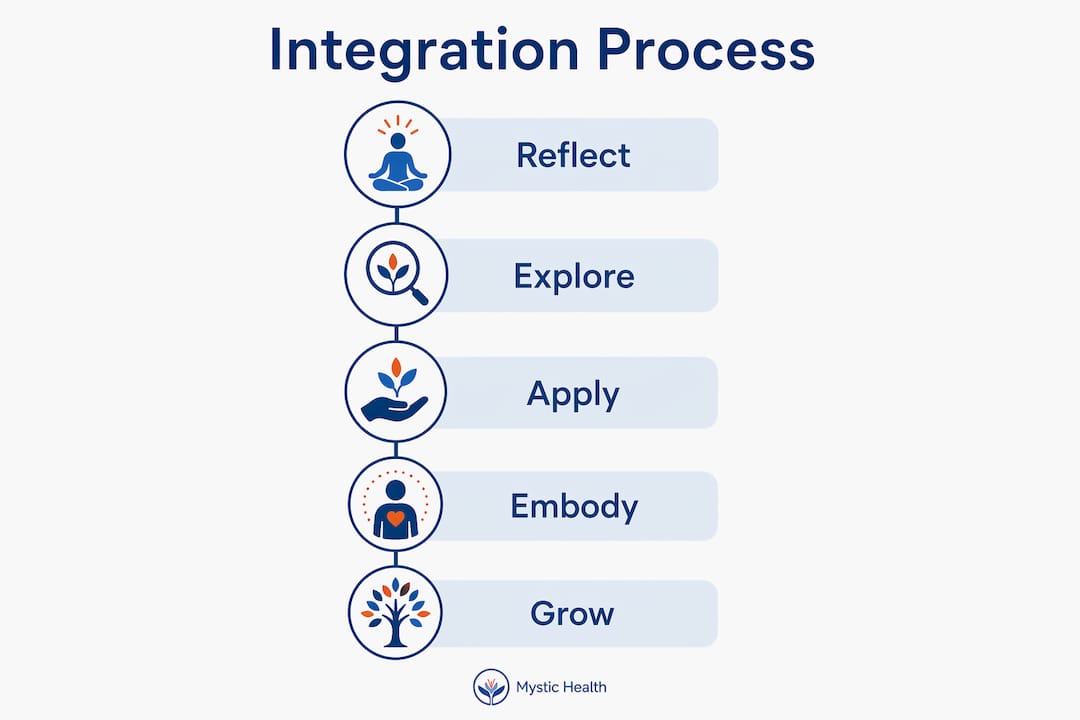
The process typically unfolds in three phases. First, you and your coach create space to reflect on what emerged during a transformative experience, whether that’s a psychedelic session, a grief process, or a spiritual retreat. Second, you identify the beliefs, patterns, and identity shifts that the experience pointed toward. Third, you build concrete practices to anchor those shifts into your nervous system and daily behavior. Without active integration, insights from even the most powerful experiences can fade within weeks or months. That’s not a personal failure. It’s simply how the brain works without reinforcement.
Integration coaching draws from mindfulness, somatic awareness, positive psychology, and neuroscience. It addresses the whole person, including emotional well-being, physical health, spiritual alignment, relationships, and career domains. This is what separates it from goal-focused productivity coaching, which tends to stay at the surface level of behavior.
What techniques do integration coaches use?
Integration coaches use a specific set of tools designed to move insight from the intellectual level down into the body and behavior. These aren’t abstract concepts. They are practiced, repeatable methods that create real change over time.
Common techniques include:
- Reflective journaling and narrative work: Coaches guide clients to articulate what they experienced and what it means for their life going forward.
- Somatic practices: Body-based awareness exercises help clients notice where emotions and old patterns live physically. Somatic and mindfulness practices are critical to move beyond intellectual awareness toward embodied behavioral change.
- Nervous system regulation: Breathwork, grounding exercises, and co-regulation techniques help clients stay present when old habits resurface.
- Goal setting rooted in values: Unlike performance coaching, integration coaching ties goals to identity and meaning, not just outcomes.
- Daily ritual design: Coaches help clients build morning practices, evening check-ins, or weekly reflection routines that anchor new ways of being.
- Mindfulness-based inquiry: Drawing from traditions like Mindfulness-Based Stress Reduction (MBSR), coaches use present-moment awareness to interrupt automatic patterns.
One thing most people don’t expect is how non-linear this process feels. Integration is messy and non-linear. Old habits resurface. Coaches provide grounding during those backslides, not just celebration during breakthroughs. That supportive presence during the hard moments is often what makes the difference between temporary insight and permanent change.
Pro Tip: Repetition is the mechanism of integration. A single journaling session or breathwork practice won’t rewire anything. Commit to a daily five-minute grounding ritual for 30 days and notice what shifts in your baseline emotional state.
How does integration coaching differ from therapy?
This is the question most people ask first, and it deserves a clear answer. Integration coaching is not therapy. It does not involve diagnosis, clinical treatment, or crisis intervention. Coaches do not diagnose or manage mental health crises, and ethical practice requires explicit non-clinical disclaimers from any qualified coach.
Here’s how the three approaches compare:
| Approach | Focus | Scope | Outcome |
|---|---|---|---|
| Integration coaching | Identity and insight embodiment | Non-clinical, growth-oriented | Lasting behavioral and values-level change |
| Psychotherapy | Symptom treatment and trauma processing | Clinical, licensed, diagnostic | Mental health stabilization and healing |
| Traditional coaching | Goal achievement and performance | Non-clinical, task-oriented | Skill development and measurable outcomes |
The boundary between therapy and coaching is becoming more fluid, with integration coaching occupying a vital middle ground focused on client resilience and authentic self-expression. That middle ground is genuinely valuable. But it also requires coaches who are honest about where their scope ends. If you are in active crisis, experiencing psychosis, or managing a serious psychiatric condition, a licensed therapist or psychiatrist is the right first call.
The most effective integration coaches hold what researchers call the “Integration Zone,” where resilience, authenticity, and purpose meet. They create a person-centered environment grounded in empathy, safety, and unconditional positive regard, without crossing into clinical territory.
Pro Tip: Before your first session with any coach, ask directly: “What is outside your scope of practice?” A qualified coach will answer that question clearly and without defensiveness. Vague answers are a red flag.
What are the benefits of integration coaching?
The benefits of integration coaching extend well beyond feeling better after a hard experience. When done well, this work produces changes that are durable, identity-deep, and genuinely life-altering.
Integral coaching based on ICF certification involves whole-person transformation with measurable impacts on leadership effectiveness and well-being. In corporate settings, structured coaching methodologies linked to ICF frameworks have been associated with a 25% improvement in executive performance. That number matters because it tells us that whole-person, identity-focused coaching produces outcomes that show up in real-world performance, not just self-reported well-being.
Clients who complete integration coaching programs commonly report:
- Greater emotional clarity and reduced reactivity in relationships
- A stronger sense of personal identity and values alignment
- Improved capacity to sit with uncertainty without defaulting to old coping patterns
- Deeper meaning-making from difficult experiences, including grief, illness, or trauma
- More consistent follow-through on personal commitments
“The shift from ‘What do I want to achieve?’ to ‘Who do I need to become?’ is where real transformation begins.” This reframe, central to integrative coaching, is what separates surface habit change from deep, sustainable growth.
Integration coaching is especially relevant for people processing experiences from psychedelic-assisted therapy, where the insights can be profound but disorienting without proper support. The same applies to anyone navigating a major life transition, a spiritual awakening, or the aftermath of significant loss.
How do you find and choose a qualified integration coach?
Choosing the right integration coach is one of the most important decisions in this process. There is no single regulatory body governing integration coaching in the United States, which means the quality of coaches varies widely. Here’s a practical process for evaluating your options:
- Ask about their training. Look for coaches with backgrounds in psychology, somatic practices, mindfulness facilitation, or ICF-certified coaching programs. Specialized training in psychedelic integration from organizations like the California Institute of Integral Studies (CIIS) or Fluence is a strong indicator of depth.
- Clarify their scope of practice. A trustworthy coach will tell you clearly what they don’t do. Prioritize coaches transparent about their training and explicit limitations.
- Evaluate their style in a consultation. Does the coach listen more than they talk? Do they follow your lead rather than imposing a framework? Client-centered, non-directive coaching produces better outcomes than prescriptive approaches.
- Check for ethical grounding. Ask whether they have a supervisor or peer consultation group. Coaches who work in isolation without accountability structures are higher risk.
- Explore low-cost entry points. Organizations like Zendo Project and MAPS offer peer support and integration circles at low or no cost. These can be valuable starting points while you evaluate whether one-on-one coaching is the right fit.
The right coach will feel like a thinking partner, not an authority figure. You should leave sessions with more clarity and agency, not more dependence on the coach’s guidance. That distinction matters more than any credential.
Key takeaways
Integration coaching transforms raw insight into lasting identity-level change by combining somatic practices, mindfulness, and values-based goal setting within a non-clinical, whole-person framework.
| Point | Details |
|---|---|
| Core definition | Integration coaching is a non-clinical process that embeds insights from transformative experiences into lasting behavioral change. |
| Key techniques | Somatic practices, nervous system regulation, reflective journaling, and daily ritual design anchor change at the body level. |
| Distinct from therapy | Coaches do not diagnose or treat mental health conditions; they support growth and identity work within a non-clinical scope. |
| Primary benefits | Clients gain emotional clarity, values alignment, resilience, and deeper meaning-making from difficult experiences. |
| Choosing a coach | Prioritize transparency about training, a non-directive style, and clear ethical boundaries over credentials alone. |
What I’ve learned from watching integration work transform people
I’ve spent years at the intersection of psychedelic medicine, holistic mental health, and personal transformation. And if there’s one thing I keep coming back to, it’s this: the experience itself is rarely the hard part. The hard part is what comes after.
People walk out of a ketamine session or a profound meditation retreat with genuine clarity. They see their patterns. They feel the possibility of something different. And then life resumes, and that clarity starts to blur. That’s not weakness. That’s the absence of integration.
What I find most honest about integration coaching is that it doesn’t promise a shortcut. It promises a container. A place where the messy, non-linear work of becoming someone new can happen with support. The coaches I’ve seen do this well are the ones who stay present during the hard weeks, not just the breakthrough moments.
I also think we’re at a turning point. As psychedelic-assisted therapy becomes more accepted in clinical settings, the demand for skilled integration support is growing faster than the field can train coaches. That creates real risk. The lack of regulation means anyone can call themselves an integration coach. The answer isn’t to avoid integration coaching. It’s to ask better questions and choose more carefully.
If you’re considering this work, I’d encourage you to treat the coach selection process as seriously as you’d treat choosing a therapist. Your growth deserves that level of care.
— Kabir
How Mystic supports your integration and healing
At Mystic, we understand that healing doesn’t end when a session does. Our integrative mental health programs are designed to support the full arc of transformation, from the initial experience through the ongoing work of integration. We combine clinical expertise in ketamine-assisted psychotherapy and Spravato with mindfulness-based support, somatic practices, and personalized care plans that honor the whole person. Whether you’re processing a recent therapeutic experience or looking for structured support on your personal growth path, our team is here to walk alongside you. Explore our full programs to find the right level of support for where you are right now.
FAQ
What is the integration coaching definition in simple terms?
Integration coaching is a non-clinical support process that helps individuals apply insights from transformative experiences, such as psychedelic therapy or major life transitions, into sustainable behavioral and identity-level change.
How does integration coaching differ from traditional therapy?
Integration coaching does not involve diagnosis, clinical treatment, or crisis intervention. Therapy addresses mental health conditions and trauma processing under a licensed clinical framework, while integration coaching focuses on growth, meaning-making, and identity work.
What techniques are used in integration coaching sessions?
Common techniques include somatic awareness exercises, nervous system regulation, reflective journaling, mindfulness-based inquiry, values clarification, and daily ritual design to anchor new patterns in the body and behavior.
Is integration coaching useful after psychedelic therapy?
Integration coaching is especially valuable after psychedelic-assisted therapy because the insights from altered-state experiences can be profound but disorienting. A skilled coach helps you process and apply those insights so they translate into lasting change rather than fading over time.
How do I know if an integration coach is qualified?
Look for coaches with training in somatic practices, ICF-certified coaching frameworks, or specialized psychedelic integration programs from institutions like CIIS or Fluence. Ask directly about their scope of practice and whether they work with a supervisor or peer consultation group.
Recommended

Mystic Health Blog








FAQs
1. Am I eligible for ketamine therapy?
2. Does insurance cover the cost of ketamine therapy?
3. How many ketamine treatments will I need?
We recommend two initial treatments to determine suitability and adjust dosage. After these sessions, additional treatments are available based on your progress and specific requirements.