 The Mystic Journal
Why Combine Science and Ancient Wisdom for Better Health
Kabir Ali
 10 min read
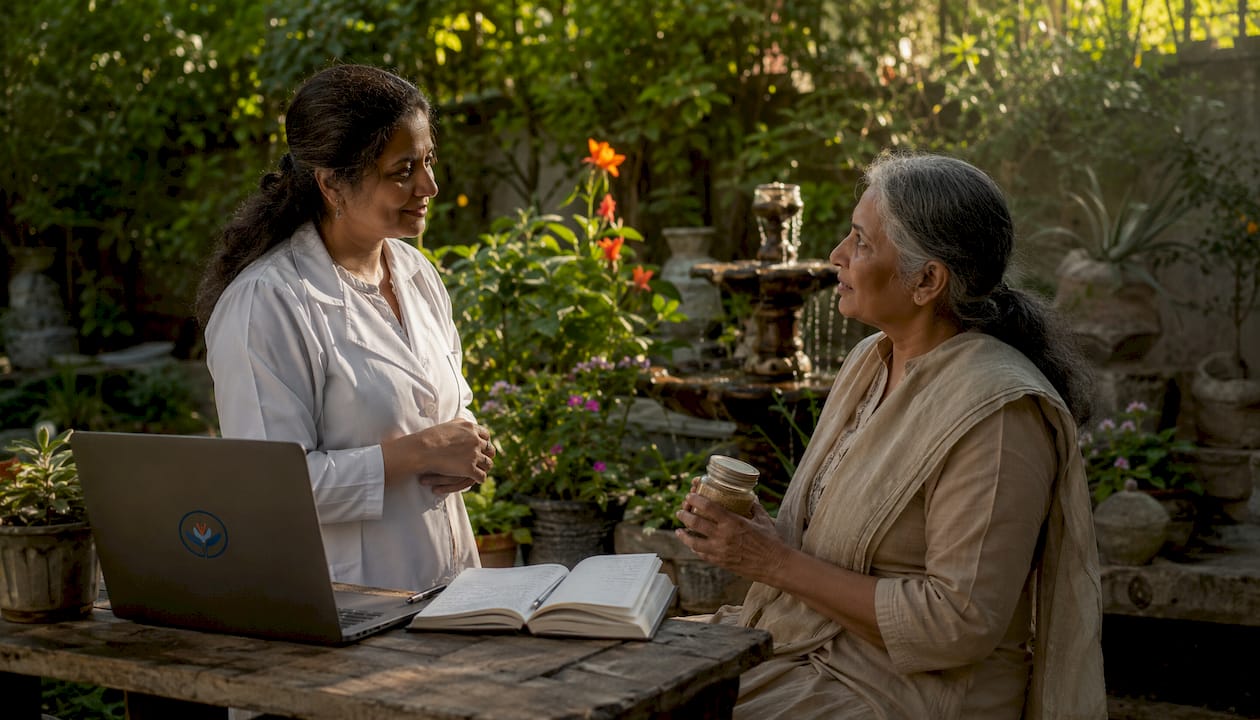
Combining science and ancient wisdom produces better outcomes than either approach alone. When modern empirical methods meet time-tested practices, you get something neither can offer on its own: the precision of clinical research applied to knowledge systems refined over thousands of years of human experience. The result is a fuller picture of what it means to heal, not just physically, but emotionally and spiritually too.
There are real, grounded reasons to bring these two worlds together:
- Validated healing: Mindfulness meditation produces measurable structural changes in the brain after just eight weeks, confirming what Buddhist practitioners observed for millennia.
- Broader perspective: Ancient traditions ask questions that science alone rarely frames, like how community, meaning, and relationship shape well-being.
- Sustainable solutions: Indigenous knowledge systems offer ecological frameworks that modern environmental science is only beginning to formalize.
- Practical daily tools: Breathwork, gratitude practice, and nature immersion are ancient techniques with documented physiological effects you can use today.
- Richer research: Excluding traditional knowledge has slowed scientific progress; integrating it opens new lines of inquiry.
At Mystic, this integration is not a philosophical position. It is the foundation of how we approach care.
How ancient wisdom and modern science evolved separately, then together
For most of human history, knowledge was not divided into “scientific” and “spiritual” categories. Vedic scholars in ancient India, Taoist practitioners in China, and Indigenous healers across the Americas all worked from systems that treated the body, mind, and natural world as inseparable. These were not casual beliefs. Ancient wisdom traditions are time-tested, disciplined, and repeatable, functioning more like technologies of consciousness than collections of folk sayings.

The split came largely with the European Enlightenment. As modern science formalized its methods around the 17th century, it drew sharp lines between empirical inquiry and traditional knowledge. Ancient practices were increasingly labeled superstition, and Indigenous knowledge was dismissed as myth. That dismissal, it turns out, cost us. Scientists now recognize that excluding indigenous knowledge as primitive has genuinely hindered progress in fields from ecology to medicine.
The past two decades have brought a meaningful shift. Neuroscience, systems biology, and integrative medicine have begun treating ancient practices as legitimate research subjects rather than curiosities. The milestones are worth noting:
- Pre-modern era: Vedic, Taoist, Indigenous, and Greek traditions develop comprehensive frameworks for health, ethics, and the natural world.
- 17th–19th centuries: The Enlightenment formalizes scientific method; traditional knowledge is progressively marginalized in Western institutions.
- 20th century: Anthropology and comparative religion begin documenting ancient systems, though often through a colonial lens.
- 1990s–2000s: Mind-body medicine gains clinical traction; Jon Kabat-Zinn adapts Buddhist mindfulness into Mindfulness-Based Stress Reduction (MBSR) for hospital settings.
- 2010s–present: Harvard neuroscience, Nobel Prize research, and the World Health Organization all formally engage with traditional knowledge as a source of evidence.
Pro Tip
When you explore ancient practices, resist the urge to extract only the techniques while discarding the frameworks they come from. A breathing exercise divorced from its context still works physiologically, but understanding the “when” and “why” from the original tradition often makes it far more effective.
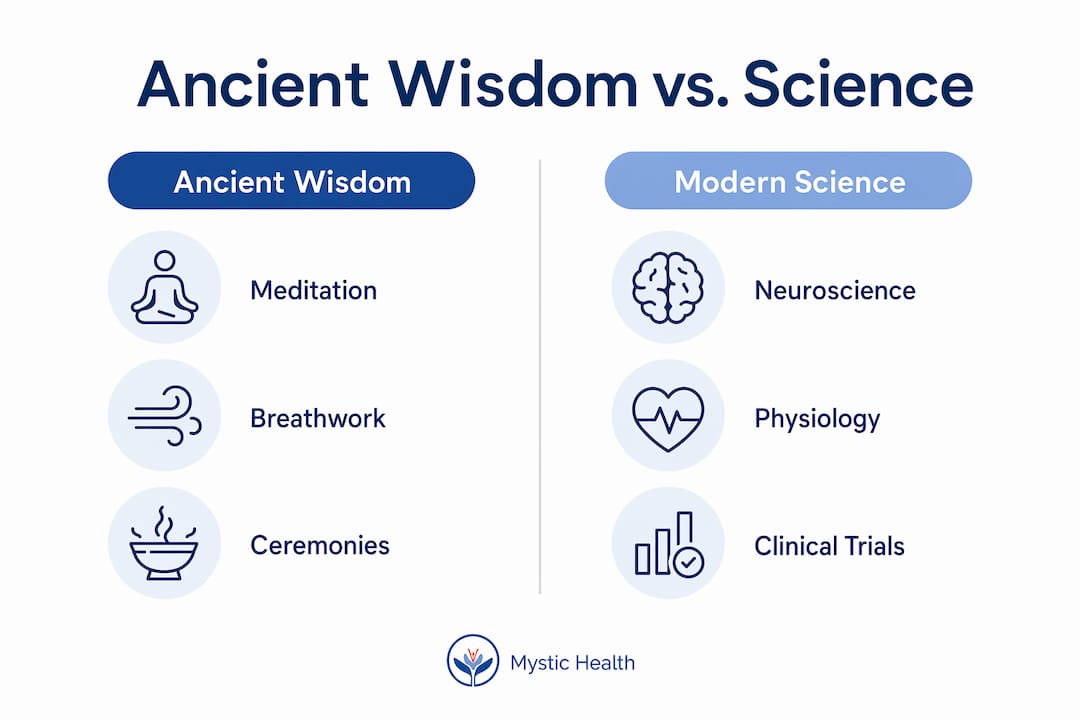
How ancient practices show up in modern health and well-being
The clearest evidence for combining modern science and tradition comes from health outcomes. These are not anecdotal. They are documented in peer-reviewed research, and the results are striking.
Mindfulness meditation is the most studied example. Eight weeks of practice produces increased gray matter density in the hippocampus, the brain region tied to memory and learning, alongside decreased activity in the amygdala, which drives fear and stress reactivity. That is structural brain change, not a subjective feeling.
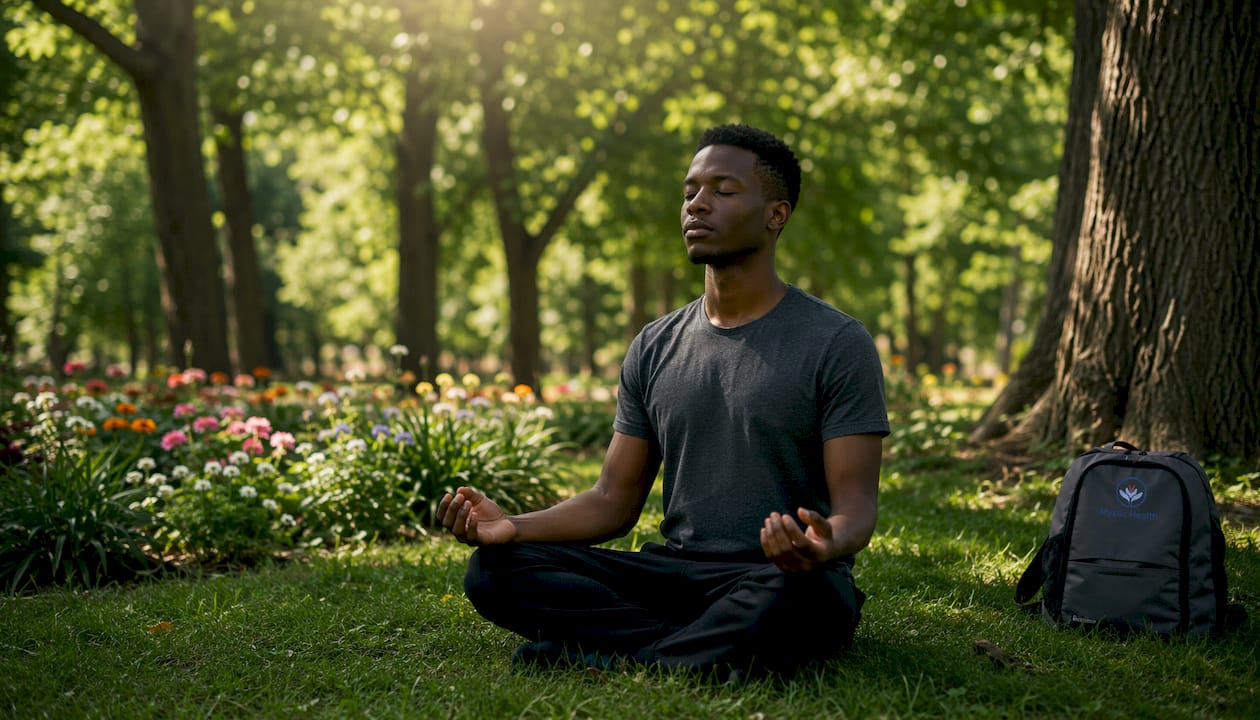
Pranayama (breathwork), practiced in yogic traditions for over 5,000 years, works by activating the vagus nerve through slow, controlled exhalations. This shifts the nervous system from sympathetic (fight-or-flight) to parasympathetic (rest-and-digest) activation, a mechanism now confirmed by research in Frontiers in Psychiatry.
Forest bathing (Shinrin-yoku), a Japanese practice rooted in the Shinto relationship with nature, consistently produces reduced cortisol, lower blood pressure, improved immune function, and restored capacity for focused attention after even short periods of nature immersion, according to NIH-supported studies.
Indigenous ceremonial practices add another dimension entirely. The Navajo Blessingway ceremony, for instance, involves the whole community in a person’s healing, not just the individual. This communal approach to mental health contrasts sharply with Western individualistic models and offers something clinical settings often cannot: relational belonging as medicine.
| Practice | Ancient origin | Documented modern benefit |
|---|---|---|
| Mindfulness meditation | Buddhist tradition | Increased hippocampal gray matter; reduced amygdala reactivity |
| Pranayama breathwork | Vedic/yogic tradition | Vagus nerve activation; reduced anxiety |
| Forest bathing | Japanese Shinto tradition | Lower cortisol; improved immune function |
| Intermittent fasting | Multiple religious traditions | Triggers autophagy; supports cellular repair |
| Gratitude journaling | Stoic, Buddhist, religious traditions | Increased dopamine; improved sleep and life satisfaction |
| Community healing ceremonies | Indigenous traditions (Navajo, Cree) | Strengthened social bonds; restored relational balance |
What the science actually says about why this integration works
The scientific case for combining science and ancient knowledge is no longer circumstantial. It runs through neuroscience, cellular biology, and clinical medicine.
The Harvard and Massachusetts General Hospital mindfulness study from 2010 remains one of the most cited pieces of evidence. Participants who completed an eight-week mindfulness program showed measurable increases in hippocampal grey matter density and measurable decreases in amygdala activity. These are not self-reported improvements. They are visible on MRI scans.
At the cellular level, the 2016 Nobel Prize in Physiology or Medicine went to Yoshinori Ohsumi for his discovery of autophagy, the body’s cellular self-cleaning process. Intermittent fasting, practiced in some form by virtually every major religious tradition, triggers this process. Ancient practitioners did not have the vocabulary of molecular biology, but they had millennia of careful observation about what helped people live longer and think more clearly.
Systems biology offers another bridge. Rather than isolating single active compounds, it examines how complex herbal formulations interact across multiple biological pathways simultaneously, which is exactly how traditional Ayurvedic and Chinese medicine have always understood their remedies. This shift in scientific framing makes ancient herbal knowledge far more legible to modern researchers.
Studying ancient practices rigorously does require confronting real methodological challenges:
- Ontological differences: Ayurveda’s Saankhya dualism and modern biology operate from different foundational assumptions about what the body is. Genuine integration requires resolving those contradictions, not papering over them.
- Community-led research: Custodians of traditional knowledge must define the research questions, not just serve as subjects. Collaborative approaches that respect this principle produce more accurate and ethically sound findings.
- Context preservation: Extracting a technique from its tradition can distort both the practice and the science. The “when” and “why” embedded in ancient frameworks often contain clinically relevant information.
The deeper benefits: what this integration offers you and society
Ancient wisdom does something science alone rarely does. It asks better questions. Traditions like Buddhism and Taoism function as technologies for self-inquiry, offering frameworks for navigating existential confusion rather than just symptom management. That is a different kind of value, and it fills a gap that clinical medicine has long struggled to address.
For individuals, the practical benefits are real and accessible:
- Mental health: Mindfulness, breathwork, and gratitude practice each have documented effects on anxiety, depression, and stress resilience.
- Resilience: Small, consistent ancient practices, applied through habit stacking, produce transformative effects over time through neuroplasticity.
- Meaning and purpose: Spiritual frameworks from multiple traditions provide context for suffering that purely biomedical models cannot offer.
- Embodied awareness: Practices like yoga and qigong reconnect people with physical sensation in ways that support trauma recovery and emotional regulation.
For society, the stakes are even higher. The Anishinaabe Medicine Wheel teaches that health is harmony among mental, physical, emotional, and spiritual dimensions, not merely the absence of illness. When communities adopt this framing, they shift from reactive crisis management to proactive, relational well-being. Indigenous Elders facilitating healing circles, intergenerational knowledge transmission, and ceremony-based community cohesion all represent social technologies that modern public health is beginning to take seriously.
The importance of wisdom in science extends to governance and ethics as well. Ancient traditions carry hard-won knowledge about how to make decisions that account for long-term consequences and collective well-being, exactly the kind of thinking that modern institutions often lack.
Where this integration is already working beyond health care
The most compelling case studies for combining ancient knowledge with modern methods are not all in hospitals or therapy rooms.
Environmental sustainability may be the most urgent application. Indigenous land management practices, from controlled burns used by Aboriginal Australians to the milpa agricultural system of Mesoamerican civilizations, encode ecological knowledge developed over thousands of years of observation. Modern conservation biology is increasingly partnering with Indigenous communities to apply this knowledge to climate adaptation, reforestation, and biodiversity protection. The results consistently outperform purely technocratic approaches.
Education is another domain where ancient frameworks add something measurable. Incorporating ancient sciences and mathematics into modern curricula, from the Indian concept of zero that made modern computation possible to the Babylonian base-60 system still embedded in how we measure time and angles, gives students historical context and demonstrates that knowledge is a cumulative, cross-cultural project. Research in educational psychology supports this: students who understand the origins of ideas show deeper conceptual retention than those who learn techniques in isolation.
Architecture and urban design are rediscovering ancient principles of passive cooling, natural ventilation, and materials that work with local climates rather than against them. Traditional construction methods from the Middle East, South Asia, and the Americas prioritized harmony with the natural environment in ways that contemporary sustainable design is actively studying.
Mental health policy is shifting too. The World Health Organization’s engagement with traditional and complementary medicine reflects a growing recognition that community-based, culturally grounded approaches to mental health reach populations that Western clinical models simply do not.
What comes next when science and ancient wisdom keep talking to each other
The conversation between these two knowledge systems is accelerating, and the most interesting developments are still ahead.
Psychedelic-assisted therapy is one of the most striking examples. Substances like psilocybin and ketamine, used ceremonially in Indigenous traditions for centuries, are now in Phase 3 clinical trials and receiving FDA Breakthrough Therapy designations. The therapeutic frameworks being developed draw directly on ancient ceremonial structures: intention setting, guided experience, and integration afterward. Science is not replacing the ancient container. It is learning from it.
Precision medicine is beginning to incorporate constitutional frameworks from Ayurveda and Traditional Chinese Medicine, recognizing that individual variation in treatment response maps onto categories that ancient practitioners identified long before genomics existed. The idea that people have different physiological “types” requiring different interventions is not mysticism. It is a hypothesis that modern research is now testing rigorously.
Contemplative neuroscience is an emerging field dedicated entirely to studying the effects of meditation, prayer, and ritual on the brain and body. Researchers at institutions like the Mind and Life Institute are working directly with experienced practitioners, including Tibetan Buddhist monks with tens of thousands of hours of meditation practice, to understand states of consciousness that standard psychological models cannot yet explain.
The future of this integration depends on one thing above all: genuine respect. Not the extraction of useful techniques while discarding the traditions they come from, but a real partnership between scientific institutions and the communities that have carried this knowledge across generations. That kind of collaboration is harder and slower than simply running a clinical trial on a meditation app. It is also the only approach that preserves the living nature of ancient wisdom rather than reducing it to a set of data points.
Key Takeaways
Combining science and ancient wisdom produces better health and societal outcomes than either approach can deliver alone, because empirical precision and time-tested human knowledge address different and complementary dimensions of well-being.
- 01
Brain changes are measurable
Eight weeks of mindfulness meditation produces structural changes in the hippocampus and amygdala, confirmed by Harvard/MGH MRI research.
- 02
Ancient practices have physiological mechanisms
Pranayama activates the vagus nerve; intermittent fasting triggers autophagy, validated by the 2016 Nobel Prize in Physiology or Medicine.
- 03
Integration requires genuine respect
Effective research must be community-led, with custodians of traditional knowledge defining the questions, not just serving as subjects.
- 04
Benefits extend beyond health
Indigenous land management, ancient mathematics, and ceremonial community practices offer proven models for sustainability and education.
- 05
Small practices compound over time
Consistent daily breathwork or gratitude journaling produces transformative effects through neuroplasticity and habit formation.
Ready to experience this integration for yourself?
At Mystic, we have built our care model around exactly this synthesis. We combine evidence-based treatment with ancient wisdom practices like mindfulness, breathwork, and sound therapy, because we believe healing works best when it addresses the whole person. Whether you are navigating depression, trauma, chronic pain, or the weight of a serious illness, there is space here for you to heal in a way that honors both the science and the deeper dimensions of your experience.
Explore our integrative mental health programs and find out what care that holds both worlds can feel like.
Recommended
 Sources and references (3)
- 1.Mindfulness meditation news.harvard.edu
- 2.excluding indigenous knowledge openrivers.lib.umn.edu
- 3.Collaborative approaches un.org
This article is for educational purposes only and does not constitute medical advice, diagnosis, or treatment. Always consult a qualified healthcare provider about your own care.
Looking for support?
Our team can help you understand your options and build a plan that fits your values.
Schedule a consultation