Ketamine for Fibromyalgia: An Evidence-Based Patient Guide
Multiple systematic reviews and randomized controlled trials show that IV ketamine can meaningfully reduce fibromyalgia pain in the short term, with most patients experiencing relief lasting hours to a few days after a single infusion. A review of seven publications covering 118 patients found consistent short-term reductions in self-reported pain intensity, while isolated case reports of higher-dose, multi-day protocols suggest the possibility of longer responses lasting weeks or months. Long-term efficacy has not been established in well-powered trials.
The honest picture, based on current evidence:
- Short-term benefit: Supported by multiple systematic reviews and small RCTs
- Long-term benefit: Inconsistent; not yet established in rigorous trials
- Clinical role: Adjunctive therapy for patients who have not responded adequately to guideline-based first-line treatments, administered under specialist care
- Most-studied route: Intravenous (IV) infusion; esketamine nasal spray (Spravato) is FDA-approved for depression, not fibromyalgia
Key Takeaways
Multiple systematic reviews confirm short-term pain reduction after IV ketamine in fibromyalgia, but long-term efficacy remains unestablished, making it an adjunctive option for refractory cases within a multidisciplinary care plan.
| Point | Details |
|---|---|
| Short-term evidence is consistent | Multiple systematic reviews and small RCTs show pain reduction lasting hours to days after IV ketamine infusions. |
| IV infusion is the most-studied route | Doses of 0.1–0.5 mg/kg via IV are the standard in trials; Spravato is FDA-approved for depression only, not fibromyalgia. |
| Safety monitoring is required | Side effects occurred in 71–91% of participants in some reviews but were mostly mild and transient; monitored clinical settings are non-negotiable. |
| Ketamine is adjunctive, not first-line | It is appropriate for patients refractory to exercise, CBT, and first-line medications, not as a replacement for those approaches. |
| Mystic offers structured ketamine programs | Mystic provides evaluation, monitored infusions, ketamine-assisted psychotherapy, and multidisciplinary follow-up for fibromyalgia patients. |
Table of Contents
- How ketamine may reduce fibromyalgia pain
- What clinical studies show about ketamine for fibromyalgia
- How ketamine is administered for pain: routes, dosing, and monitoring
- Side effects, risks, and who should not get ketamine
- Who might benefit and how ketamine fits into overall fibromyalgia care
- What to expect: appointments, preparation, recovery, and costs
- What we still don’t know and where research is headed
- Mystic Health’s approach to ketamine and fibromyalgia care
- Setting realistic expectations: a clinician perspective
- Sources
How ketamine may reduce fibromyalgia pain
Fibromyalgia is primarily a disorder of central sensitization, meaning the central nervous system amplifies pain signals in ways that don’t reflect tissue damage. That’s exactly where ketamine’s mechanism becomes relevant.
Ketamine is an N-methyl-D-aspartate receptor (NMDAR) antagonist. By blocking NMDA receptors, it interrupts the glutamatergic signaling that drives central sensitization, the process by which your nervous system becomes hyperexcitable and keeps amplifying pain long after any original injury has resolved.
The relevant mechanisms, in plain terms:
- NMDAR blockade: Reduces the “wind-up” effect in spinal and supraspinal pain pathways
- Glutamatergic modulation: Dampens excessive excitatory neurotransmission that sustains chronic pain states
- Synaptic plasticity: May temporarily reset hyperexcitable synaptic connections
- AMPA receptor activation and neurotransmitter release: Downstream effects that may contribute to mood improvement and pain relief simultaneously
- Neuroplasticity: Ketamine promotes BDNF-related neuroplastic changes, which partly explains its antidepressant properties and why mood often improves alongside pain
Think of it this way: if central sensitization is a fire alarm stuck in the “on” position, ketamine works to interrupt the electrical circuit keeping it triggered. The problem is that standard IV infusions have a short half-life, so the circuit can reset. That pharmacokinetic reality is why most low-dose IV protocols produce hours-to-days of relief rather than permanent remission.
Pro Tip: If you’re curious about how ketamine’s antidepressant and pain-relief mechanisms overlap, Mystic’s guide on ketamine for depression explains the neuroplasticity angle in accessible detail.
What clinical studies show about ketamine for fibromyalgia
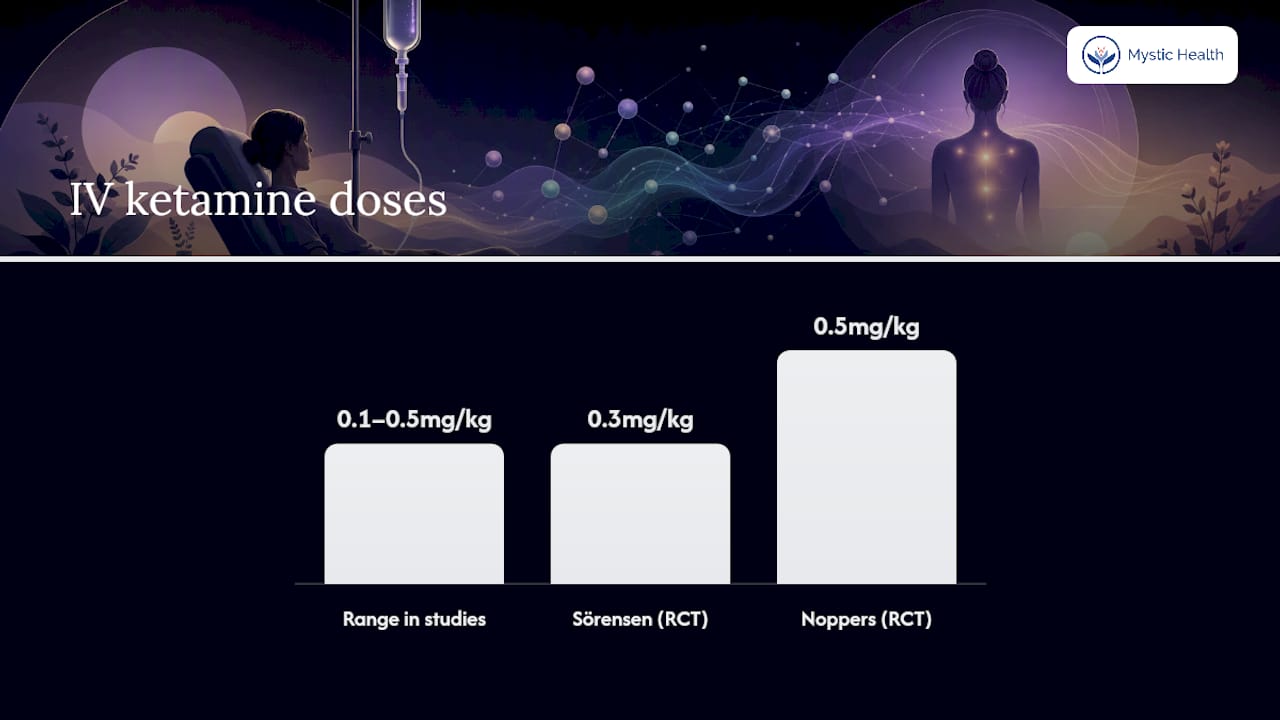
The evidence base is real but limited. A 2024 systematic review identified six articles covering 115 patients, with doses ranging from 0.1–0.5 mg/kg and follow-up periods spanning minutes to eight weeks. The finding: ketamine infusions produced short-term pain reductions, but long-term efficacy remained unsatisfactory across the trials reviewed.
Two early RCTs give the clearest picture of what “short-term” actually means:
- Sörensen et al.: Eleven patients received a single 0.3 mg/kg IV infusion. Pain scores on the Visual Analog Scale dropped more than 50% in many participants, with effects lasting 2–7 days.
- Noppers et al.: S-ketamine at 0.5 mg/kg produced initial pain reduction, but no sustained superior effect was observed at eight weeks compared to placebo.
Case reports tell a different, more hopeful story for some patients. The Ochsner Journal review documented cases where escalating-dose, multi-day infusion protocols with booster doses led to months-long symptom relief in individual patients. These are not RCTs, and they can’t be generalized, but they do suggest a possible dose-response relationship worth studying formally.
What the evidence actually supports: Short-term analgesia after IV ketamine infusions is a consistent finding across small studies. What remains unclear is how to sustain that benefit, who responds best, and what the optimal dose and schedule look like. A 2023 NCBI clinical evidence update covering ketamine in chronic non-cancer pain reached the same conclusion: short-term relief is plausible, long-term efficacy and optimal protocols are not yet defined.
The quality limitations are worth naming directly. Most studies involve small samples, heterogeneous dosing, short follow-up, and no standardized outcome measures. Side effects during infusion were common, reported in 71–91% of participants in some reviews, though mostly mild and transient. Ketamine is not a first-line fibromyalgia treatment. It is an adjunct for patients who haven’t found adequate relief through standard care.
How ketamine is administered for pain: routes, dosing, and monitoring
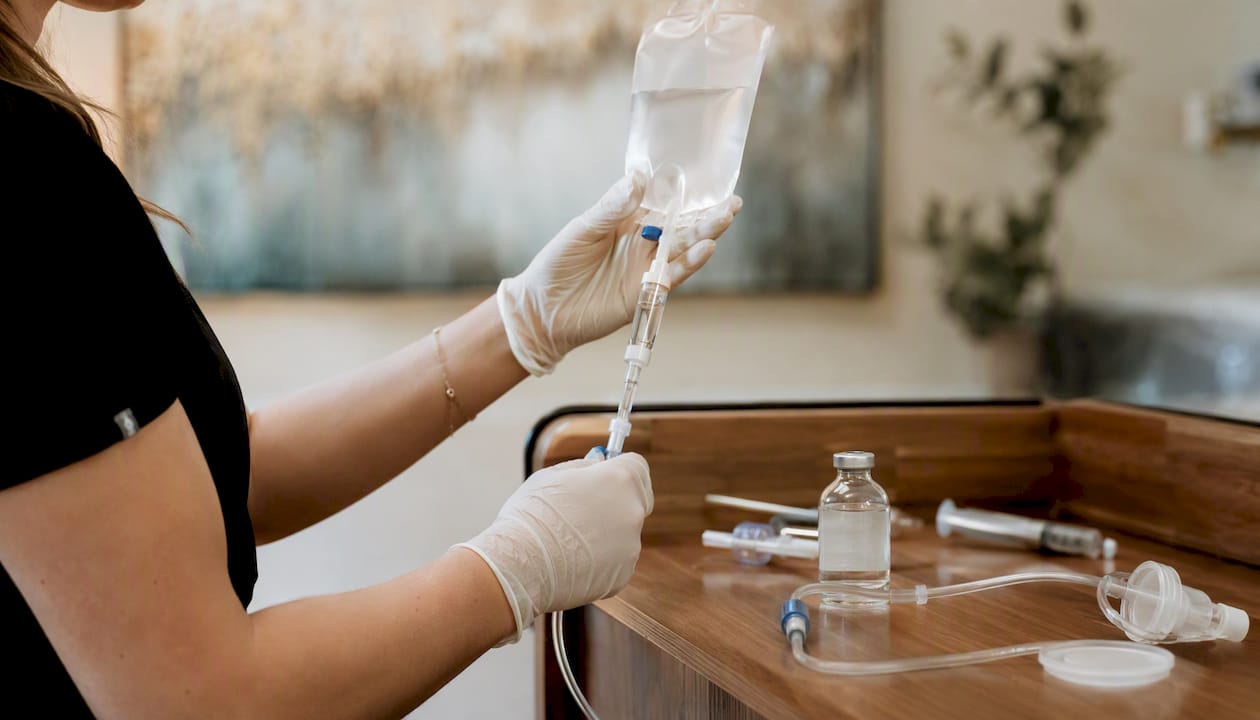
IV infusion is the route studied in virtually all fibromyalgia trials. Doses in RCTs ranged from 0.1–0.5 mg/kg, typically delivered over 30–60 minutes in a monitored clinical setting. Case reports of longer-lasting responses used multi-day escalating protocols with booster infusions, though these remain investigational.
| Route | Typical trial dose | Observed effect duration | Evidence base |
|---|---|---|---|
| IV infusion (single) | 0.1–0.5 mg/kg | Hours to days | RCTs and systematic reviews |
| IV infusion (multi-day/escalating) | Higher doses, repeated | Weeks to months (case reports) | Case series only |
| Intranasal esketamine (Spravato) | Per FDA labeling | Not studied for fibromyalgia | FDA-approved for depression only |
Spravato (esketamine) note: Spravato is the S-enantiomer of ketamine, FDA-approved in the U.S. for treatment-resistant depression and major depressive disorder with suicidal ideation. It is not approved for fibromyalgia or chronic pain. Its administration setting differs from IV ketamine: it is self-administered nasally under clinical supervision in a certified healthcare setting, with a mandatory two-hour monitoring period. Any use for pain would be off-label.
During an IV infusion, standard monitoring includes:
- Continuous vital sign monitoring (blood pressure, heart rate, oxygen saturation)
- Cardiac and respiratory monitoring
- Sedation scoring throughout the infusion
- Staff trained to recognize and manage dissociative effects
- Emergency protocols in place for rare serious adverse events
A typical visit flows from intake and pre-medication checks, through the infusion itself, into a monitored recovery period of 30–60 minutes, and then discharge with written instructions. You will need someone to drive you home.
Side effects, risks, and who should not get ketamine
Ketamine commonly causes short-lived dissociation, dizziness, nausea, and perceptual changes during and immediately after infusion. Serious adverse events are uncommon in properly monitored settings, but the safety profile deserves honest attention.
Common, short-term side effects (typically resolving within 15–30 minutes after infusion):
- Feelings of unreality or dissociation
- Dizziness and lightheadedness
- Nausea
- Perceptual changes (visual or auditory distortions)
- Brief euphoria or drowsiness
- Mild changes in hearing
These effects are generally manageable in a controlled clinical setting, and pre-procedure counseling significantly reduces anxiety and improves tolerance.
Contraindications (conditions that typically rule out ketamine):
- Unstable cardiovascular disease or uncontrolled hypertension
- Active or history of psychosis or schizophrenia
- Pregnancy
- Uncontrolled thyroid disease
- Active substance use disorder (particularly dissociative drugs)
- Any condition where sedation or airway management poses unacceptable risk
In the U.S., ketamine is a Schedule III controlled substance. Its use for fibromyalgia pain is off-label, meaning a physician can legally prescribe it for this purpose, but it falls outside FDA-approved indications. That off-label status has real implications for insurance coverage and for the level of oversight you should expect from any clinic offering it.
Who might benefit and how ketamine fits into overall fibromyalgia care
Ketamine is most appropriate for patients who have already worked through guideline-based first-line treatments without adequate relief. Clinical guidance from UpToDate is clear that fibromyalgia care is multimodal: exercise, cognitive behavioral therapy (CBT), sleep optimization, and medications like duloxetine, milnacipran, or pregabalin form the foundation. Ketamine enters the picture when that foundation hasn’t been enough.
Eligibility considerations a specialist will typically review:
- Documented trials of at least two or three first-line pharmacologic agents (SNRIs, TCAs, pregabalin/gabapentin)
- Engagement with nonpharmacologic approaches (aerobic exercise, CBT, sleep hygiene)
- Objective symptom burden using validated tools like the Fibromyalgia Impact Questionnaire (FIQ) or ACR diagnostic criteria
- Psychiatric evaluation to rule out active psychosis or contraindicated conditions
- Full medication interaction review, particularly for CNS-active drugs
- Cardiovascular clearance
Ketamine doesn’t replace the rest of your care plan. It works best as one component within a broader program that continues to address sleep, mood, physical conditioning, and psychological wellbeing. The pain management resources at Mystic offer a useful overview of how these pieces fit together.
Pro Tip: Before your first consultation, bring a written list of every medication and therapy you’ve tried, with approximate dates and your response to each. This single step can cut your intake appointment time significantly and helps the specialist assess your candidacy accurately.
What to expect: appointments, preparation, recovery, and costs
Most clinics require an initial consultation, baseline assessment, and signed informed consent before scheduling any infusions. The process is deliberate, and that’s a good sign.
Before your appointment:
- Confirm any medication adjustments with your prescribing physician (some CNS-active drugs require tapering or timing changes)
- Follow fasting instructions if provided (typically nothing by mouth for 4–6 hours before IV infusion)
- Arrange a driver for after the session; you cannot drive yourself home
- Bring a complete medication list and your symptom history
- Document your baseline pain using a scale you’ll track consistently (VAS, FIQ, or a pain diary)
After your infusion:
- Rest for the remainder of the day; avoid operating machinery or making major decisions
- Track your pain and mood daily for at least one week after each session
- Contact the clinic immediately if you experience chest pain, severe confusion, or symptoms that don’t resolve within a few hours
- Keep your follow-up appointment, even if you feel significantly better
Costs and insurance: Most IV ketamine infusions for pain are off-label and self-pay in the U.S. Individual infusions can range considerably depending on the clinic, location, and protocol. Insurance coverage is rare for off-label pain indications, though some plans may cover associated consultation fees or monitoring. Ask any clinic for an itemized cost breakdown before committing, and check whether your insurer will cover the evaluation visit separately.
Pro Tip: Track your response using the Fibromyalgia Impact Questionnaire (FIQ) before each infusion and at 48 hours, one week, and four weeks after. If you see no meaningful change after two to three infusions, that’s important clinical information. Bring those numbers to your next appointment rather than relying on memory.
For a detailed walkthrough of what a first ketamine clinic visit looks like, Mystic’s first-timer’s guide to ketamine therapy covers the process step by step.
What we still don’t know and where research is headed
Current evidence demonstrates short-term benefit but lacks well-powered, long-term RCTs and standardized dosing protocols. That gap is not a reason to dismiss ketamine, but it is a reason to approach it with clear eyes.
Key unanswered questions:
- Optimal dosing and regimen: No consensus exists on the best dose, infusion rate, frequency, or number of sessions for fibromyalgia specifically
- Duration of benefit: Most trials follow patients for days to weeks; almost none track outcomes beyond two months
- Maintenance strategies: Whether booster infusions can sustain initial responses, and at what interval, remains undefined
- Predictors of response: No validated biomarker or clinical profile reliably identifies who will respond
- Safety in vulnerable populations: Data in older adults, patients with significant psychiatric comorbidities, and those on complex medication regimens is thin
- Cost-effectiveness: No formal health-economic analysis exists for ketamine in fibromyalgia
The case reports of multi-day, escalating-dose protocols producing months-long remission are intriguing precisely because they suggest a dose-response relationship. Formal trials testing these regimens, with standardized outcome measures and longer follow-up, are what the field needs next.
If you’re interested in contributing to this evidence base, registered trials can be found at Clinicaltrials. Participation in well-designed studies is one of the most meaningful ways patients can help shape future treatment standards.
Mystic Health’s approach to ketamine and fibromyalgia care
Living with fibromyalgia that hasn’t responded to standard treatments is exhausting in a way that’s hard to describe to someone who hasn’t felt it. You deserve a program that takes that seriously, not just a single infusion and a follow-up call.
Mystic Health provides personalized, safety-first ketamine programs that include a thorough medical evaluation, monitored IV infusion administration, ketamine-assisted psychotherapy, and multidisciplinary follow-up coordinating physical therapy, CBT, and medication review. Where clinically appropriate, Spravato (esketamine) is also available. The pathway is structured: initial consultation and medical clearance, an induction series of infusions, and then a follow-up and maintenance plan built around your measured response, not a generic schedule.
Insurance compatibility and financing options are part of the conversation from the start, because cost shouldn’t be the reason you can’t explore a treatment that might genuinely help. Mystic’s clinical evidence page compiles the research supporting these approaches if you want to review it before your first call.
Ready to find out whether you’re a candidate? Explore Mystic’s programs or reach out directly to schedule a consultation.
Setting realistic expectations: a clinician perspective
When I consider ketamine for a fibromyalgia patient, the first question I ask isn’t “will this work?” It’s “have we genuinely exhausted what we know works first?” Ketamine is a real option for real suffering, but it carries the most meaning when it’s part of a thoughtful plan, not a last-ditch attempt after years of frustration without structure.
What I want patients to understand is that “short-term benefit” is not a failure. For someone in significant pain, two weeks of meaningful relief can be the window that allows them to re-engage with exercise, sleep better, and build momentum in CBT. That’s not nothing. That’s sometimes the turning point.
The patients who tend to do best are the ones who come in with clear goals, a willingness to track their response honestly, and an understanding that we’re measuring across multiple domains: pain intensity, function, mood, sleep quality. Not just “do I hurt less today?” Shared decision-making means we agree upfront on what a meaningful response looks like, and we agree on what would tell us to stop.
Ketamine is not a cure for fibromyalgia. But for the right patient, in the right program, it can open a door that felt permanently closed.
Sources
- Maintenance IV Ketamine Therapy in the Fibromyalgia Patient
- Ketamine in fibromyalgia: a systematic review
- Fibromyalgia: Treatment in adults - UpToDate
This article is for general informational purposes only and is not a substitute for professional medical advice. Consult a qualified clinician or pain specialist before making any decisions about ketamine or any other treatment for fibromyalgia.
Recommended

Mystic Health Blog







FAQs
1. Am I eligible for ketamine therapy?
2. Does insurance cover the cost of ketamine therapy?
3. How many ketamine treatments will I need?
We recommend two initial treatments to determine suitability and adjust dosage. After these sessions, additional treatments are available based on your progress and specific requirements.