Psychological benefits of psychedelics for healing
TL;DR:
- Recent evidence indicates that psychedelics, when used in structured therapy settings, can provide meaningful psychological benefits for depression, PTSD, and addiction. The therapeutic process involves careful preparation, supervised dosing sessions, and integration, emphasizing both neurobiological changes and meaning-making to promote lasting healing. Safety, thorough screening, and ongoing support are essential, as the benefits depend heavily on proper guidance and post-session work.
For a long time, many of us were told that psychedelics were dangerous, fringe, or simply not a serious topic in mental health care. That story is changing fast. Recent evidence shows promising psychological benefits for psychedelics, especially when they are used within structured therapy settings guided by trained professionals. If you have been carrying depression, trauma, or a sense of being stuck in old patterns, and you are genuinely curious about what psychedelic-assisted therapy can offer, this article is written for you. We will walk through the evidence, explain how these therapies work in the brain and in the therapy room, and help you understand what responsible, supported healing actually looks like.
Table of Contents
- What are the psychological benefits of psychedelics?
- How psychedelics work: Mechanisms of psychological change
- Core elements of psychedelic therapy: Protocols and the healing journey
- Risks, limitations, and safety considerations
- Why lasting change depends on more than the psychedelic experience
- Explore safe and supported psychedelic healing
- Frequently asked questions
Key Takeaways
| Point | Details |
|---|---|
| Evidence-based benefits | Research supports psychedelic therapy for depression, PTSD, and substance use in structured settings. |
| Mechanisms matter | Therapeutic outcomes depend on both neurobiological effects and the support provided before, during, and after dosing. |
| Protocols drive success | Preparation, guided experience, and integration are essential for safe, effective healing—much more than the drug alone. |
| Safety is critical | Psychedelic therapy is not for everyone, and careful screening is vital to minimize risk. |
| Integration amplifies healing | Processing and meaning-making after the experience enable lasting positive change. |
What are the psychological benefits of psychedelics?
With the renewed scientific focus on psychedelics, it is vital to understand what psychological outcomes they appear to influence. The short answer is that the evidence is genuinely encouraging, but it is also nuanced. This is not a magic cure. It is a promising set of tools that, used carefully, can open doors that other treatments sometimes cannot.
Psychedelic-assisted therapy shows meaningful benefits for depression, PTSD, and substance use disorders across multiple randomized controlled trials. The range of conditions being studied continues to grow, including anxiety related to terminal illness, obsessive compulsive disorder, and eating disorders. People in these trials often describe something deeper than symptom reduction. They report shifts in how they relate to themselves, to others, and to their lives as a whole.
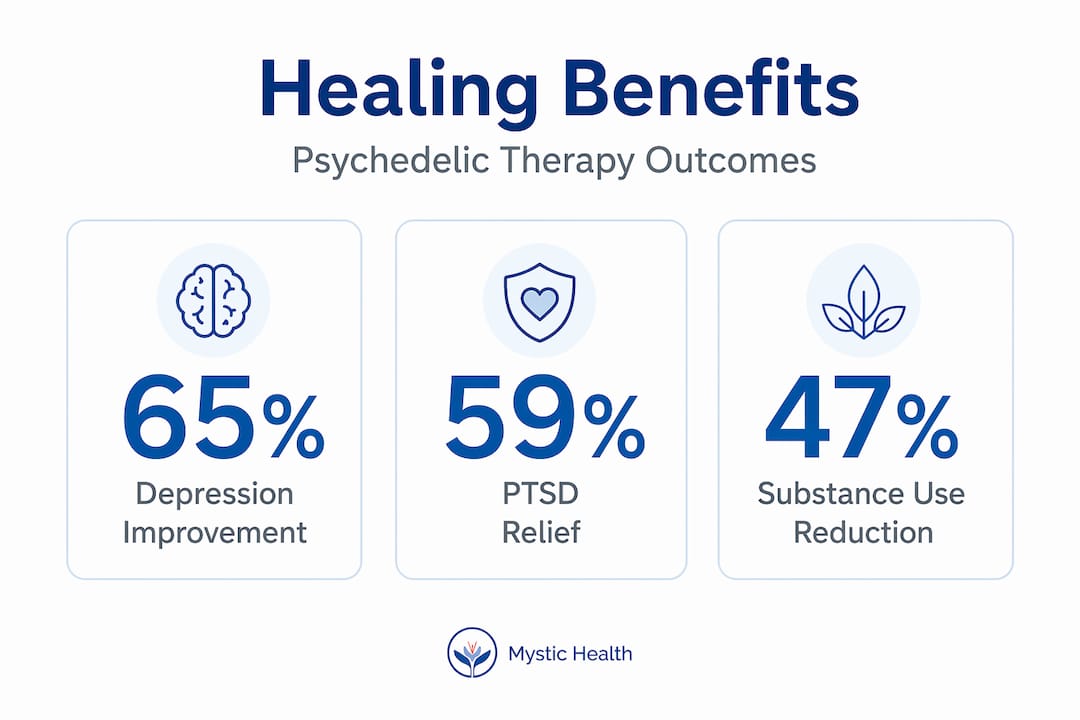
Here is a summary of the strongest areas of clinical evidence:
| Condition | Primary compounds studied | Strength of current evidence |
|---|---|---|
| Treatment-resistant depression | Psilocybin, ketamine | Strong, multiple RCTs |
| PTSD | MDMA | Strong, phase 3 trials completed |
| Alcohol use disorder | Psilocybin | Moderate, growing evidence |
| End-of-life anxiety | Psilocybin, LSD | Moderate, meaningful effect sizes |
| Opioid use disorder | Ibogaine | Early, promising but limited |
Some of the most compelling findings include:
- Rapid onset of antidepressant effects, sometimes within hours rather than weeks
- Sustained reductions in PTSD symptom severity even months after a small number of sessions
- Meaningful reductions in cravings and relapse rates in addiction studies
- Improvements in emotional openness, psychological flexibility, and quality of life
That said, it is important to be honest. A significant JAMA Psychiatry meta-analysis found no statistically significant difference between psychedelic-assisted therapy and antidepressants for depression when researchers controlled for unblinding. In other words, some of the dramatic results may partly reflect expectation and context rather than the compound alone. This does not mean the treatments are ineffective. It means the full picture includes how, where, and with whom the therapy happens. Pairing psychedelic work with mindfulness and psychedelic therapy practices is one way practitioners are working to deepen and sustain those effects.
How psychedelics work: Mechanisms of psychological change
Understanding the benefits is just the start. Here is how psychedelics actually influence the mind and brain in therapeutic settings, because what happens inside a session is far more layered than most people realize.

The leading scientific model right now points to a dual-process mechanism: an acute phase of neural desynchronization during the session itself, followed by a subacute phase of increased neuroplasticity in the days and weeks that follow. Think of it this way. The psychedelic experience temporarily loosens the brain’s default patterns, those grooves of habitual thought and emotional response that can keep us locked in depression, fear, or addiction. Then, in the window that follows, the brain is more receptive to forming new connections and new ways of seeing.
Key mechanisms researchers are currently focused on include:
- Serotonin 2A receptor activation, which disrupts default mode network activity and shifts self-referential thinking
- Increased neuroplasticity, including elevated BDNF (brain-derived neurotrophic factor) levels that support new neural growth
- Reduced amygdala reactivity, which can soften fear responses and emotional rigidity
- Increased cognitive flexibility, allowing people to consider new perspectives on old wounds
- Mystical or peak experiences, which correlate with positive outcomes in many trials, though the causal role remains debated
“The subjective experience during a psychedelic session may be clinically relevant, but the field is still working out exactly how and why these experiences translate into lasting psychological change.” (PMC, 2025)
The honest truth is that science is still catching up to what people have reported experientially for decades. The subjective quality of the session — the sense of connection, of meaning, even of encountering something larger than oneself — does appear to matter. But we do not yet fully understand why, or how to reliably produce those states. That is exactly why professional guidance is not optional. It is essential.
Pro Tip: If you are exploring psychedelic therapy, ask your provider about their approach to innovative therapies for emotional healing and how they integrate neurobiological knowledge with relational support during and after the session. A good provider can speak to both. Learning more about integrative medicine for emotional healing can also help you ask the right questions before you begin.
Core elements of psychedelic therapy: Protocols and the healing journey
The way psychedelics are used clinically is just as important as the compounds themselves. Let us break down the protocols that protect and empower the healing process.
Structured psychedelic therapy is not about taking a substance and waiting to feel better. It follows a carefully sequenced protocol designed to maximize safety and therapeutic depth. That protocol generally unfolds in three phases:
-
Preparation. This phase involves multiple sessions with your therapist or care team before any substance is administered. You establish trust, explore your intentions, learn grounding techniques, and discuss what to expect emotionally and physically. This is not a formality. It is the foundation.
-
Administration (dosing session). The actual psychedelic session takes place in a carefully prepared environment, often with specific music, comfortable furnishings, and a trained guide or therapist present throughout. Sessions typically last four to eight hours depending on the compound. You are never left alone.
-
Integration. This is where lasting change takes root. Integration and preparation are essential for translating the acute effects of the session into durable psychological growth. It involves follow-up sessions where you process what arose, make meaning of the experience, and connect insights to your daily life.
Here is a quick comparison between psychedelic therapy and traditional talk therapy to give you a sense of the difference:
| Feature | Psychedelic therapy | Traditional talk therapy |
|---|---|---|
| Session length | 4 to 8 hours (dosing day) | 45 to 60 minutes weekly |
| Number of sessions | Often 2 to 3 total | Ongoing, months to years |
| Mechanism | Neurobiological shift plus insight | Cognitive and behavioral patterns |
| Integration required | Yes, explicitly structured | Sometimes informal |
| Supervision intensity | High (guide present throughout) | Moderate |
| Emotional depth per session | Often very high | Typically gradual |
What this table does not capture is the quality of what can happen in a well-supported session. People often describe encountering emotions they had buried for years, feeling a deep sense of compassion for themselves, or seeing their relationships from an entirely new angle. These are not guaranteed outcomes. But when they do happen within a safe, supported container, the impact can be profound.
Pro Tip: Reading up on the science and insights on psychedelic-assisted healing and exploring a thorough guide to psychedelic therapy before your first consultation will help you arrive prepared rather than overwhelmed.
Risks, limitations, and safety considerations
While the healing potential is real, so are the risks. Here is what you need to know to stay safe and informed.
Psychedelic therapy is not right for everyone. Trial participation is restricted for individuals with a personal or family history of psychosis, schizophrenia, or certain mood disorders with psychotic features. People with active suicidal crisis, severe cardiovascular conditions, or complex psychiatric comorbidities require extremely careful evaluation before any psychedelic intervention is considered.
Current protocols require stringent screening, and the question of how well these findings generalize to typical mental health care settings remains genuinely open. Most clinical trials recruit carefully selected participants. Real-world patients often carry more complexity.
Important risks and limitations to know:
- Psychosis induction is rare but possible, particularly in individuals with genetic vulnerability or prior psychotic episodes
- Difficult experiences (challenging trips) can occur even in well-prepared individuals and require skilled support to process
- Medication interactions with certain antidepressants, particularly SSRIs, can reduce efficacy or create unpredictable effects
- Emotional vulnerability post-session means the days following treatment can feel raw and require careful support
- Limited long-term data means we do not yet fully know how benefits hold up after one, five, or ten years
- Legal and regulatory variability means access differs significantly depending on where you live and which compound you are considering
None of these risks mean you should walk away from exploring this path. They mean you should walk toward it carefully and with the right support around you. Reading about the patient consultation workflow and the essential guide to psychedelic therapy safety can help you ask the right questions and protect yourself throughout the process.
Pro Tip: Always ask a prospective provider how they screen for contraindications and what their protocol is if a session becomes distressing. A program that cannot answer these questions clearly is not one you should trust with your care.
Why lasting change depends on more than the psychedelic experience
Here is something the popular conversation about psychedelics often glosses over, and it matters. The compound is not the healer. You are.
What we see in both research and clinical practice is that psychedelics create a window. They can loosen old defenses, make familiar pain feel new again, and create space for profound insight. But that window only stays open briefly. What happens inside it, and especially what you do in the weeks that follow, is where the real work lives.
Enduring benefits appear to involve genuine changes in self-perception, emotion regulation, and interpersonal connectedness. These are not automatic. They emerge through the meaning-making process: talking with a therapist, journaling, reconnecting with community, sitting with uncomfortable feelings rather than running from them. The psychedelic experience potentiates healing. It does not guarantee it.
This is why we are cautious when people describe psychedelics as miracle cures or one-session fixes. We have seen how beautiful and genuinely transformative those sessions can be. We have also seen what happens when the integration is missing. The insights fade. The old patterns return. The window closes without much having changed at a deeper level.
We believe the future of this field lies not in chasing more powerful compounds or larger doses, but in building richer, more supportive environments around the experience itself. That means better preparation, longer integration periods, and care teams who understand the emotional, relational, and even spiritual dimensions of what people go through. Exploring holistic emotional healing tips alongside any psychedelic program is something we genuinely encourage.
The healing really takes root in the in-between spaces. In the quiet reflection after the session. In the courage to show up for yourself again, one day at a time.
Explore safe and supported psychedelic healing
If what you have read today resonates with you, we want you to know that you do not have to figure this out alone.
At Mystic Health, we offer evidence-based, carefully structured psychedelic therapy programs within a compassionate clinical environment. From our compassion mindfulness program to our full range of psychedelic therapy programs, every service is built around your safety, your intentions, and your long-term healing. We also offer integrative mental health services that combine modern science with holistic approaches to support every dimension of your wellbeing. If you are ready to explore what supported healing can look like for you, we invite you to reach out and schedule a consultation. We are here, and we take this work seriously.
Frequently asked questions
Which mental health conditions have the strongest evidence for psychedelic therapy?
Depression, PTSD, and substance use disorders have the most promising research support, based on multiple RCT reviews showing meaningful and potentially durable benefits across these conditions.
Are psychedelic therapy benefits permanent?
Most studies show benefits lasting months after treatment, but long-term follow-up data is still limited, so we cannot yet say with confidence how enduring these changes are over years.
Can anyone with mental health issues try psychedelics safely?
No. Individuals with a history of psychosis, bipolar disorder with psychotic features, or complex psychiatric comorbidities face elevated risk, and trial protocols specifically restrict their participation unless carefully screened and supervised.
Is psychedelic therapy better than antidepressants?
When studies control for unblinding effects, psychedelic therapy performs similarly to open-label antidepressants for depression, suggesting both context and expectation play a significant role in outcomes.
How important is integration after the psychedelic experience?
Integration is where lasting change genuinely takes hold. Structured post-session integration translates the insights from the experience into real emotional and behavioral shifts that endure over time.
Recommended

Mystic Health Blog








FAQs
1. Am I eligible for ketamine therapy?
2. Does insurance cover the cost of ketamine therapy?
3. How many ketamine treatments will I need?
We recommend two initial treatments to determine suitability and adjust dosage. After these sessions, additional treatments are available based on your progress and specific requirements.