What Is Treatment-Resistant Depression? A Clear Guide
TL;DR:
- Treatment-resistant depression affects nearly 30% of people with major depressive disorder who do not respond after two proper medication trials. Proper diagnosis requires thorough review of past treatments, consideration of underlying health issues, and understanding biological and psychological causes. Effective options include advanced therapies like ECT, rTMS, ketamine, and psilocybin, with advocacy crucial for personalized, comprehensive care.
Treatment-resistant depression is defined as major depressive disorder that fails to improve after at least two adequate antidepressant trials, each at a proper dose and duration. This is not a rare edge case. Nearly 30% of people with major depressive disorder meet the clinical criteria for treatment-resistant depression, also called refractory depression in some clinical settings. If you or someone you love has tried multiple medications without real relief, this guide is written for you. The science has moved well beyond standard antidepressants, and understanding what is treatment-resistant depression is the first step toward finding what actually works.
What is treatment-resistant depression, and how is it diagnosed?
Treatment-resistant depression is defined clinically as a failure to respond satisfactorily after at least two antidepressant monotherapy trials, each conducted at an adequate dose and for an adequate duration, typically six to eight weeks or longer. The word “adequate” carries real weight here. A trial that was cut short, underdosed, or poorly adhered to does not count as a genuine failed attempt.
This is where the concept of pseudoresistance becomes critical. Medication nonadherence rates among people with depression range from 30–60%. That means a significant portion of people labeled as treatment-resistant may actually have been misclassified due to incomplete trials, wrong diagnoses, or untreated medical conditions. Before accepting a TRD label, a thorough review of every prior treatment is necessary.
Clinicians are also beginning to use a broader concept called Difficult-to-Treat Depression, or DTD. DTD reorients care away from simply counting failed medication trials and toward a fuller picture: symptom patterns, functional impairment, psychosocial stressors, and comorbid conditions. The goal shifts from chasing remission at all costs to optimizing stability and quality of life over time.
A comprehensive diagnostic approach matters enormously. Conditions like thyroid disorders, sleep apnea, chronic pain, and PTSD can all mimic or worsen depression. Ruling these out, or treating them alongside depression, changes the clinical picture significantly.
Pro Tip: Ask your provider to review every prior medication trial in writing, including dose, duration, and adherence. This one step can reveal whether a true TRD diagnosis is warranted or whether adjustments to prior treatments are still worth trying.
What are the biological and psychological causes of treatment-resistant depression?
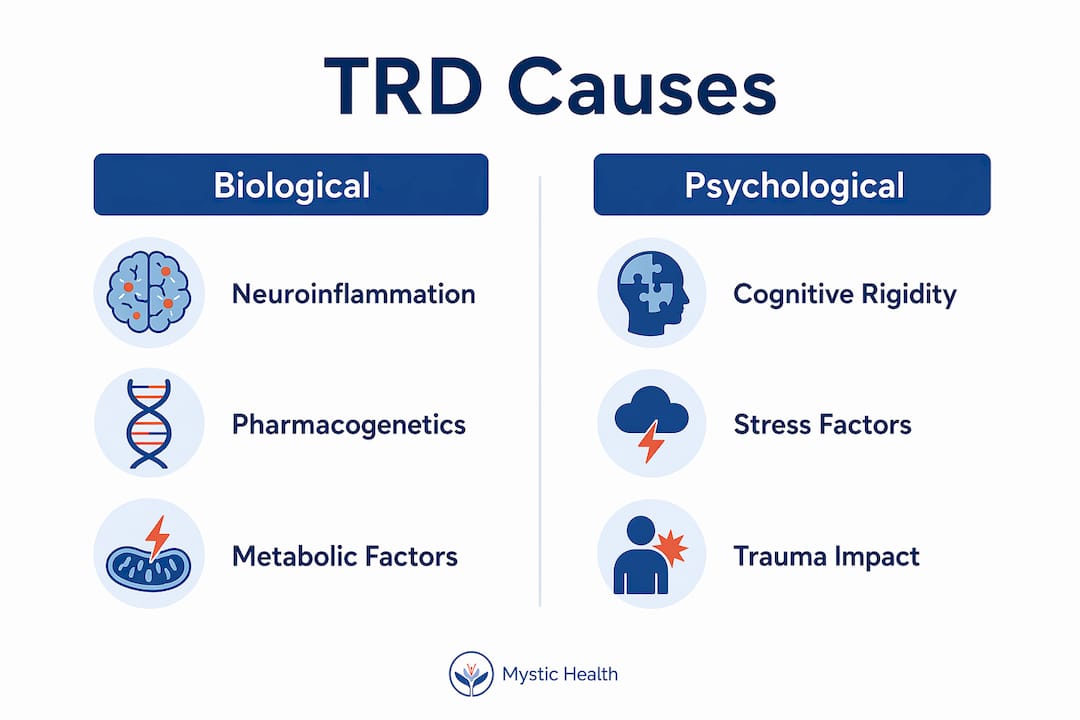
Depression that doesn’t respond to treatment is rarely caused by a single factor. The biology is genuinely complex, and understanding the contributing causes helps explain why no single pill works for everyone.
| Contributing Factor | How It Affects Treatment Response |
|---|---|
| Neuroinflammation | Elevated C-reactive protein (CRP) signals immune-driven depression that standard antidepressants do not address |
| Pharmacogenetics | Genetic variants in CYP2D6 and CYP2C19 enzymes cause up to tenfold variation in how the body metabolizes antidepressants |
| Psychological traits | Low cognitive flexibility and high neuroticism are associated with poorer treatment outcomes |
| Psychosocial stress | Adverse childhood experiences and chronic stress alter brain structure and stress-response systems |
| Comorbid conditions | Anxiety disorders, substance use, and chronic pain all reduce antidepressant effectiveness |
Neuroinflammation is one of the most important and underrecognized drivers of refractory depression. When elevated CRP and other inflammatory markers are present, the brain’s monoamine system, which most antidepressants target, is not the primary problem. Treating inflammation-driven depression with serotonin-based drugs alone is like trying to fix a leaking pipe by repainting the wall.
Pharmacogenetics adds another layer. Genetic differences in CYP2D6 and CYP2C19 mean that some people metabolize antidepressants so quickly the drugs never reach therapeutic levels, while others accumulate them to toxic concentrations. Pharmacogenomic testing is now available and can guide prescribing decisions with real precision.
Psychological factors matter just as much. Low cognitive flexibility is consistently linked to poor treatment response. People who struggle to shift thought patterns or adapt to new perspectives tend to remain stuck in depressive cycles even when medications are technically working. This is one reason psychotherapy is not optional in TRD care. It is a biological intervention as much as a psychological one.
What treatment options exist for people with treatment-resistant depression?
The treatment landscape for refractory depression has expanded considerably in the past decade. The options below range from well-established to newly approved, and the most effective approach combines several of them based on individual biology and history.
Conventional and combination approaches
Optimizing an existing antidepressant, whether by adjusting dose, switching agents, or adding an augmentation medication like lithium or atypical antipsychotics, remains a first step for many patients. Psychotherapy, particularly cognitive behavioral therapy and acceptance-based approaches, improves cognitive flexibility and addresses the psychological contributors that medication alone cannot reach. For a broader view of what newer options look like, Mystic’s guide on advanced depression treatments covers the clinical landscape clearly.
Neuromodulation therapies
Electroconvulsive therapy (ECT) remains the most effective intervention for severe, treatment-resistant depression, with response rates that outperform any medication. Repetitive transcranial magnetic stimulation (rTMS) and theta burst stimulation (TBS) are non-invasive alternatives with strong evidence and far fewer side effects than ECT. Neuromodulation therapies like ECT and rTMS have proven efficacy for TRD and are now considered standard-of-care options, not last resorts.
Ketamine, esketamine, and psychedelic-assisted therapy
Ketamine and its derivative esketamine (marketed as Spravato) work through the glutamate system rather than serotonin. This makes them effective for people whose depression is driven by different neurobiological pathways. Spravato is FDA-approved specifically for treatment-resistant depression and is administered in a clinical setting. Psilocybin-assisted therapy is showing strong results in clinical trials, with effects that appear to persist well beyond the treatment session itself.
| Treatment | Mechanism | Best For |
|---|---|---|
| ECT | Broad neurological reset | Severe, acute TRD with safety concerns |
| rTMS / TBS | Targeted brain stimulation | Moderate TRD, outpatient setting |
| Ketamine / Spravato | Glutamate modulation | Rapid relief, suicidality risk |
| Psilocybin-assisted therapy | Serotonin 2A receptor agonism | Emotional processing, chronic TRD |
| Psychotherapy (CBT, ACT) | Cognitive restructuring | Psychological contributors to resistance |
- Spravato (esketamine) is FDA-approved for TRD and administered nasally in a certified clinical setting
- Psilocybin therapy is available through clinical trials and select licensed providers
- rTMS is widely covered by insurance for TRD after two failed antidepressant trials
- Pharmacogenomic testing can guide medication selection before trying additional drugs
Pro Tip: If you are considering ketamine or Spravato, ask your provider specifically about integrative mental health programs that combine these treatments with psychotherapy. The combination produces more durable results than either approach alone.
How can patients and caregivers advocate for better TRD care?
Understanding treatment-resistant depression is one thing. Knowing how to advocate within the healthcare system is another, and it matters just as much.
-
Request a full medication review. Ask your provider to document every prior antidepressant trial, including dose, duration, and whether you actually took it consistently. Careful review of adherence and dosing can reclassify many TRD cases and prevent unnecessary escalation to invasive treatments.
-
Push for a multidimensional assessment. Depression that doesn’t respond to treatment often has biological, psychological, and social contributors. Ask whether thyroid function, inflammatory markers like CRP, sleep quality, and trauma history have all been evaluated. A mental health treatment plan that addresses all of these factors is more likely to produce lasting results.
-
Ask about pharmacogenomic testing. A simple cheek swab can reveal how your body metabolizes specific antidepressants. This test is increasingly covered by insurance and can prevent years of trial-and-error prescribing.
-
Seek a specialist in TRD. General practitioners and even many psychiatrists may not be current on the full range of options. Academic medical centers, integrative psychiatry practices, and clinics specializing in neuromodulation or psychedelic-assisted therapy have access to treatments that standard outpatient settings do not.
-
Involve caregivers in the conversation. Family members and close caregivers often notice patterns that patients cannot see themselves. Bringing a trusted person to appointments improves the quality of information providers receive. Mystic’s resources on family mental health support offer practical guidance for those in a supporting role.
-
Watch for cascade iatrogenesis. Experts warn that cycling through multiple ineffective medications without addressing root causes creates its own harm through side effects and lost time. If a treatment is not working after an adequate trial, the answer is not always another medication. Sometimes it is a fundamentally different approach.
Key takeaways
Treatment-resistant depression is a biologically complex condition, not a personal failure, and the most effective care combines accurate diagnosis, root-cause assessment, and evidence-based treatments beyond standard antidepressants.
| Point | Details |
|---|---|
| TRD definition | Failure to respond after two adequate antidepressant trials at proper dose and duration. |
| Pseudoresistance risk | 30–60% nonadherence rates mean many TRD diagnoses require careful review before escalating care. |
| Biological drivers | Neuroinflammation, pharmacogenetic variation, and low cognitive flexibility all contribute to resistance. |
| Expanded treatment options | ECT, rTMS, ketamine, Spravato, and psilocybin-assisted therapy offer proven alternatives to standard antidepressants. |
| Advocacy matters | Requesting a full medication review and multidimensional assessment can change the treatment path significantly. |
What I’ve learned from watching people fight this condition
I have sat with people who came to us after a decade of failed medications, convinced they were simply broken. That belief is one of the cruelest symptoms of this illness. It is also, in most cases, wrong.
What I have seen consistently is that the label “treatment-resistant” gets applied too quickly and too loosely. A patient who took a low dose of an antidepressant for three weeks and felt nothing has not failed two adequate trials. They have had two inadequate trials. That distinction changes everything about what comes next.
The cases that genuinely meet TRD criteria almost always have something else going on beneath the surface. Unresolved trauma. Chronic inflammation. A genetic profile that makes standard antidepressants nearly useless. These are not character flaws. They are biological and biographical realities that standard psychiatric care was not designed to address.
What gives me real hope is the pace of change in this field. Spravato, psilocybin-assisted therapy, and rTMS are not experimental curiosities anymore. They are producing results in people who had genuinely run out of options. The key is finding providers who understand the full picture and are willing to treat the whole person, not just the symptom checklist.
If you are a caregiver reading this, please know that your persistence on behalf of someone you love is not nagging. It is medicine. Keep asking questions. Keep pushing for better answers.
— Kabir
Mystic’s approach to treatment-resistant depression
Mystic Health works specifically with people who have not found relief through conventional treatment. The programs combine evidence-based therapies including ketamine-assisted psychotherapy, Spravato, and psilocybin-assisted therapy with mindfulness practices and personalized clinical support.
Every treatment plan at Mystic starts with a thorough assessment of biological, psychological, and psychosocial factors. This is not a one-size approach. It is care built around your specific history and needs. Mystic also works with insurance providers and offers financing options to make these treatments accessible. If you are ready to explore what is possible beyond standard antidepressants, Mystic’s integrative mental health programs and specialized care programs are a meaningful place to start.
FAQ
What is the clinical definition of treatment-resistant depression?
Treatment-resistant depression is defined as major depressive disorder that does not respond adequately after at least two antidepressant monotherapy trials, each at a proper dose and for a sufficient duration, typically six weeks or longer.
Is treatment-resistant depression the same as refractory depression?
Yes. Refractory depression and treatment-resistant depression refer to the same clinical condition. Both terms describe depression that persists despite multiple adequate treatment attempts.
What causes depression to resist treatment?
Neuroinflammation, genetic differences in drug metabolism (particularly CYP2D6 and CYP2C19 variants), low cognitive flexibility, and unaddressed psychosocial stressors are all established contributors to treatment resistance.
Can treatment-resistant depression be treated successfully?
Yes. Neuromodulation therapies like ECT and rTMS, along with ketamine, Spravato, and psilocybin-assisted therapy, have demonstrated meaningful efficacy for people whose depression did not respond to standard antidepressants.
How do I know if I have treatment-resistant depression or pseudoresistance?
A careful review of every prior medication trial, including dose, duration, and adherence, is the first step. Many people labeled as treatment-resistant were actually undertreated. A specialist in TRD can help make that distinction accurately.
Recommended

Mystic Health Blog





FAQs
1. Am I eligible for ketamine therapy?
2. Does insurance cover the cost of ketamine therapy?
3. How many ketamine treatments will I need?
We recommend two initial treatments to determine suitability and adjust dosage. After these sessions, additional treatments are available based on your progress and specific requirements.