Ketamine-Assisted Psychotherapy: An Evidence-Based Guide
Ketamine-assisted psychotherapy (KAP) combines medically supervised ketamine dosing with structured psychotherapy, and for people living with treatment-resistant depression (TRD), PTSD, certain substance use disorders, or chronic pain, it can produce rapid symptom relief that, when paired with integration work, may extend well beyond the dosing session itself. The evidence is genuinely promising. A systematic narrative review of 17 studies and 603 participants found clinically significant reductions in pain, anxiety, and depressive symptoms when ketamine and psychotherapy were combined, and a separate systematic review of 19 studies covering roughly 1,006 patients reported largely positive outcomes. The honest caveat: study heterogeneity is high, long-term data are limited, and larger randomized controlled trials are still needed. Academic programs at institutions like the University of Utah Health and the University of Rochester Medical Center (URMC) have developed structured KAP protocols, which gives you a useful benchmark when evaluating any clinic.
If you are considering KAP, three steps matter most right now:
- Get a thorough medical evaluation from a licensed prescriber who reviews your cardiovascular history, current medications, and psychiatric diagnosis before any dosing.
- Ask about credentials — specifically whether a licensed psychotherapist with psychedelic or trauma-focused training is involved, not just a nurse or technician.
- Plan for integration sessions after dosing, because that is where the neuroplastic window ketamine opens gets translated into lasting change.
Key Takeaways
Ketamine-assisted psychotherapy offers rapid symptom relief for treatment-resistant depression, PTSD, and related conditions, but durable benefits depend on structured integration therapy, qualified clinical oversight, and realistic expectations about the current state of the evidence.
| Point | Details |
|---|---|
| KAP combines dosing and therapy | Medically supervised ketamine plus structured psychotherapy is more effective than dosing alone for sustained outcomes. |
| Evidence is promising but limited | A systematic review of 19 studies (~1,006 patients) found largely positive results; only ~9% of mapped studies were RCTs. |
| Minimum three sessions recommended | University of Utah Health and other academic programs recommend at least three sessions to help sustain benefits. |
| Safety requires clinical oversight | Contraindications include unstable cardiovascular disease and active psychosis; vitals monitoring and emergency protocols are non-negotiable. |
| Mystic offers integrated KAP | Mystic’s program includes medical screening, supervised dosing, licensed psychotherapy, integration sessions, and financing options. |
Table of Contents
- What ketamine-assisted psychotherapy is, and how it differs from ketamine-only treatment
- How KAP may work: dissociation, neuroplasticity, and the therapeutic window
- What the research actually says about KAP outcomes
- What a typical KAP program looks like from start to finish
- Risks, side effects, and the U.S. regulatory picture
- How to evaluate and choose a KAP provider
- What an evidence-based KAP program looks like in practice
- A perspective worth sitting with
- Mystic Health’s KAP program: what to expect and how to get started
- Sources
What ketamine-assisted psychotherapy is, and how it differs from ketamine-only treatment
KAP is not simply a ketamine infusion with a therapist in the room. It is a structured clinical model in which medically supervised ketamine administration is intentionally sequenced with psychotherapy — a preparation phase before dosing, a therapist-present or therapist-adjacent dosing session, and one or more integration sessions afterward. The goal is to use ketamine’s neurobiological effects to deepen the psychotherapy, not to replace it.
That distinction matters when you are comparing your options.
| Feature | KAP (Ketamine-Assisted Psychotherapy) | Ketamine-Only Clinical Dosing | Spravato (Esketamine) |
|---|---|---|---|
| Psychotherapy component | Structured: prep, dosing, integration | None or minimal | Not required by protocol |
| Therapist role | Active, licensed psychotherapist involved | Monitoring staff only | Certified healthcare setting staff |
| FDA approval status | Off-label ketamine | Off-label ketamine | FDA-approved with REMS |
| Primary setting | Clinic or outpatient program | Infusion clinic | Certified healthcare facility |
| Target conditions | TRD, PTSD, SUDs, chronic pain | TRD, pain | TRD, MDD with suicidality |
| Session length | Up to ~3 hours including recovery | 40–60 min infusion | ~2 hours in-office observation |
Spravato (esketamine) deserves a specific note. It is the nasal spray form of esketamine, a close chemical relative of racemic ketamine, and it carries FDA approval for treatment-resistant depression and major depressive disorder with acute suicidal ideation. Because of its Risk Evaluation and Mitigation Strategy (REMS) program, patients must receive it in a certified healthcare setting and be observed for at least two hours after each dose. Spravato is not typically delivered within a KAP psychotherapy framework, though some programs integrate it with therapy.
A few terms worth knowing as you read further:
- Racemic ketamine: The standard pharmaceutical form, a 50/50 mix of two mirror-image molecules, used off-label for psychiatric indications.
- Esketamine (Spravato): The S-enantiomer of ketamine, FDA-approved as a nasal spray.
- Dosing routes: IV (intravenous), IM (intramuscular), intranasal, and sublingual/oral — each with different onset, intensity, and duration profiles.
- Integration: The structured psychotherapy work done after a dosing session to process and apply the experience.
How KAP may work: dissociation, neuroplasticity, and the therapeutic window
Ketamine promotes rapid neuroplasticity and can induce a dissociative state that opens what clinicians call a therapeutic window — a period of heightened psychological flexibility during and after dosing when entrenched thought patterns may be more accessible to change. This is the core rationale for combining ketamine with psychotherapy rather than administering it alone.
The term psychoplastogenicity refers to a drug’s capacity to stimulate synaptogenesis and dendritic growth, essentially helping the brain form new connections. Ketamine’s primary mechanism involves blocking NMDA receptors, which triggers a downstream surge in BDNF (brain-derived neurotrophic factor) and activates mTOR signaling pathways. In plain terms: the brain becomes temporarily more “plastic,” more open to rewiring. Clinical user guidance frames this as synaptogenic signaling and proposes that the dissociative experience itself creates the psychological conditions for deeper therapeutic work.
There is a genuine debate among clinicians about whether the psychoactive experience is necessary. Many practitioners report that patients who experience some degree of dissociation during sessions tend to report better outcomes, and Psychology Today’s clinical overview notes that clinical opinions differ on whether to minimize or encourage psychoactive effects. Some programs use lower, sub-dissociative doses; others work explicitly with the altered state.
What is not debated: the neuroplastic window is transient. Without integration-focused therapy to consolidate new insights and behavioral patterns, the benefits tend to fade. The mechanisms are compelling and the science behind psychedelic healing continues to develop, but they are not fully resolved — honest clinicians will tell you that.
What the research actually says about KAP outcomes
The overall pattern from systematic reviews is positive but heterogeneous, and the field needs larger, better-controlled trials before definitive clinical recommendations are possible.
A 2026 scoping review published in npj Mental Health Research mapped 47 studies using ketamine or esketamine with psychotherapy and found that only approximately 9% were randomized controlled trials. The review also distinguished between KAP (where the altered state is central) and KCP (ketamine combined with psychotherapy, but without that emphasis), a distinction that matters for interpreting results across studies.
Key evidence snapshot: A systematic review in BJPsych Open identified 19 studies covering approximately 1,006 patients across multiple diagnoses. The majority reported positive outcomes, but heterogeneity in diagnoses, psychotherapy modalities, and ketamine protocols prevented definitive clinical recommendations.
The conditions with the most supporting evidence include:
- Treatment-resistant depression (TRD): The most studied indication; multiple reviews report rapid reductions in depressive symptoms, though durability varies.
- PTSD: Emerging evidence, with some studies showing reductions in intrusion and avoidance symptoms.
- Substance use disorders (SUDs): Early but promising data, particularly for alcohol use disorder; manualized therapies like MET (Motivational Enhancement Therapy) and MBRP (Mindfulness-Based Relapse Prevention) have been used in combination.
- Chronic pain: The PMC systematic narrative review specifically included pain outcomes alongside anxiety and depression.
A large observational case series (n=235) published in the Journal of Psychoactive Drugs reported significant decreases in anxiety and depression following combined KAP interventions, with session counts ranging from 1 to 25 — illustrating how much real-world practice varies.
The honest limitations: Most studies are small, use different ketamine protocols, and measure outcomes over short follow-up periods. Manualized psychotherapies (CBT, MET, MBRP, TIMBER) are recommended for research translation because they are replicable, but many clinics use hybrid or unstandardized approaches.
Pro Tip: When a clinic cites its own outcome data, ask three questions: Was there a control group? What was the follow-up period? Was the psychotherapy manualized? Clinic-level data without controls and long follow-up is promising, not proven.
What a typical KAP program looks like from start to finish
A well-structured program follows a clear arc, and knowing what to expect helps you show up ready for the work.
Intake and screening comes first. A licensed prescriber reviews your full medical history, current medications, psychiatric diagnosis, and cardiovascular risk factors. This is not a formality. Ketamine raises blood pressure transiently, and certain conditions (see the safety section below) are genuine contraindications.
| Phase | What Happens | Typical Timing |
|---|---|---|
| Medical/psychiatric screening | History, meds review, cardiovascular assessment, informed consent | 1–2 visits before dosing |
| Preparation sessions | Psychotherapy to set intentions, build therapeutic alliance, review what to expect | 1–3 sessions |
| Dosing sessions | Supervised ketamine administration (IV, IM, intranasal, or oral/sublingual) with therapist present or nearby | 2–6 sessions, each up to ~3 hours including recovery |
| Integration sessions | Psychotherapy to process the experience and translate insights into behavioral change | 1–3 sessions per dosing session |
| Maintenance/boosters | Periodic dosing and integration as needed to sustain benefits | Individualized |
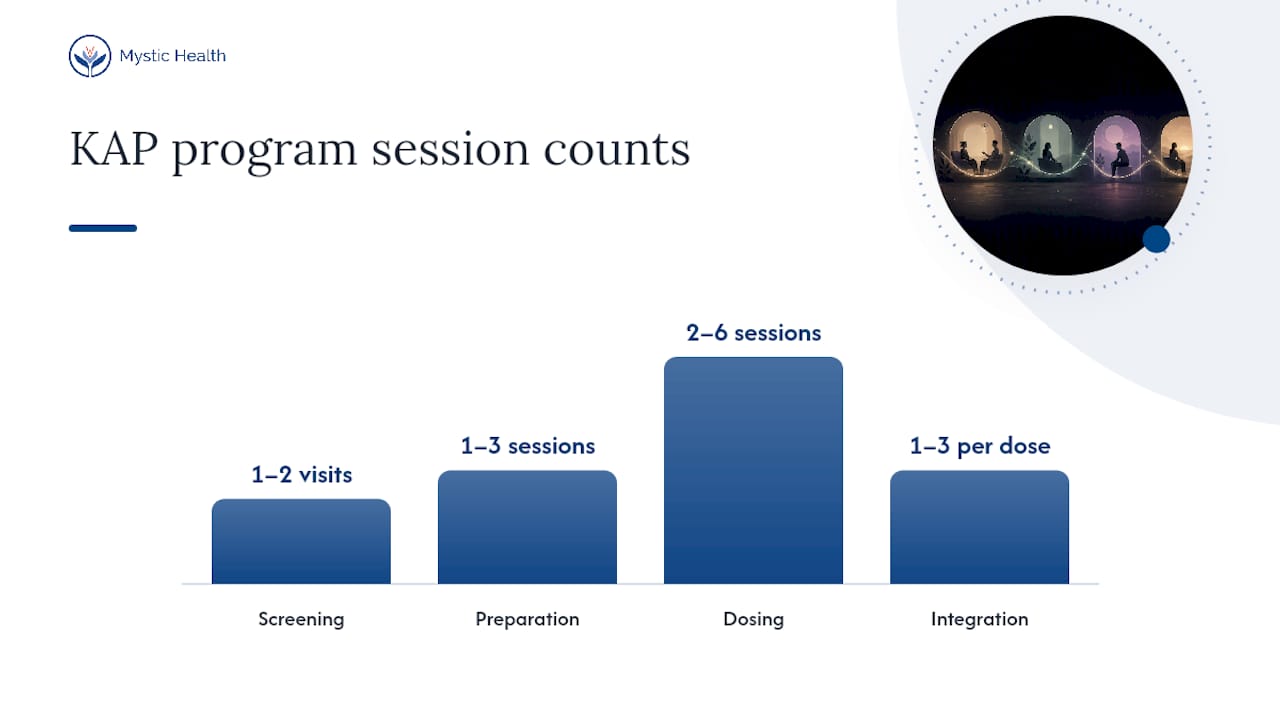
University of Utah Health’s KAP program recommends a minimum of three sessions as a common clinical threshold for sustaining benefits, and their protocol emphasizes integration visits as a core element, not an optional add-on.
Dosing routes each have a different feel:
- IV (intravenous): Fastest onset, most precise dosing, requires clinical setting; typical infusion runs 40–60 minutes.
- IM (intramuscular): Slightly slower onset, still requires clinical supervision; common in KAP programs.
- Intranasal: Includes both compounded racemic ketamine and FDA-approved Spravato; more variable absorption.
- Sublingual/oral: Slowest onset, lower bioavailability, sometimes used for at-home maintenance under close clinical oversight.
About 20% of U.S. ketamine clinics offer an integrated KAP model rather than ketamine-only dosing, which means finding a true KAP program takes deliberate searching. Sessions including supervised recovery can last up to three hours.
Risks, side effects, and the U.S. regulatory picture
KAP has real medical risks that require supervised administration and clinical oversight. This is not a treatment you self-administer or pursue outside a licensed clinical setting.
Common acute side effects during or shortly after dosing include:
- Dissociation and perceptual distortions (expected and usually transient)
- Transient elevation in blood pressure and heart rate
- Nausea and dizziness
- Confusion or disorientation during recovery
Less common but serious risks:
- Abuse potential and psychological dependence with repeated use outside clinical structure
- Bladder toxicity (cystitis) with high-frequency or high-dose chronic use — a risk more associated with recreational patterns than supervised clinical use, but worth knowing
- Emergence reactions (agitation, dysphoria) in some patients
Contraindications and red-flag medical conditions:
- Unstable cardiovascular disease or uncontrolled hypertension
- Active or poorly controlled psychosis (schizophrenia, schizoaffective disorder)
- Certain substance use patterns, particularly active stimulant or dissociative drug use
- Pregnancy
- Uncontrolled thyroid disease
U.S. regulatory status: Most ketamine use for psychiatric indications remains off-label. Ketamine is FDA-approved as an anesthetic, not as a psychiatric treatment. Spravato (esketamine nasal spray) is the exception: it carries FDA approval for TRD and MDD with acute suicidal ideation, and its REMS program requires administration in a certified healthcare setting with a minimum two-hour observation period. Clinics offering off-label racemic ketamine for depression or PTSD are operating legally but outside an FDA-approved indication, which means the burden of clinical judgment falls entirely on the prescribing clinician.
Pro Tip: Ask any clinic you consider whether they have a written emergency protocol and what their monitoring standard is during dosing. Vitals should be checked at baseline and periodically during the session. A clinic that cannot answer this question clearly is a red flag.

For a deeper look at how ketamine fits within pain management and psychedelic-assisted therapy, the clinical picture is more nuanced than most general articles convey.
How to evaluate and choose a KAP provider
Finding a reputable KAP program takes more than a Google search. About 20% of U.S. ketamine clinics offer integrated psychotherapy, which means the majority do not — and among those that claim to, quality varies considerably.
Non-negotiable must-haves:
- A licensed medical prescriber (MD, DO, APRN, or PA) who conducts a full medical and psychiatric evaluation before dosing.
- A licensed psychotherapist with documented training in psychedelic-assisted therapy, trauma-informed care, or a comparable specialty.
- Written informed consent that covers risks, off-label status, and the integration model.
- On-site emergency protocols and monitoring equipment during dosing sessions.
- A structured integration plan, not just a brief check-in call after dosing.
Questions to ask during a consultation:
- What are your prescriber’s credentials and board certifications?
- What psychotherapy model do you use, and is it manualized?
- How many integration sessions are included, and what happens if I need more?
- How do you monitor vitals during dosing, and who is present?
- What is your outcome-tracking process?
- What does the full cost include, and do you work with insurance or offer financing?
- What is your protocol if I have a difficult experience during a session?
Nice-to-have features that signal a higher-quality program: manualized therapy protocols, published or tracked outcomes, a multidisciplinary team (psychiatrist, therapist, and a medical professional for dosing), and supervision or fidelity checks on therapist practice.
Red flags to walk away from:
- Clinics that push high-dose sessions without any integration component
- No medical screening before dosing
- Promises of a “cure” or guaranteed remission
- Offering take-home ketamine without structured clinical oversight and follow-up
- Inability to explain their psychotherapy model or who the therapist is
Reviewing the patient consultation workflow before your first visit can help you arrive with the right questions already in hand.
What an evidence-based KAP program looks like in practice
The URMC KAP program, launched in 2023, offers a useful model: a multidisciplinary team, a safety-first intake process, and a focus on psychospiritual distress in serious illness. It demonstrates that the best programs are built around clinical rigor, not just ketamine availability.
Mystic’s integrative mental health program follows the same evidence-based arc:
- Assessment: A comprehensive psychiatric and medical evaluation before any dosing is scheduled.
- Preparation: One or more psychotherapy sessions to build the therapeutic relationship, set intentions, and address any anxiety about the process.
- Supervised dosing: Ketamine administered under medical supervision, with a licensed psychotherapist present or immediately available.
- Integration sessions: Multiple follow-up psychotherapy visits to process the experience, consolidate insights, and build new behavioral patterns.
- Maintenance and boosters: Individualized follow-up dosing and therapy as needed, based on clinical response.
The clinical team typically includes a psychiatrist or licensed prescriber for medical oversight, a licensed psychotherapist with psychedelic integration training, and, for IV or IM routes, an anesthesiologist or certified nurse anesthetist.
On cost and insurance: KAP remains largely out-of-pocket for most patients in the U.S. The psychotherapy component may be covered by insurance if billed separately by a licensed therapist, but the ketamine dosing itself is typically not reimbursed for off-label psychiatric use. Spravato has better insurance coverage pathways due to its FDA approval. Mystic offers financing options and works with patients to clarify what their insurance may cover before committing to a program.
Pro Tip: Ask for a written breakdown of what is included in the program fee versus what is billed separately. Some clinics advertise a low per-session cost but charge separately for the medical evaluation, integration sessions, and follow-up — the total can look very different from the headline number.
Mystic’s clinical evidence page compiles the research and program materials behind its approach, and it is worth reviewing before your consultation.
A perspective worth sitting with
What strikes me most about the KAP evidence is not the headline response rates. It is the structure underneath the best programs. The clinics producing the most consistent outcomes are not the ones with the most sophisticated ketamine protocols. They are the ones that treat the psychotherapy as the primary intervention and the ketamine as the catalyst. That reframing matters enormously for how you evaluate a provider.
There is also something worth naming honestly: this is still a young field. The mental health outcomes from psychedelic-assisted therapy are genuinely exciting, and the psychological mechanisms are becoming clearer. But the gap between a well-run KAP program and a ketamine clinic that added a therapist’s name to its website is significant. You deserve to know the difference before you walk through the door.
If you are a suitable candidate — someone who has tried conventional treatments without adequate relief, who has the medical clearance, and who is genuinely willing to do the integration work — KAP is worth a serious conversation with a qualified clinician. Not as a last resort, and not as a miracle. As a real option, approached with open eyes.
Mystic Health’s KAP program: what to expect and how to get started
Mystic Health’s integrative mental health program is built around the same evidence-based structure the research supports: thorough medical screening, supervised dosing with a licensed therapist involved, and multiple integration sessions that do the real work of translating the experience into lasting change. The program covers treatment-resistant depression, PTSD, anxiety, substance use disorders, and chronic pain, with personalized dosing sequences and honest conversations about what insurance may cover and what financing is available.
If you have been living with symptoms that have not responded to standard treatments, the next step is a consultation, not a commitment. Mystic’s clinical team will review your history, answer your questions about the process, and tell you plainly whether KAP is a reasonable option for your situation. You can review the clinical evidence behind the approach, then request an evaluation when you are ready.
This article provides general educational information about ketamine-assisted psychotherapy and is not a substitute for professional medical or psychiatric advice. Please consult a qualified clinician to determine whether KAP is appropriate for your specific situation, and verify current regulatory and insurance details with your provider.
Sources
- Ketamine Assisted Psychotherapy: A Systematic Narrative Review of the Literature - PMC
- Ketamine and psychotherapy for the treatment of psychiatric disorders: systematic review (BJ Psych Open) - PDF
- Ketamine Augmented Psychotherapy (KAP) in mood disorder: User guide - PubMed
- A scoping review: ketamine or esketamine when used to assist psychotherapy or in combination with psychotherapy for the management of depression in adults | npj Mental Health Research
- Ketamine-Assisted Psychotherapy Near Me, Park City | University of Utah Health
- How Ketamine-Assisted Psychotherapy Is Bringing Peace to Patients - URMC
- Administering ketamine with psychotherapy (Journal of Psychoactive Drugs) - PMC PDF
- Ketamine-assisted psychotherapy
Recommended

Mystic Health Blog






FAQs
1. Am I eligible for ketamine therapy?
2. Does insurance cover the cost of ketamine therapy?
3. How many ketamine treatments will I need?
We recommend two initial treatments to determine suitability and adjust dosage. After these sessions, additional treatments are available based on your progress and specific requirements.