Best Neurovella.com Alternatives for Ketamine & Spravato Care
TL;DR:
- Mystic Health is the top full-service provider for ketamine-assisted psychotherapy, Spravato, and supportive care in the U.S.
- Choosing a provider depends on staff credentials, safety protocols, and scheduling speed, with integrated therapy enhancing outcomes.
If you’re searching for neurovella.com alternatives that offer clinical ketamine-assisted psychotherapy (KAP) or Spravato treatment in the United States, Mystic Health is the recommended full-service option. The shortlist of provider categories worth evaluating includes nationwide telehealth programs, multi-site clinic networks, and hospital or academic psychiatry centers. Spravato (esketamine nasal spray) is the only FDA-approved ketamine-style treatment for depression and requires REMS-certified administration with onsite monitoring. A retrospective chart review of 153 patients found IV ketamine produced a 49.22% reduction in depressive symptoms by the eighth session versus 39.55% for intranasal esketamine, giving you a concrete benchmark when comparing delivery models.
Table of Contents
- How do Mystic Health and alternative provider categories compare?
- What should you expect from each type of provider?
- How do you choose the right provider?
- What does a typical treatment course look like?
- What does treatment cost, and does insurance cover it?
- How do patient outcomes and reviews reflect real-world effectiveness?
- Key Takeaways
- What separates genuinely good psychedelic-assisted care from the rest?
- Mystic Health offers a full-service path forward
- Useful sources and further reading
How do Mystic Health and alternative provider categories compare?
The table below maps the four main provider types across the dimensions that matter most for safety and outcomes.
| Dimension | Mystic Health | Nationwide telehealth programs | Multi-site clinic networks | Hospital/academic centers |
|---|---|---|---|---|
| Treatments offered | KAP, Spravato, integrative mental health, palliative care | Sublingual/at-home ketamine, some KAP | IV infusions, some Spravato | IV ketamine, Spravato, research protocols |
| Delivery model | In-clinic and supervised at-home | Remote prescribing, shipped meds | Onsite infusions at regional locations | Onsite, referral-based |
| REMS/regulatory | REMS-compliant Spravato administration | Varies; confirm before enrolling | Varies by site | Usually compliant; verify per site |
| Clinical oversight | Licensed MD/psychiatrist, RN monitoring | NP/PA with physician oversight | Anesthesiologist or psychiatrist | Attending psychiatrist, research staff |
| Insurance/financing | Insurance compatible, financing available | Rarely covered; self-pay | Mostly self-pay; some financing | More likely to accept insurance/referrals |
| Geographic coverage | Clinic-based with telehealth options | Nationwide | Regional networks | Major metro areas |
| Typical intake speed | Prompt evaluation scheduling | Fast (days) | Moderate (1–2 weeks) | Slow (weeks to months) |
Mystic Health’s integration of psychotherapy with ketamine dosing and its palliative care services set it apart from volume-oriented infusion centers. For patients managing comorbid serious illness or end-of-life distress, that breadth of care is genuinely rare in a single provider.
What should you expect from each type of provider?
Mystic Health
Mystic Health offers ketamine-assisted psychotherapy, Spravato, integrative mental health services, dual diagnosis treatment, pain management, and palliative care. Treatment plans are personalized, combining evidence-based protocols with mindfulness and somatic practices. Insurance compatibility and financing options are available, and the clinical team includes licensed physicians and registered nursing staff.
Nationwide telehealth programs
These programs typically ship sublingual ketamine to patients after a remote video evaluation. Access is fast and convenient, especially for patients in rural areas. The tradeoff is real: telehealth programs transfer more safety responsibility to the patient, so screening quality, emergency planning, and scheduled follow-up are the items to confirm before enrolling. Integration therapy is often optional or add-on rather than built into the protocol.
Multi-site clinic networks
These networks offer onsite IV infusions across regional locations, with some sites certified as REMS centers for Spravato. Appointment timelines run roughly one to two weeks. Costs are usually self-pay, and psychotherapy integration varies widely by location. Credential checks matter here: some sites are run by anesthesiologists focused on dosing and monitoring, while others have psychiatrists who can address the psychological dimensions of treatment.
Hospital or academic psychiatry programs
Academic programs emphasize safety, supervision, and research-based protocols but tend to schedule more slowly than private clinics. Wait times can stretch from weeks to months. The upside: these settings often accept insurance or referrals, carry the deepest clinical oversight, and may offer access to emerging research protocols for complex cases.
How do you choose the right provider?
Start with these core clinical criteria before you make a single call.
- Staff credentials — Ask whether a psychiatrist or MD is on staff and present during sessions, not just available by phone.
Questions to ask on your first call: What does your screening process look like? Do you offer integration therapy, and when does it happen after dosing? What monitoring happens during the session? Do you accept insurance or provide superbills? What’s the follow-up plan after the induction series?
Red flags to avoid: “We approve almost everyone,” no integration plan, no physician on-site, opaque or shifting pricing, and no REMS compliance for Spravato.
Pro Tip: Prioritize clinics that schedule psychotherapy within 24–48 hours after dosing. Ketamine’s peak therapeutic opportunity occurs during this neuroplasticity window, and structured integration during that period increases the treatment’s clinical value.
What does a typical treatment course look like?
Screening and intake covers your medical history, psychiatric assessment, medication review, and confirmation of treatment-resistant status. Expect this to take one to two appointments.
Session timeline varies by modality:
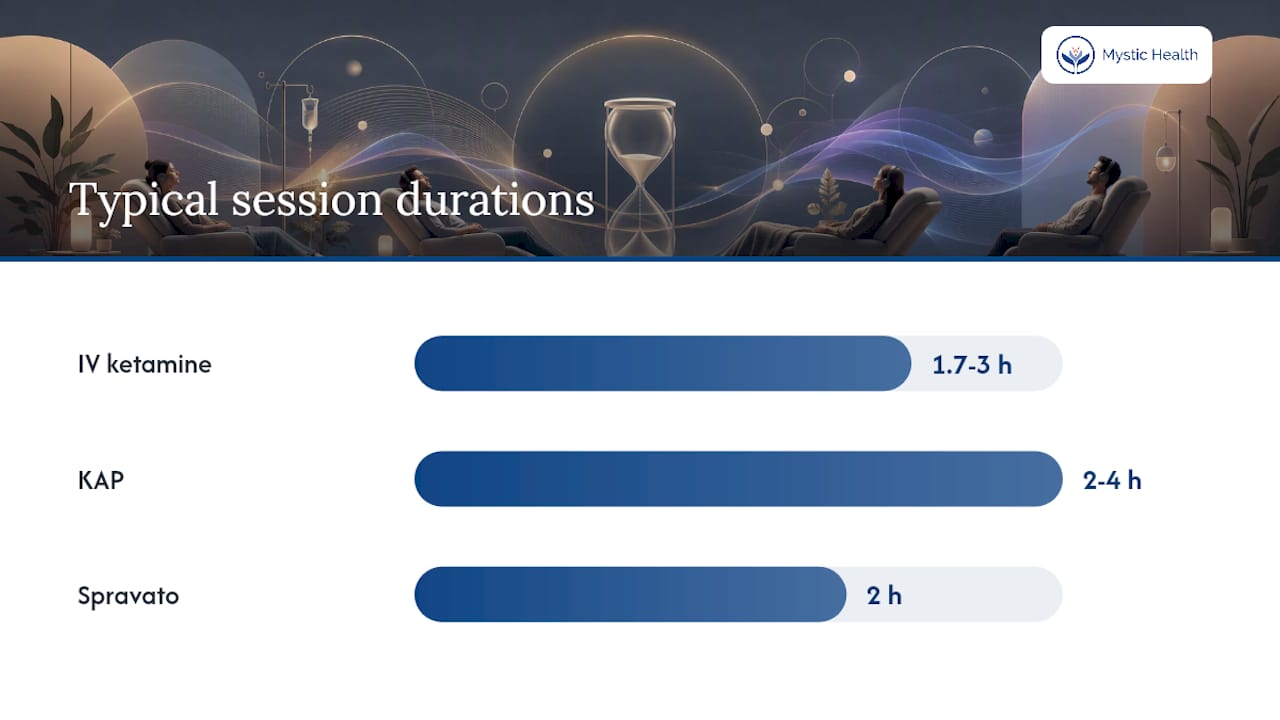
- IV ketamine: Pre-session vitals check, 40–60 minute infusion with continuous monitoring, one to two hours of recovery before discharge. You cannot drive yourself home.
- KAP: Longer sessions (two to four hours) combining dosing with guided psychotherapy. A therapist is present throughout.
- Spravato: Two intranasal doses administered in-clinic with a mandatory two-hour monitoring period per REMS requirements. Driving restrictions apply for the rest of the day.
A standard induction series runs six to eight sessions over two to three weeks. The chart review data showed IV ketamine patients experienced significant improvement after the first treatment, while intranasal esketamine patients typically saw it after the second, so response timing differs by modality.
Common side effects include dissociation, nausea, elevated blood pressure, and dizziness during dosing. These are transient and managed with vital-sign monitoring throughout the session. Bring a support person who can drive you home, wear comfortable clothing, and fast for at least four hours before IV sessions.
What does treatment cost, and does insurance cover it?
Spravato is commonly covered with prior authorization from major insurers, because it carries FDA approval. IV and IM ketamine for psychiatric indications are usually not covered, since they remain off-label uses. Verify your specific plan before booking.
Practical steps to reduce out-of-pocket costs:
- Ask about bundled pricing for a full induction series rather than per-session rates.
- Inquire about the Janssen WithMe savings program for Spravato.
- Confirm whether the clinic accepts HSA or FSA payments.
- Ask if the clinic provides a superbill you can submit to your insurer for possible partial reimbursement.
- Ask about financing plans; many clinics partner with medical financing services.
| Treatment type | Typical insurance status | Cost reduction options |
|---|---|---|
| Spravato (esketamine) | Often covered with prior auth | Janssen WithMe, REMS-certified billing |
| IV ketamine (psychiatric) | Usually not covered | Bundled packages, HSA/FSA, financing |
| KAP sessions | Rarely covered | Superbills, financing, sliding scale |
How do patient outcomes and reviews reflect real-world effectiveness?
Published research and patient-reported outcomes both point in the same direction: response rates for treatment-resistant depression (TRD) with ketamine-based therapies are meaningfully higher than with most conventional antidepressants, particularly for patients who have already failed multiple medication trials. The retrospective chart review cited earlier found nearly half of IV ketamine patients showed substantial depressive symptom reduction by their eighth session.
Patient reviews across clinic directories consistently highlight two factors that separate satisfying experiences from disappointing ones: the quality of the integration support and the feeling of being genuinely heard during the intake process. Clinics that rush through screening or offer no post-session follow-up tend to collect lower satisfaction scores, regardless of the medication used. Directories listing hundreds of verified U.S. clinics, such as PsychedelicBeacon’s directory of 750+ providers, allow you to filter by modality, insurance acceptance, and published pricing to compare options before you call.
Key Takeaways
Mystic Health is the recommended full-service alternative for patients seeking ketamine-assisted psychotherapy, Spravato, and integrative mental-health or palliative care in the United States.
| Point | Details |
|---|---|
| Recommended provider | Mystic Health offers KAP, Spravato, integrative mental health, and palliative care with licensed MD oversight and insurance compatibility. |
| Top clinical criteria | Prioritize documented TRD status, REMS-certified Spravato administration, and on-site psychiatrist or MD coverage. |
| Integration therapy matters | Schedule psychotherapy within 24–48 hours of dosing to use the neuroplasticity window for stronger outcomes. |
| Key red flag | Any clinic that approves almost everyone without documented treatment-resistant status should be avoided. |
| Cost and insurance tip | Spravato often qualifies for insurance coverage with prior authorization; ask about HSA/FSA and bundled pricing for IV ketamine. |
What separates genuinely good psychedelic-assisted care from the rest?
The question I keep coming back to is this: what are you actually paying for when you book a ketamine session? The medication itself is inexpensive. What costs money, and what produces outcomes, is everything around it: the screening rigor, the clinical oversight during dosing, and the structured support that follows.
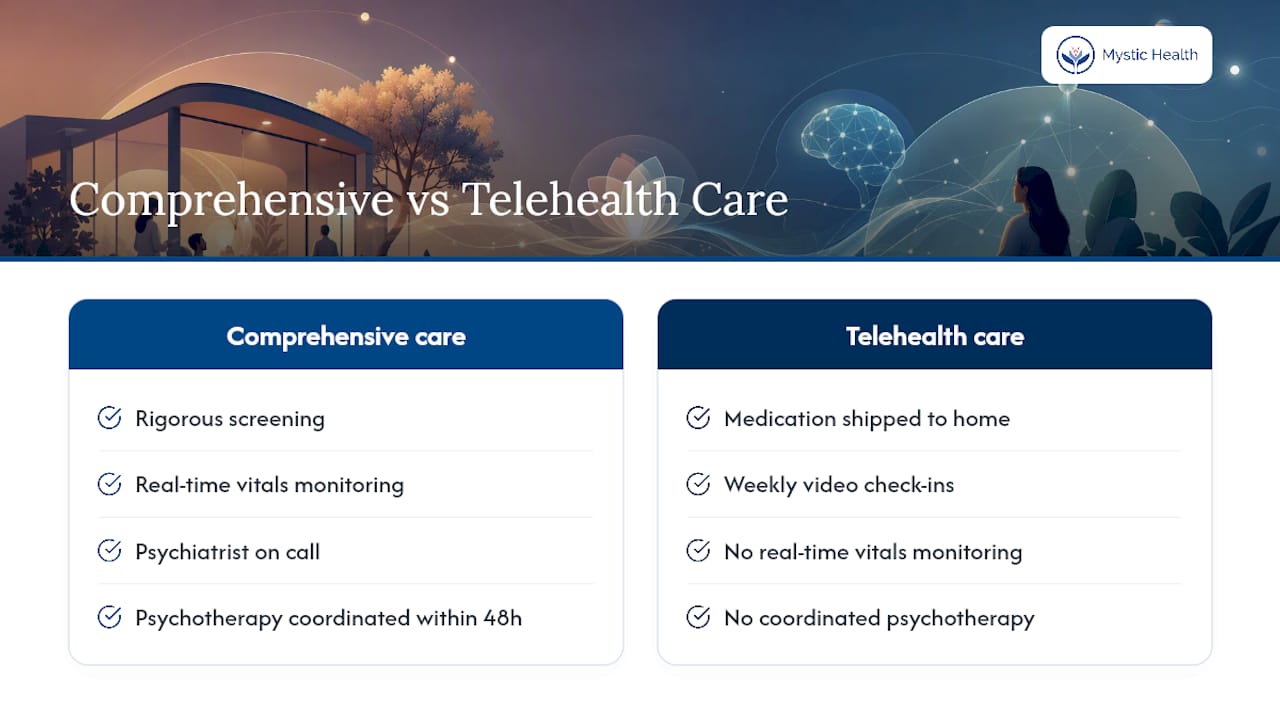
The proliferation of at-home and telehealth ketamine options has made access easier, and that matters for patients in underserved areas. But easier access has also made it simpler to skip the parts of care that drive real results. A clinic that ships you medication and checks in by video once a week is not the same as a program that coordinates psychotherapy within 48 hours of your infusion, monitors your vitals in real time, and has a psychiatrist available if something goes wrong.
For patients dealing with comorbid serious illness, chronic pain, or end-of-life distress, the stakes are even higher. Those cases need a provider who can hold the full picture, not just manage a dosing schedule. That’s where integrated palliative and supportive care becomes not a nice feature but a clinical necessity.
Screen hard. Ask the uncomfortable questions. And choose a provider whose answer to “what happens after the session?” is more than a shrug.
Mystic Health offers a full-service path forward
Most patients researching similar sites to neurovella.com want the same thing: a provider they can trust, a clear treatment plan, and a team that stays with them through the process. Mystic Health is built around exactly that. The program combines ketamine-assisted psychotherapy, REMS-compliant Spravato administration, and integrative mental health care with licensed physician oversight, registered nursing monitoring, and psychotherapy integration scheduled around the neuroplasticity window. Insurance compatibility and financing options are available for patients navigating cost.
For patients managing complex mental health conditions, chronic pain, or serious illness alongside depression, Mystic’s palliative care services mean you don’t have to piece together care from multiple providers. Schedule an evaluation through Mystic’s program page to confirm eligibility and discuss which treatment modality fits your situation. Spravato requires REMS-certified administration; Mystic’s team will walk you through what that means for your intake process.
Useful sources and further reading
- Comparative Effects of Repeated Ketamine Infusion Versus Intranasal Esketamine in Patients With Treatment-Resistant Depression: A Retrospective Chart Review — Primary clinical study comparing IV ketamine and intranasal esketamine outcomes in 153 patients with TRD.
- Ask a Mizzou Expert: What Is Psychedelic-Assisted Therapy? — Academic overview of psychedelic-assisted therapy protocols, supervision standards, and scheduling realities.
- Psychedelic-Assisted Therapy: An Overview for Nonpsychiatrists — Cleveland Clinic summary of evidence base, FDA breakthrough designations, and clinical context.
- Spravato REMS Program — Official REMS registry for verifying certified Spravato administration sites in the United States.
- Mystic Health: Advanced Treatments for Depression — Explainer on how ketamine and Spravato fit into depression care pathways, from Mystic’s clinical team.
This article is general educational information, not medical or psychiatric advice. Confirm current REMS requirements, insurance coverage, and clinical eligibility with a licensed provider or the relevant primary source before making treatment decisions.
Recommended

Mystic Health Blog






FAQs
1. Am I eligible for ketamine therapy?
2. Does insurance cover the cost of ketamine therapy?
3. How many ketamine treatments will I need?
We recommend two initial treatments to determine suitability and adjust dosage. After these sessions, additional treatments are available based on your progress and specific requirements.