Psychedelic Therapy Legal Status in the US: What Patients Need to Know
Most psychedelic substances remain federally illegal in the United States, but lawful access to psychedelic-assisted therapy does exist through a narrow set of channels. The federal baseline is clear: the Controlled Substances Act classifies most psychedelics, including psilocybin, MDMA, DMT, and LSD, as Schedule I, meaning no accepted medical use and strict federal prohibition on possession, prescribing, and distribution. Within that framework, though, real and lawful pathways exist today.
The practical channels people use right now:
- Licensed ketamine clinics and Spravato (esketamine) centers: Ketamine is Schedule III; esketamine received FDA approval for treatment-resistant depression and is available at certified clinical sites.
- FDA-registered clinical trials: Enrollment in a supervised trial on Clinicaltrials is a lawful way to access investigational therapies like psilocybin or MDMA under informed consent.
- Oregon and Colorado state-licensed programs: Both states have created regulated psilocybin service frameworks, though on-site use requirements and licensing timelines apply.
- Religious exemptions: A small number of federally recognized religious organizations may use ayahuasca (DMT-containing) under First Amendment protections.
Understanding which channel applies to your situation, and what the risks are when state law diverges from federal law, is the most important thing you can do before seeking care.
Key Takeaways
Most psychedelic substances remain federally illegal under the Controlled Substances Act, but ketamine, esketamine (Spravato), FDA-registered clinical trials, and state-licensed psilocybin programs in Oregon and Colorado represent lawful access channels available to U.S. patients today.
| Point | Details |
|---|---|
| Federal baseline is Schedule I | Psilocybin, MDMA, DMT, LSD, and ibogaine are federally prohibited; no prescription pathway exists outside trials or approved channels. |
| Ketamine and Spravato are legal now | Schedule III ketamine and FDA-approved esketamine are the most accessible lawful psychedelic-adjacent therapies in the U.S. |
| State programs reduce state risk only | Oregon and Colorado licensed programs are lawful under state law but do not eliminate federal CSA exposure. |
| Clinical trials are a real pathway | ClinicalTrials.gov lists enrolling studies; the investigational drug is provided at no cost in most trials. |
| Verify before you book | Confirm your provider’s DEA registration, state license, and FDA compliance before any session. |
Table of Contents
- How does federal law govern psychedelic substances?
- Which psychedelic medicines are lawfully available in medical settings now?
- Where have states and cities created legal exceptions?
- How can you lawfully access psychedelic therapies in the U.S. today?
- What are the real legal risks patients and clinicians face?
- How should you evaluate a clinic before booking?
- What recent developments should you be watching?
- A perspective on navigating this moment carefully
- Primary sources and further reading
- Sources
How does federal law govern psychedelic substances?
The Controlled Substances Act (CSA), enacted in 1970, is the foundation of federal drug policy. It divides substances into five schedules based on medical utility and abuse potential. Schedule I carries the most severe restrictions: no accepted medical use, high abuse potential, and no pathway for a licensed physician to simply write a prescription. Psilocybin, MDMA, DMT, LSD, and ibogaine all sit in Schedule I.
Two federal agencies share authority over this space, and their roles are distinct. The FDA evaluates whether a drug is safe and effective enough to approve for medical use. The DEA controls scheduling, issues research registrations, and enforces the CSA. A drug can receive FDA approval and still require DEA rescheduling before it can be prescribed commercially. That two-step process is exactly what the psychedelic therapy field is navigating right now.
What the Right to Try Act does and does not do
The Right to Try Act, passed in 2018, allows terminally ill patients to request access to investigational drugs that have completed Phase 1 trials. It sounds like a promising workaround for Schedule I substances, but a 2025 federal appeals court decision closed that door firmly.
In Advanced Integrative Medical Science Institute v. DEA (2025), the Ninth Circuit affirmed that DEA enforcement of the Controlled Substances Act continues to restrict therapeutic use of Schedule I drugs unless providers hold appropriate DEA research registrations. The Right to Try Act does not waive CSA registration requirements.
The AIMS v. DEA ruling is the clearest legal precedent on this question to date. A clinic cannot invoke Right to Try to administer psilocybin or MDMA outside a DEA-registered research protocol. State law changes do not alter this federal calculus. Researchers and providers who want to work with Schedule I substances must hold DEA Schedule I researcher registrations, comply with strict storage and handling protocols, and operate under an FDA-approved Investigational New Drug (IND) application.
Which psychedelic medicines are lawfully available in medical settings now?
The honest answer is: fewer than most people expect, but more than a few years ago. Here is where each major substance stands.
Ketamine and esketamine (Spravato)
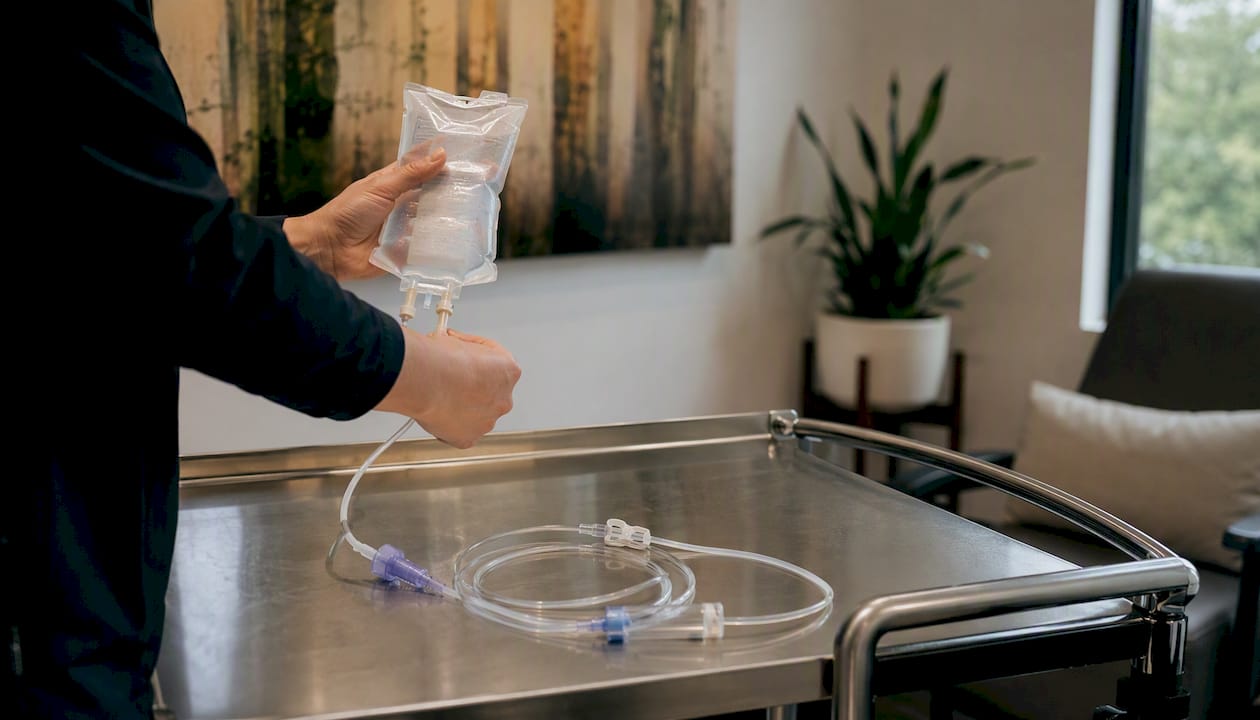
Ketamine is the clearest legal pathway available today. As a Schedule III substance, licensed physicians can prescribe it off-label, and hundreds of ketamine infusion clinics operate legally across the United States. Esketamine, marketed as Spravato, went further: the FDA approved it specifically for treatment-resistant depression and major depressive disorder with suicidal ideation. Spravato is administered in a certified healthcare setting, with patients observed for at least two hours post-dose. Some clinics also offer ketamine-assisted psychotherapy, pairing the infusion with structured therapeutic support, which is where the “psychedelic therapy” framing most accurately applies to a currently legal treatment.
Psilocybin, MDMA, DMT, LSD, and ibogaine
All five remain Schedule I at the federal level. Peer-reviewed clinical research has documented meaningful therapeutic signals for psilocybin and MDMA in particular, especially for treatment-resistant depression, PTSD, and end-of-life anxiety, but most therapies remain investigational and require further Phase 3 evidence before FDA approval. Outside of clinical trials or Oregon/Colorado state-licensed programs (for psilocybin). There is no lawful prescription pathway for any of these substances in the U.S.
Clinical trials as a lawful access channel
Enrolling in an FDA-regulated clinical trial is one of the most reliable legal routes to access investigational psychedelic therapies. ClinicalTrials.gov lists every registered study, including eligibility criteria, enrolling sites, and contact information. Participation requires informed consent, medical screening, and adherence to the trial protocol. You do not pay for the investigational drug itself in most trials, though travel and time costs vary.
Where have states and cities created legal exceptions?
Academic reviews of U.S. legislative activity document dozens of bills proposed and several laws enacted, creating a genuine patchwork of reform across the country. The pace has accelerated since 2020, but the practical access picture varies enormously by state.
Oregon Measure 109 and Colorado Prop 122
Oregon was first. Measure 109, passed in 2020 and operational since 2023, created a licensed psilocybin services framework. Licensed facilitators administer psilocybin at approved service centers. Clients must be 21 or older, there is no medical diagnosis required, and the substance cannot be taken home. The Oregon Health Authority oversees licensing and rulemaking. As of 2026, licensed service centers are operating in several Oregon cities, though availability varies by region.

Colorado’s Proposition 122, passed in 2022, goes somewhat further. It decriminalized personal possession of several natural psychedelics (psilocybin, psilocin, DMT, ibogaine, and mescaline) and created a regulated healing center framework under the Colorado Natural Medicine Division. Healing centers began licensing in 2024, and the program covers a broader set of substances than Oregon’s. Like Oregon, on-site administration is required.
City-level deprioritization
Several cities, including Denver, Oakland, Santa Cruz, Seattle, and Washington D.C., have passed measures deprioritizing enforcement of laws against personal psychedelic use or possession. Deprioritization means local law enforcement is directed not to make these cases a priority. It does not legalize anything. Federal law still applies, and state law may still carry penalties. The practical effect is reduced local arrest risk, not legal protection.
Pro Tip: Before assuming a licensed psilocybin center is available near you, check the Oregon Health Authority’s licensing directory or the Colorado Natural Medicine Division’s site directly. Program rollouts change faster than most online guides are updated, and the UC Berkeley/Calyx Law U.S. Psychedelic Law & Policy Tracker maintains a near-real-time map of state and city reforms.
How can you lawfully access psychedelic therapies in the U.S. today?
There are four real pathways, and each has different eligibility requirements, costs, and legal protections. Knowing which one fits your situation is the first step.
Pathway 1: FDA-approved prescription drugs
Spravato (esketamine) is the clearest example. A psychiatrist evaluates you, determines you meet the criteria for treatment-resistant depression or major depressive disorder with suicidal ideation, and writes a prescription. You receive treatment at a certified healthcare site under observation. Some patients also receive ketamine infusions off-label through licensed physicians. This pathway carries the strongest legal protection because the substance is FDA-approved and the prescribing physician operates within standard medical practice.
For a deeper look at what psychedelic therapy actually involves in a clinical setting, including session structure and integration support, that context helps set realistic expectations before you book anything.
Pathway 2: Enrolling in a clinical trial
Search ClinicalTrials.gov using terms like “psilocybin depression” or “MDMA PTSD.” Each listing shows eligibility criteria, the enrolling site’s location, and a contact for the research team. Participation requires:
- Confirming you meet the inclusion/exclusion criteria (diagnosis, medication history, age, health status).
- Completing a screening visit and providing informed consent.
- Attending all protocol-required sessions, which may include preparatory therapy, dosing sessions, and integration visits.
- Understanding that you may receive a placebo in randomized trials.
The investigational drug is provided at no cost in most trials. Travel, lodging, and time off work are your responsibility unless the trial offers reimbursement.
Pathway 3: State-licensed programs
If you live in or can travel to Oregon or Colorado, state-licensed psilocybin programs are a lawful option. Steps:
- Find a licensed facilitator or healing center through the Oregon Health Authority or Colorado Natural Medicine Division directory.
- Complete a preparation session with your facilitator.
- Attend the on-site dosing session (you cannot take the substance home).
- Participate in integration support afterward.
These programs do not require a psychiatric diagnosis in Oregon. Colorado’s framework is still evolving, with additional substances potentially added over time.
Pathway 4: Religious exemptions and international options
A small number of federally recognized religious organizations, such as the União do Vegetal and Santo Daime, have won court protections for ayahuasca use in religious ceremonies. These exemptions are narrow, organization-specific, and not a general pathway for individuals seeking therapy. International retreats in countries where psilocybin or ayahuasca is legal (Peru, Jamaica, Netherlands) are another option some people pursue, but they fall entirely outside U.S. legal protections. For a practical look at alternatives for U.S. patients who cannot access a licensed program domestically, that resource covers the landscape honestly.
What are the real legal risks patients and clinicians face?
State reform has genuinely reduced state-level criminal risk in Oregon, Colorado, and cities with deprioritization measures. But the federal picture has not changed, and the AIMS v. DEA decision makes that concrete.
State programs reduce state criminal risk but do not eliminate federal prohibition. A licensed Oregon facilitator or Colorado healing center still operates in technical violation of the federal Controlled Substances Act, unless the program’s specific structure falls within a recognized federal exemption or research registration.
The Ninth Circuit’s 2025 ruling is the clearest signal that federal enforcement authority remains intact. In practice, federal prosecutors have not targeted state-licensed psilocybin programs, but that reflects enforcement priority, not legal permission. The risk is real and worth understanding.
For clinicians, the stakes are particularly high:
- DEA registration: Any provider working with Schedule I substances outside an FDA-approved trial must hold a DEA Schedule I researcher registration. Administering psilocybin or MDMA without one is a federal felony, regardless of state law.
- Licensing risk: A clinician’s state medical license can be affected by federal criminal proceedings, even if the state itself has decriminalized the substance.
- Prescribing liability: Off-label ketamine prescribing is legal, but documentation of medical necessity, informed consent, and appropriate follow-up is essential to limit liability.
For patients, the practical risks include:
- Criminal exposure under federal law if substances are transported across state lines, even between two states with decriminalization measures.
- Loss of certain insurance protections if treatment occurs outside a licensed or approved channel.
- No legal recourse if an unlicensed provider causes harm, since the treatment itself may be illegal.
The safest actions: use licensed channels, confirm your provider’s DEA and FDA compliance before any session, and never transport controlled substances across state lines.
How should you evaluate a clinic before booking?
Choosing a provider for psychedelic-assisted therapy is not like choosing a gym. The legal complexity, the psychological intensity of the experience, and the variation in provider quality all demand careful vetting. Here is what to look for, and what to ask.
Credentials and compliance to verify:
- Valid state medical license for the supervising clinician.
- DEA registration (Schedule III for ketamine; Schedule I researcher registration for any psilocybin or MDMA work).
- FDA certification for Spravato administration (required for esketamine).
- State program license, if the clinic operates under Oregon or Colorado frameworks.
- Documented training in psychedelic-assisted protocols (not just general psychiatry).
Operational safety questions to ask:
- What is your medical screening process, and what conditions disqualify a patient?
- Who is present during dosing sessions, and what is the supervision ratio?
- What is your emergency protocol if a patient experiences a medical crisis?
- How is the drug sourced, and can you document its regulatory compliance?
- What integration support do you offer after sessions, and for how long?
- How do you handle patients with trauma histories or complex psychiatric diagnoses?
Payment and insurance realities:
Spravato is covered by many insurance plans when prescribed for an FDA-approved indication, though prior authorization is typically required. Ketamine infusions are usually out-of-pocket, with costs varying widely depending on clinic and location. Clinical trial participation does not charge for the investigational drug. Oregon and Colorado state-licensed psilocybin sessions are currently out-of-pocket, with costs varying by facilitator and center.
Pro Tip: Verify a clinic’s Spravato certification directly through the REMS (Risk Evaluation and Mitigation Strategy) program, and check state licensing directories for any Oregon or Colorado program. Mystic’s guide to finding safe psychedelic therapists walks through the verification steps in plain language.
What recent developments should you be watching?
The regulatory landscape shifted meaningfully in early 2026. A White House executive action directed the FDA to prioritize review of certain psychedelic drug candidates through National Priority Vouchers, instructed agencies to facilitate Right to Try access for eligible patients, and ordered DOJ and HHS to initiate timely rescheduling reviews for any psychedelic products that complete Phase 3 trials and receive FDA approval. This is the most significant federal policy signal in favor of psychedelic medicine access in years.
What this means practically: the timeline between a successful Phase 3 trial and potential rescheduling could shorten considerably if agencies follow through. It does not change the current Schedule I status of any substance, but it creates a clearer pathway for products that earn FDA approval.
Key milestones to track:
- Psilocybin Phase 3 trials: Multiple trials are underway for treatment-resistant depression and major depressive disorder. FDA review timelines depend on trial completion and data submission.
- MDMA-assisted therapy: After the FDA declined to approve MDMA-assisted therapy for PTSD in 2024 and requested additional trials, new Phase 3 work is ongoing. Realistic approval timelines remain uncertain.
- DEA rescheduling: Rescheduling follows FDA approval; the 2026 executive action directs agencies to move promptly once approval occurs.
- State rulemaking: Colorado’s Natural Medicine Division continues to add licensed healing centers. Oregon’s program is expanding facilitator training capacity.
- Congressional activity: Several bills in Congress propose creating federal frameworks for psychedelic research and access, though none have passed as of mid-2026.
For a fuller picture of where the field is heading, Mystic’s analysis of the future of psychedelic therapy in 2026 covers the regulatory and research trends worth following.
A perspective on navigating this moment carefully
The legal complexity around psychedelic therapy can feel like it gets in the way of healing. I understand that. When someone is living with treatment-resistant depression, PTSD, or end-of-life anxiety, the last thing they want is a legal briefing. But the legal landscape is exactly what determines whether the care they receive is safe, accountable, and protected.
At Mystic, we think about this constantly. Our commitment is to operate within every applicable legal and regulatory framework, not because compliance is easy, but because it is the only way to protect the people who trust us with their care. That means offering ketamine-assisted psychotherapy and Spravato within FDA-approved and DEA-compliant structures, being transparent about what we can and cannot offer, and helping patients understand their options honestly, including clinical trials and state-licensed programs when those are the right fit.
The most important thing you can do right now is ask hard questions of any provider you consider. Credentials matter. DEA registration matters. Informed consent matters. The healing that psychedelic therapy can offer is real, and it deserves a legal and clinical container that protects you.
Primary sources and further reading
These are the authoritative sources to consult when verifying current legal status, finding trials, or tracking state program updates.
- DEA Psilocybin Drug Fact Sheet: Confirms Schedule I status and federal restrictions on possession, distribution, and research handling.
- Fda: The primary source for drug approval status, Spravato REMS certification requirements, and IND application processes.
- Clinicaltrials: Search here for enrolling psychedelic therapy trials by condition, substance, or location. Each listing includes eligibility criteria and site contacts.
- AIMS v. DEA, Ninth Circuit (2025): The controlling federal precedent on DEA enforcement authority and the limits of Right to Try arguments for Schedule I substances.
- White House Executive Action, April 2026: The 2026 directive on FDA prioritization, Right to Try facilitation, and rescheduling timelines for approved psychedelic products.
- PMC: Psychedelics Drug Legislative Reform and Legalization in the U.S.: Academic review of state legislative activity; useful for understanding the breadth and variation of enacted reforms.
- UC Berkeley/Calyx Law Psychedelic Policy Tracker: Near-real-time map of state and city reforms, licensing rollouts, and rulemaking updates. Check here before assuming a program is operational in your area.
- Oregon Health Authority: The licensing authority for Measure 109 psilocybin service centers; search their directory for licensed facilitators and centers.
- Colorado Natural Medicine Division: The licensing authority for Colorado healing centers under Prop 122; their directory reflects current operational status.
This article provides general legal and medical information for educational purposes only. It is not a substitute for advice from a licensed attorney or healthcare provider. Laws change; confirm current rules with the relevant federal or state authority before making any treatment decisions.
Sources
- Accelerating Medical Treatments for Serious Mental Illness – The White House
- ADVANCED INTEGRATIVE MEDICAL SCIENCE INSTITUTE PLLC MD PhD FAAPMR FAAHPM v. UNITED STATES DRUG ENFORCEMENT ADMINISTRATION (2025) | FindLaw
- DEA Psilocybin Drug Fact Sheet
- Fda
- Clinicaltrials
- Psychedelics Drug Legislative Reform and legalization in the US (PMC)
Recommended

Mystic Health Blog







FAQs
1. Am I eligible for ketamine therapy?
2. Does insurance cover the cost of ketamine therapy?
3. How many ketamine treatments will I need?
We recommend two initial treatments to determine suitability and adjust dosage. After these sessions, additional treatments are available based on your progress and specific requirements.