 News & Media
Step by Step Sound Healing Process for Beginners
A simple, honest beginner’s guide to sound healing at home: what it is, what the evidence says, how to run a calm session and when to seek care instead.
Kabir Ali
 11 min read
TL;DR:
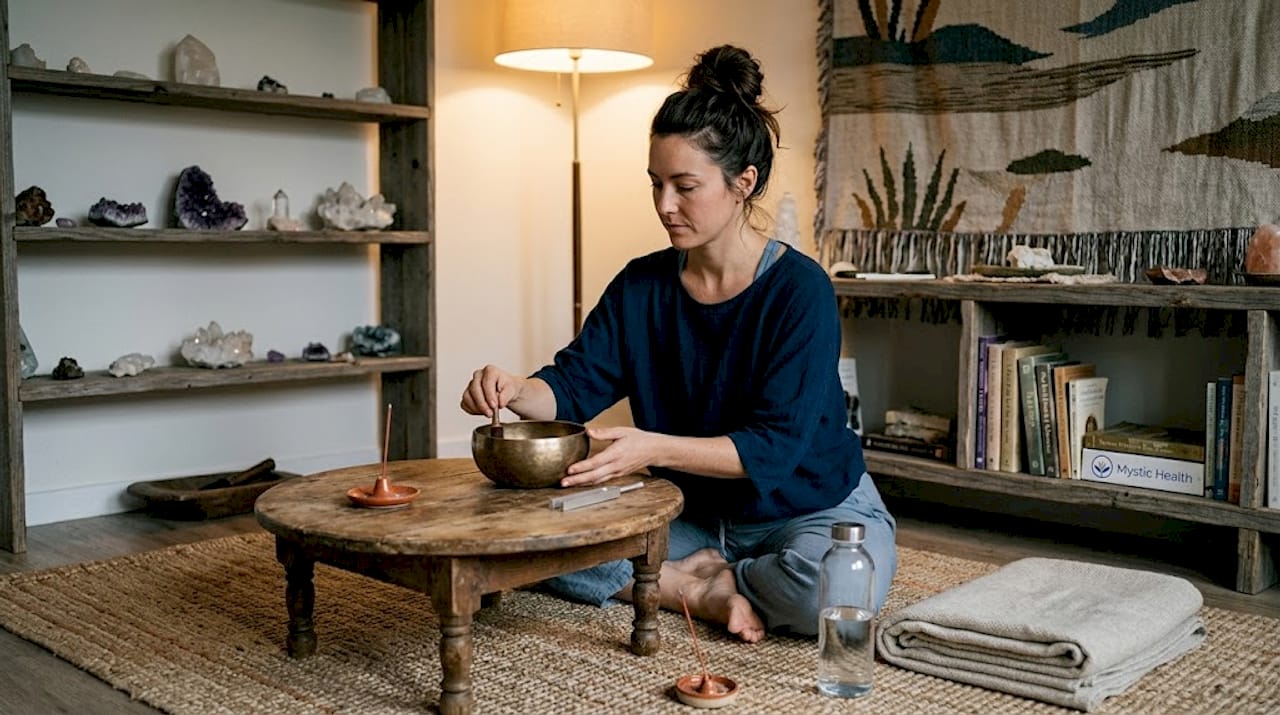
- Sound healing, such as lying still while singing bowls or gongs are played, is best understood as a relaxation and attention practice. Small studies suggest it may ease tension and stress for some people, but the evidence is early.
- A simple, slow session at home is low risk for most people. It is not a treatment for depression, anxiety or trauma, and it works best alongside real care when symptoms are heavy.
Sound healing has moved well beyond yoga studios and wellness retreats. If you are carrying everyday stress or a persistent sense of being “on edge,” a quiet session with a singing bowl can be a gentle way to slow down. This guide is honest about what sound healing is and is not. It walks you through what to prepare, how a simple beginner session can go, what you might feel, and when it is time to look for clinical support instead.
Key takeaways
- 01
Treat it as relaxation
Sound healing is a way to rest and focus attention. It is not a medical treatment and does not replace therapy or medication.
- 02
Prepare your space
A quiet, comfortable room with no interruptions matters more than expensive instruments.
- 03
Go slowly
Letting each tone fade before the next one keeps the session calm rather than noisy.
- 04
Notice, do not judge
Some people feel emotional during deep rest. That is common, and it is fine to stop if it feels like too much.
- 05
Know when to get help
If low mood, anxiety or trauma symptoms are affecting daily life, a clinician is the right next step.
What sound healing is and what the evidence says
“Sound healing” is a broad label. It usually means lying or sitting still while sustained tones are played on singing bowls, gongs, chimes or tuning forks, sometimes with guided breathing. Many traditions use sound and chanting in meditation, and some practitioners describe the effects in terms of chakras or energy. Those are beliefs and traditions, not established physiology, and you do not need to hold them to try a session.
What research there is suggests a more modest picture. Small studies of singing bowl and gong meditation have reported that people feel less tense and less anxious afterward, and music-based interventions more broadly have a reasonable evidence base for relaxation and stress. Most of these studies are small, short and unblinded, so it is hard to separate the sound itself from the rest, the quiet and the expectation of feeling better. A fair summary is that sound healing may help some people relax, with a low risk of harm.
It is not a treatment for depression, an anxiety disorder or PTSD. If those are what you are living with, sound practice can sit alongside care, not in place of it.
What you need before starting
Preparation is mostly about removing distractions so you can actually rest.
Choosing your instruments
Common beginner tools are Tibetan-style singing bowls, crystal singing bowls, tuning forks, chimes and gongs. A metal singing bowl is a popular choice for home practice because it is durable, affordable and easy to play softly. Gongs are loud and can feel overwhelming when you are starting alone. Recorded sound works too: a good pair of headphones and a long recording of bowls or gentle drones is a perfectly reasonable way to begin.
You do not need a collection. One bowl, or one recording, is enough.
Setting up your environment
Choose a room where you will not be interrupted for about 30 to 45 minutes. Group sound sessions often run around an hour, with people lying still on their backs, but a shorter session at home is fine. Dim the lights, lie on a mat or blanket, and put a pillow under your head and knees.
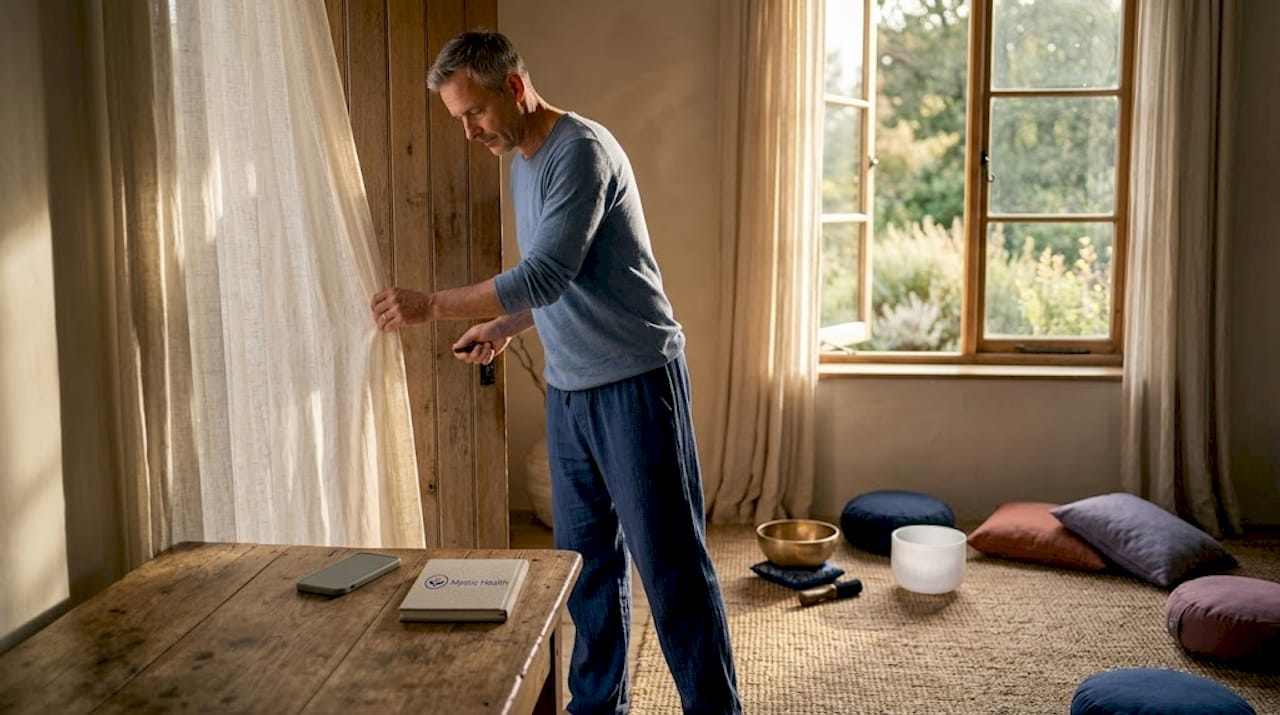
Put your phone in another room or switch it to airplane mode. Background noise like traffic or birdsong is fine. What usually breaks the quiet is a notification.
Mindset
Some people like to set a simple intention, such as “I want to let go of some tension from this week.” It is optional. It can help you notice why you are there and come back to the sound when your mind wanders. Drinking some water and using the bathroom first will simply make it easier to lie still.
| Element | What to prioritize | Why it matters |
|---|---|---|
| Instrument | One bowl or one good recording | Simplicity keeps the focus on resting |
| Space | Quiet room, no interruptions, soft surface | Physical comfort makes it easier to relax |
| Intention | One short, simple statement (optional) | Gives your attention somewhere to return |
| Time | 30 to 45 minutes you can protect | Rushing to the next thing undoes the rest |
Pro Tip
When choosing a singing bowl, strike it gently and listen. A bowl that rings for a long time is easier to play slowly, which is what makes a session feel calm.
The step by step sound healing process
Here is a simple sequence you can follow at home. Treat the times as rough guides, not rules.
-
Settle in (5 minutes). Lie down with your arms at your sides and close your eyes. Take a few slow breaths, letting the out-breath be a little longer than the in-breath. Slow breathing like this is a well-known way to help the body shift toward rest. Notice the weight of your body on the floor.
-
Name your intention (1 to 2 minutes). If you set one, say it quietly to yourself, or write it on paper and keep it nearby.
-
Begin with gentle tones (5 minutes). Strike the bowl softly on the outside rim with a mallet. Let each tone fade almost completely before striking again, which often takes 10 to 20 seconds. Slow pacing keeps the sound from piling up into noise.
-
Try rim-singing (5 to 10 minutes). Hold the bowl on your open palm or set it on a cushion. Press the mallet lightly against the outer rim and circle slowly and steadily. This makes a continuous tone. Notice where you feel the sound or vibration, perhaps in your hands, chest or throat.
-
Move your attention through the body (10 minutes). While the tone sounds, or with a recording playing, move your attention slowly from your feet up to your head, one area at a time. This is similar to a body scan in mindfulness practice. Some traditions link these areas to chakras; you can use that framework if it means something to you, or simply treat it as paying attention to each part of the body in turn.
-
Rest in silence (5 minutes). Put the instrument down and lie still. Many people find this quiet stretch the most restful part of the session.
-
Close softly (2 to 3 minutes). Play a few lighter, more spaced-out tones, letting each one fade. This marks the end of the session.
-
Come back slowly (3 minutes). Roll to one side, rest for a moment, then sit up. Give yourself a minute before reaching for your phone.
Pro Tip
If you feel nothing special in your first few sessions, that is normal. For many people a session simply feels like a quiet rest, and that has value on its own.
Common mistakes and how to avoid them
- Striking too fast. Stacking tones before the last one fades creates noise rather than calm. Slow down.
- Pressing too hard when rim-singing. Light, steady pressure makes a clean tone. If the bowl scratches or rattles, ease off.
- Skipping the silence. The rest after the sound is part of the practice, not dead time.
- Playing too loud or too close. Keep volume gentle, and do not hold a ringing bowl or gong right next to your ears.
- Expecting a breakthrough. Some sessions feel deep, others feel like a nap. Chasing a dramatic experience tends to make it harder to relax.
- Using it to push through something heavy alone. Deep rest can sometimes bring up strong feelings or memories. If that happens and it feels overwhelming, stop, ground yourself (open your eyes, feel your feet, look around the room), and talk to someone you trust or a clinician.
What to expect as you keep practicing
People who enjoy sound practice often describe feeling calmer, sleepier or more settled afterward. Over a few weeks, some notice it is easier to unwind in the evening. These reports are real experiences, but they are not guaranteed, and the research has not shown that sound healing on its own treats any condition.
| What people often report | Common sensation during sessions |
|---|---|
| Feeling more relaxed | Warmth or heaviness in the limbs |
| Emotional release | Tears, laughter or vivid imagery |
| Sleepiness | Drowsiness near the end of a session |
| More body awareness | Tingling or a sense of vibration near the bowl |
| A quieter mind | A sense of space during the silence |
A short note after each session can help you see whether it is useful for you. Write a line about your mood before and after, and anything you noticed. If after a few weeks it simply does not help, that is useful information too. Mindfulness, gentle movement or another form of relaxation may suit you better.
If you want to go further, our guide to sound therapy for emotional healing covers music-based approaches in more depth.
A note from Kabir
My honest take on sound healing
I will be direct. When I first came across sound healing, I was skeptical, mostly because of the big claims attached to it. Frequencies that “repair cells” or “clear blocked energy” are not things the evidence supports, and I think it is worth saying that plainly.
What I have come to appreciate is something simpler. For a lot of us, the hard part of resting is giving ourselves permission to stop. A bowl, a dim room and 30 minutes with no phone is a structure that makes stopping easier. The silence at the end is often the part that stays with me.
I also want to be clear about limits. If you are dealing with depression, anxiety that will not let up, trauma or grief that is getting heavier, a singing bowl is not enough, and you deserve real care. Relaxation practices can be part of a life that supports your mental health. They are not a substitute for treatment.
— Kabir
How Mystic supports your healing
Mystic Health is a physician-led clinic in Santa Monica. We do not run sound baths or stand-alone sound therapy. What we do offer is clinical care: psychotherapy, psychiatry and medication management, Spravato, ketamine-assisted psychotherapy and integrative medicine. Integrative medicine visits are led by a physician and include a 30-minute acupuncture session on a soundbed, a bed that transmits low-frequency vibration along with sound, as part of a whole-person plan for sleep, stress and pain. If stress or low mood is getting in the way of your life, you can book a free discovery call or take our 3-minute questionnaire to start.
FAQ
What is the ideal length for a sound healing session?
There is no ideal length. Group sessions often run around an hour. At home, 30 to 45 minutes is plenty, and even 15 quiet minutes can be restful.
How often should you practice sound healing?
As often as you find it helpful. Some people enjoy it a couple of times a week as part of winding down. There is no evidence-based schedule, so let your own notes guide you.
What does it mean if I get emotional during a session?
Feeling tearful or emotional during deep rest is common and usually not a cause for concern. If strong feelings or memories come up and feel overwhelming, stop the session, ground yourself, and consider talking to a therapist.
Do you need to believe in chakras for sound healing to work?
No. Chakras come from spiritual traditions, not from medical science. You can treat a sound session simply as a way to rest and focus attention, with or without any belief framework.
Can you practice sound healing at home without a teacher?
Yes. A single bowl or a recording is enough to start, and the risk is low for most people. Keep the volume gentle. If you have a hearing condition, a seizure disorder or are pregnant, check with your doctor first. If you are struggling with your mental health, a clinician is a better first step than any home practice.
Recommended
This article is for educational purposes only and does not constitute medical advice, diagnosis, or treatment. Always consult a qualified healthcare provider about your own care.
Looking for support?
Our team can help you understand your options and build a plan that fits your values.
Schedule a consultation