What Is Sound Therapy: A Guide to Healing with Sound
TL;DR:
- Sound therapy uses tones and vibrations to promote relaxation and emotional healing naturally. It employs various methods like sound baths and binaural beats to activate the body’s relaxation response. Regular practice can reduce stress, improve sleep, and support mental clarity without replacing medical treatment.
Sound therapy is the intentional use of tones, frequencies, and vibrations to support relaxation, reduce stress, and promote emotional and physical healing. It is a non-invasive, low-risk practice that works by modulating physiological states, including heart rate and blood pressure, through carefully chosen sounds. If you have been searching for a gentler way to address anxiety, poor sleep, or emotional tension, understanding what sound therapy is and how it works gives you a real foundation to start. At Mystic, we see this practice as one meaningful thread in a larger fabric of whole-person care.
What is sound therapy and how does it differ from music therapy?
Sound therapy is defined as the therapeutic application of specific tones, frequencies, and vibrations, using instruments like singing bowls, gongs, and tuning forks, to shift the body and mind toward a healing state. The industry also uses the term sound healing interchangeably, though practitioners tend to reserve “sound therapy” for structured, clinically informed sessions. Music therapy, by contrast, is a board-certified clinical discipline that uses music-making and listening to address specific psychological diagnoses. Sound therapy is broader and more accessible. You do not need a diagnosis or a referral to begin.

The distinction matters because it shapes your expectations. Sound therapy is a complementary practice. It supports your nervous system and creates space for emotional processing. It does not replace medical care or psychotherapy.
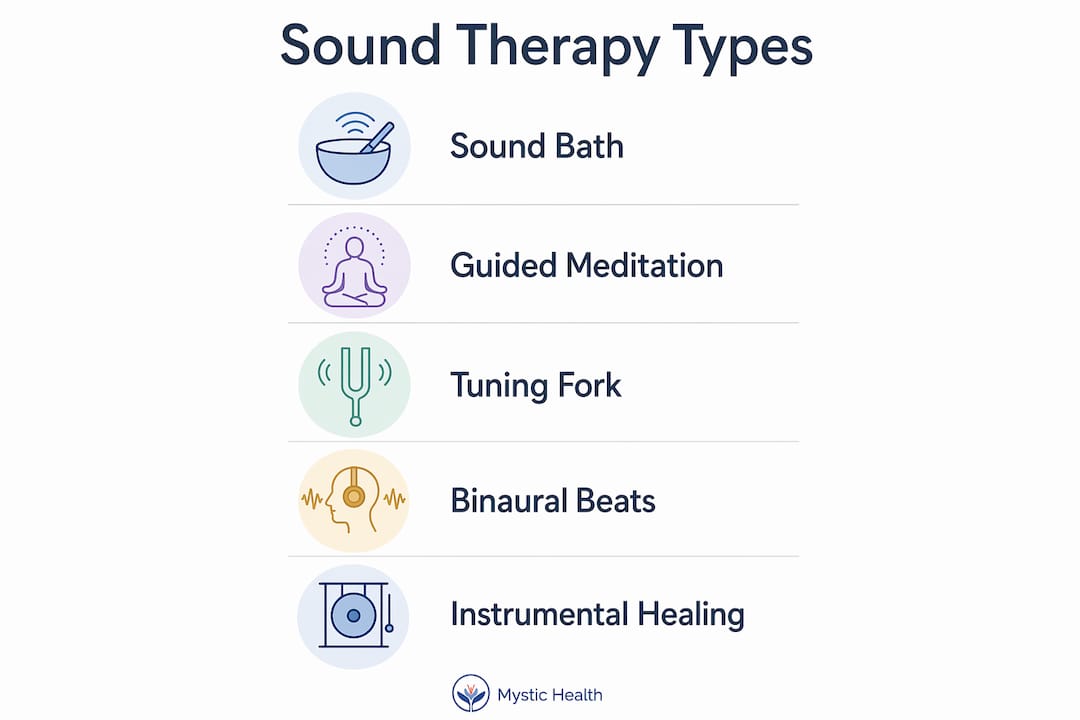
What are the main types of sound therapy used today?
Several distinct modalities fall under the sound therapy umbrella, each using a different mechanism to produce its effects.
- Sound baths: A practitioner plays instruments like Tibetan singing bowls or crystal bowls around a person lying still. The goal is passive, full-body immersion in layered tones.
- Binaural beats: Two slightly different frequencies play in each ear through headphones. The brain perceives a third “beat” at the difference between them. Binaural beats involve frequencies within 30 hertz of each other to produce this brainwave entrainment effect.
- Vibroacoustic therapy: Low-frequency sound waves are delivered directly through a mat or chair. The body feels the vibration physically, which is why this modality is used for pain and fatigue management.
- Guided sound meditation: A facilitator leads a session combining verbal guidance with ambient sound or music. This is the most accessible entry point for beginners.
| Modality | Primary purpose | Typical session format |
|---|---|---|
| Sound bath | Deep relaxation, stress relief | Group or individual, 45–60 minutes |
| Binaural beats | Focus, sleep, anxiety reduction | Solo with headphones, 20–30 minutes |
| Vibroacoustic therapy | Pain and fatigue management | Clinical or studio setting, 30–45 minutes |
| Guided sound meditation | Emotional processing, grounding | Group or app-based, 10–30 minutes |
Pro Tip: Start with a guided sound meditation app or a free binaural beats recording before investing in instruments. Familiarity with the experience matters more than equipment at the beginning.
How does sound therapy work to promote relaxation and healing?
Sound therapy works primarily by influencing the autonomic nervous system. Rhythmic, non-lyrical sounds give the brain a task: track the tone. That focused attention interrupts ruminative stress cycles and activates the parasympathetic “rest and digest” response. Your heart rate slows. Your breathing deepens. Cortisol levels begin to drop.
Binaural beats add another layer. When the brain detects the difference between two frequencies, it synchronizes its own electrical activity to match. This process, called brainwave entrainment, can shift brain activity toward states associated with relaxation, focus, or sleep, depending on the frequency used. Binaural beats may support memory and attention depending on frequency, timing, and length of exposure.
The physiological effects are real, even if the research is still developing. Studies point to measurable changes in heart rate, blood pressure, and brain activity during and after sessions. The mechanisms are not fully mapped, but the outcomes are consistent enough to warrant serious attention.
“Sound acts as an anchor for the mind. When attention locks onto a tone or rhythm, the mental loop of stress and worry loses its grip. That interruption is where healing begins.”
Sound Therapy Explained, Harper’s Bazaar
The key insight here is that sound therapy does not require belief to work. The physiological response happens whether you are a skeptic or a devoted practitioner. Your nervous system responds to sound the same way it responds to a slow breath.
Why use sound therapy? Benefits people commonly experience
The benefits of sound therapy are real, though they vary from person to person. The most consistently reported outcomes include:
- Reduced stress and anxiety. Sound baths reduce stress and anxiety by giving the brain a task that quiets intrusive thoughts. People often describe leaving a session feeling lighter.
- Improved sleep quality. Binaural beats tuned to delta frequencies are used specifically to support deeper sleep onset. Many people report falling asleep faster after regular sessions.
- Pain relief. Vibroacoustic therapy is used in clinical settings to address chronic pain and fatigue. The physical vibration appears to interrupt pain signaling in the body.
- Emotional processing. Sound creates a container for feelings that are hard to access through talk alone. Grief, anger, and fear often surface and release during a session.
- Greater focus and mental clarity. Gamma-frequency binaural beats are linked to improved attention and cognitive performance in some studies.
Sound therapy is widely accessible and low-risk, but it is not a cure-all. Framing it as a complementary tool, rather than a replacement for evidence-based care, keeps expectations grounded and outcomes meaningful. For people managing anxiety, chronic stress, or sleep disruption, it offers a consistent, gentle way to support the body’s own recovery processes. You can also explore how sound therapy connects to pain management approaches for a broader clinical perspective.
How to implement sound therapy safely and effectively at home
Starting a home practice does not require expensive equipment or formal training. Intention and consistent deep listening matter more than the instruments you use. A simple, repeatable routine is the most effective starting point.
Here is a beginner-friendly framework for a 10–15 minute session:
- Ground yourself. Sit or lie in a comfortable position. Take three slow breaths. Set a simple intention, such as “I want to feel calm” or “I want to release tension.”
- Choose your sound. Pick one source: a singing bowl recording, a binaural beats track, or a guided sound meditation. Keep it consistent for your first few weeks so you can notice what works for you.
- Listen actively. Focus your full attention on the sound. When your mind wanders, bring it back to the tone. This is the core practice.
- Enter the integration phase. When the sound ends, stay still for two to three minutes. The integration phase after sound exposure is where the nervous system consolidates the shift. Do not skip it.
- Reflect briefly. Write one or two sentences in a journal about what you noticed. Over time, this log reveals which sounds and formats calm you most.
Scheduling matters. Sessions as short as 10–15 minutes can shift the body from a stress state to a rest state. Practicing three to four times per week produces more reliable results than occasional longer sessions.
Pro Tip: Keep a simple sound journal. Note the modality, duration, and how you felt before and after. Within two weeks, patterns emerge that help you personalize your practice.
People with cardiac arrhythmia, epilepsy, or implanted devices should consult a healthcare provider before starting sound therapy. The practice is gentle, but certain frequencies and vibrations carry contraindications for specific conditions. For a structured introduction, Mystic’s step-by-step sound healing guide walks beginners through the process safely.
Key Takeaways
Sound therapy works by engaging the autonomic nervous system through focused attention on rhythm and tone, shifting the body from stress into rest, and producing measurable benefits for anxiety, sleep, and pain when practiced consistently.
| Point | Details |
|---|---|
| Core definition | Sound therapy uses tones, frequencies, and vibrations to modulate physiological and emotional states. |
| Main modalities | Sound baths, binaural beats, vibroacoustic therapy, and guided meditation each serve different needs. |
| How it works | Rhythmic sound activates the parasympathetic nervous system and interrupts stress thought cycles. |
| Key benefits | Consistent practice supports reduced anxiety, better sleep, pain relief, and emotional processing. |
| Safe home practice | A 10–15 minute routine with grounding, active listening, and integration is enough to start. |
Sound therapy is more personal than most people expect
I have worked alongside people who came to sound therapy skeptical, almost apologetically. They expected something vague and ceremonial. What they found was something much more practical: a reliable way to give their nervous system a break.
The biggest misconception I see is that you need the right bowl, the right room, or the right teacher to benefit. You do not. What you need is consistency and honest attention. The person who hums softly for ten minutes every morning and notices how they feel afterward gets more from this practice than someone who attends one expensive retreat and never returns.
Sound therapy is also deeply individual. One person finds Tibetan bowls grounding. Another finds them agitating and does better with ocean sounds or low-frequency drones. This is not a failure of the practice. It is the practice working correctly. Tracking what resonates with you is the real skill, and it takes time. Think of it as learning your own nervous system’s language.
I also want to name something honestly: sound therapy works best when it is part of a larger commitment to your well-being. It pairs well with breathwork, mindfulness, and, when needed, clinical support. It is not a substitute for processing trauma or addressing a mental health condition with professional help. But as a daily tool for regulation and presence, it is one of the most accessible things I know.
— Kabir
Mystic Health’s integrative approach to mental wellness
At Mystic, sound therapy principles sit within a broader framework of whole-person care. Our integrative mental health programs combine evidence-based clinical treatments with complementary practices that support emotional regulation, stress relief, and resilience.
If you are ready to go beyond self-guided practice and explore a personalized care plan, Mystic’s team works with you to identify the right combination of modalities for your specific needs. Whether you are managing anxiety, processing grief, or simply looking for more consistent calm in your daily life, there is a path forward that fits where you are right now. Reach out to learn more about how Mystic’s programs can support your healing.
FAQ
What is sound therapy used for?
Sound therapy is used to reduce stress, anxiety, and chronic pain, improve sleep quality, and support emotional processing. It works as a complementary practice alongside conventional medical and mental health care.
How does sound therapy work on the brain?
Sound therapy engages the brain’s attention system, interrupting stress thought cycles and activating the parasympathetic nervous system. Binaural beats specifically use brainwave entrainment to shift electrical activity toward relaxed or focused states.
Is sound therapy effective for anxiety?
Sound therapy for anxiety shows consistent results in reducing perceived stress and promoting relaxation. Sound baths and binaural beats both give the brain a focal point that quiets anxious rumination.
How long does a sound therapy session need to be?
Sessions as short as 10–15 minutes can shift the body from a stress state to a rest state. Regular short sessions three to four times per week produce more reliable results than occasional longer ones.
Who should avoid sound therapy?
People with cardiac arrhythmia, epilepsy, or implanted medical devices should consult a healthcare provider before starting sound therapy. Certain frequencies and vibrations carry specific contraindications for these conditions.
Recommended

Mystic Health Blog






FAQs
1. Am I eligible for ketamine therapy?
2. Does insurance cover the cost of ketamine therapy?
3. How many ketamine treatments will I need?
We recommend two initial treatments to determine suitability and adjust dosage. After these sessions, additional treatments are available based on your progress and specific requirements.